
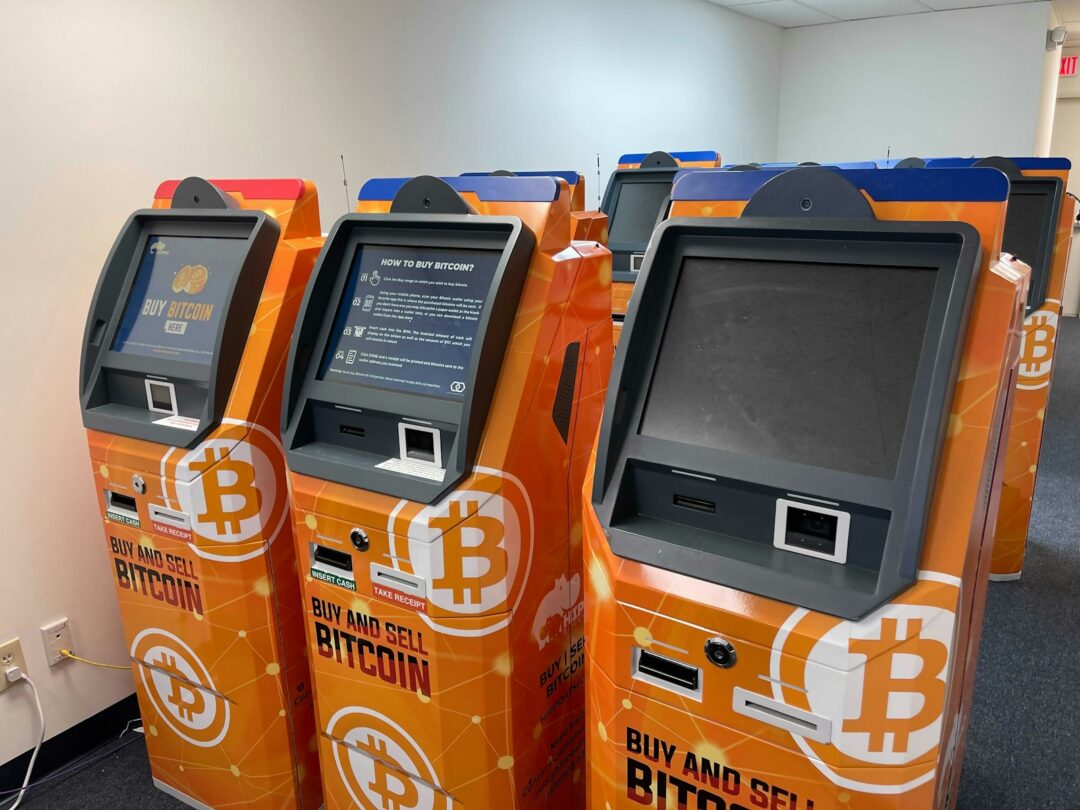
Bitcoin Depot, once the largest Bitcoin Automated Teller Machine (ATM) operator in the U.S., has collapsed into bankruptcy, exposing the fragility of the crypto kiosk business model under mounting fraud, regulatory bans, and compliance costs.
In a website statement, announced that it has initiated a voluntary Chapter 11 process in the U.S. Bankruptcy Court for the Southern District of Texas to effect an orderly cease of the company’s operations and facilitate a sale of its assets.
“The regulatory environment for Bitcon ATM (BTM) operators has shifted significantly: states have imposed increasingly stringent compliance obligations, including new transaction limits, and in some jurisdictions, outright restrictions or bans on BTM operations; and operators have faced increasing litigation and regulatory enforcement. These developments have materially affected Bitcoin Depot’s business and financial position. Under these circumstances, the Company’s current business model is unsustainable”, said CEO Alex Holmes.
With this, the company announced the shutdown of its 9,000+ kiosks worldwide.
Bitcoin Depot’s financials also revealed a dramatic downturn: first-quarter revenue fell 49.2% year-over-year, gross profit plunged 85.5%, and net losses reached $9.5 million, compared to a $12.2 million profit the year before.
Legal judgments exceeding $20 million compounded the crisis, leaving management with “substantial doubt” about its ability to continue operations.
Why the Bitcoin ATM Model Broke
Bitcoin ATMs were originally designed to bridge the gap between cash and cryptocurrency, offering a convenient way for underbanked users and those wary of online exchanges to access digital assets.
Yet the model was plagued by structural weaknesses that ultimately led to its downfall. One of the most pressing issues was the high transaction fees.
Data from the Financial Crimes Enforcement Network (FinCEN) showed that kiosk fees often ranged between 7% and 20%, far higher than the rates charged by centralized exchanges. This made Bitcoin ATMs an expensive option for everyday users, eroding their appeal as mainstream financial tools.
Fraud was another critical factor.
According to the Federal Trade Commission, ATM-related scams accounted for $65 million in losses during the first half of 2024, while Federal Bureau of Investigation reports indicated that losses ballooned to $389 million in 2025.
These schemes disproportionately targeted older adults, who were often less familiar with digital assets and more vulnerable to manipulation.
The prevalence of fraud not only damaged consumer trust but also attracted heightened scrutiny from regulators.
Regulatory backlash further compounded the industry’s challenges.
The Global Context
Despite the U.S. contraction, Bitcoin ATMs continue to expand in other regions.
Australia grew its ATM count by 43% in 2025, while Canada and Europe posted moderate growth. These markets still view kiosks as tools for financial access rather than fraud risks.
Globally, the installed base rose to 39,158 machines in 2025, though the U.S. accounted for nearly 78% of them.
Bitcoin Depot’s collapse, therefore, represents a direct hit to almost a quarter of the global total.
At the same time, the company’s downfall underscores the limits of high-fee, compliance-heavy models in sustaining mass adoption.
For governments, the lesson is clear: unchecked expansion of crypto kiosks without robust consumer safeguards can lead to systemic risks.
Regulators in the U.S. have already demonstrated a willingness to impose outright bans, citing fraud and predatory practices.
Other jurisdictions may follow suit, especially if they observe similar patterns of exploitation targeting vulnerable populations.
At the same time, governments that still see value in kiosks may be compelled to introduce stricter oversight, requiring enhanced identity verification, transaction monitoring, and fee transparency.
This could transform Bitcoin ATMs from lightly regulated cash machines into heavily supervised financial terminals, fundamentally altering their role in the ecosystem.
For the global market, Bitcoin ATMs may survive only as niche cash-conversion terminals in permissive states or countries.
Their role as mass-market infrastructure has been eclipsed by cheaper, safer, and more scalable alternatives.


