Main Points :
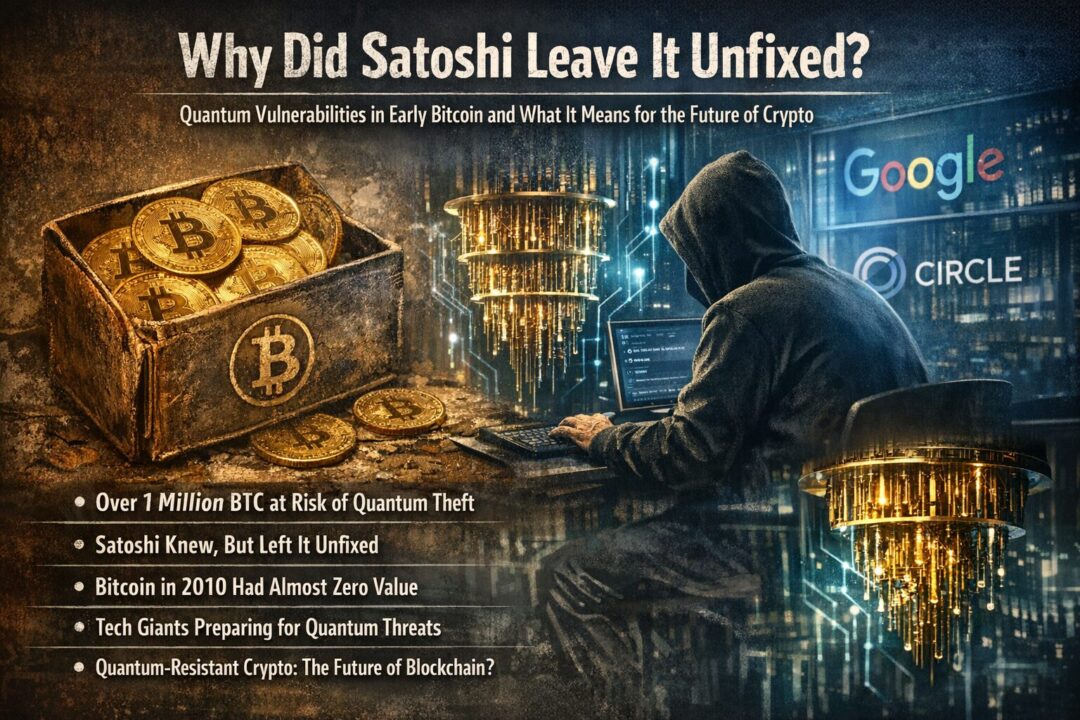
- Early Bitcoin wallets (estimated 1–2 million BTC, now worth ~$120B–$240B) may be vulnerable to future quantum attacks
- Satoshi Nakamoto was likely aware of the risk but chose not to fix it
- In 2010, Bitcoin had near-zero value, making security trade-offs rational at the time
- Today, upgrades are far more difficult due to Bitcoin’s massive scale and decentralization
- Companies like Google and Circle are actively preparing for quantum threats
- Quantum-resistant cryptography may reshape blockchain design, creating new opportunities
Introduction: A Forgotten Risk with Massive Implications
The mystery surrounding Bitcoin has always extended beyond its creator to the design decisions embedded in its early code. One of the most intriguing—and potentially dangerous—questions resurfacing in 2026 is this: why did Satoshi Nakamoto leave early Bitcoin vulnerable to quantum attacks?
According to Nic Carter, the answer is neither negligence nor oversight. Instead, it reflects a rational decision made in a completely different technological and economic context.
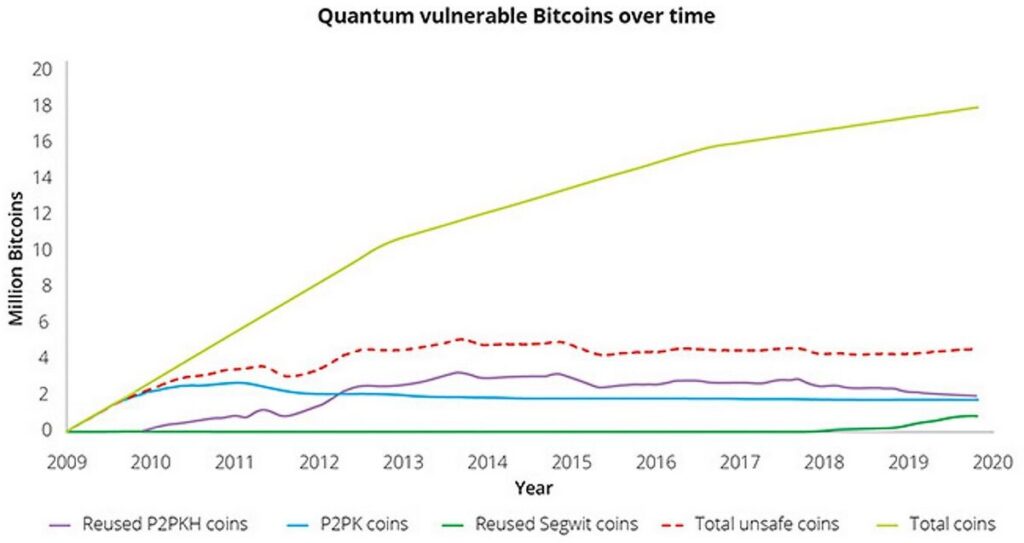
At stake today is not just a theoretical vulnerability but a potential exposure of 1 to 2 million BTC, which at current valuations represents $120 billion to $240 billion in dormant assets—many believed to belong to Satoshi himself.
The Nature of the Quantum Vulnerability
Bitcoin’s security relies on elliptic curve cryptography (ECC), which protects private keys derived from public keys. However, once a public key is revealed—such as when coins are spent—it becomes theoretically vulnerable to quantum attacks.
Quantum computers, using algorithms like Shor’s algorithm, could eventually derive private keys from exposed public keys, enabling attackers to steal funds.
Early Bitcoin addresses, especially those mined in the first years, often reused public keys or exposed them in ways that modern best practices avoid. This is why those coins—estimated at up to 2 million BTC—are considered at risk.
Why Satoshi Didn’t Fix It
Carter argues that Satoshi was aware of quantum risks but made a calculated decision:
1. Bitcoin Had No Value in 2010
At the time, Bitcoin traded at effectively $0. The idea that early coins could one day be worth hundreds of billions of dollars was unimaginable.
2. Upgrades Were Expected to Be Easy
Satoshi likely assumed that protocol upgrades would be straightforward. In a small, experimental network, patching vulnerabilities was trivial compared to today’s consensus-driven governance.
3. Future-Proofing Was Deferred
Rather than over-engineering for distant threats, Satoshi prioritized simplicity and functionality. The assumption was that quantum threats would be addressed when they became relevant.
4. The Scale Problem Was Unpredictable
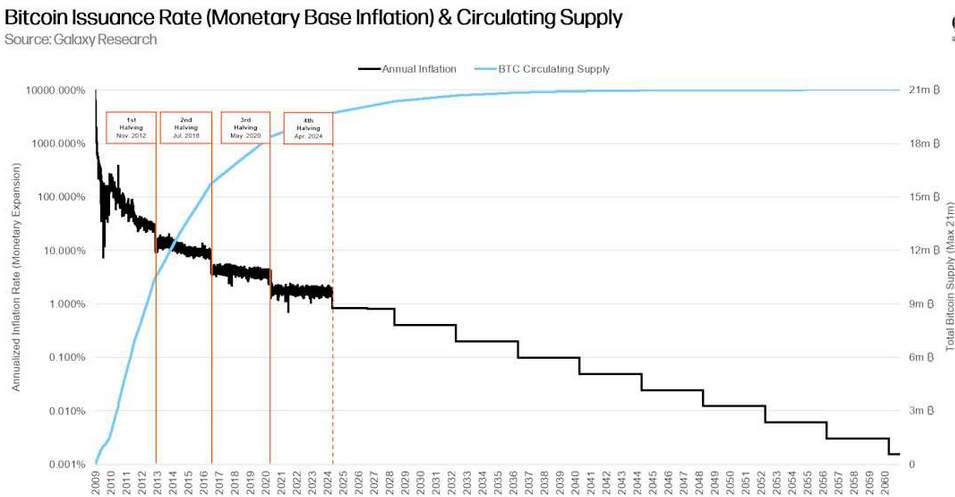
What Satoshi could not foresee was Bitcoin’s transformation into a global asset with a market capitalization exceeding trillions. Today, any protocol change requires widespread consensus, making upgrades slow and politically complex.
Modern Reality: A System Too Big to Easily Change
Fast forward to 2026, and Bitcoin is no longer an experiment—it is a foundational layer of global finance.
Upgrading Bitcoin to quantum-resistant cryptography would require:
- Network-wide consensus among miners, nodes, and developers
- Migration of funds to new address types
- Handling of lost or inactive coins (including Satoshi’s holdings)
- Potential legal and economic disputes over “recoverable” funds
This creates a paradox: the more successful Bitcoin becomes, the harder it is to evolve.
Rising Warnings from Big Tech and Crypto Firms
The quantum threat is no longer theoretical. Major institutions are actively preparing:
- Google has warned that quantum computing could break current cryptographic standards within the next decade
- Circle has released plans for quantum-resistant infrastructure
- Governments and standards bodies are already evaluating post-quantum cryptography
These developments signal a broader industry shift toward quantum resilience.
What Happens If Quantum Attacks Become Real?
If quantum computers reach sufficient capability, several scenarios could unfold:
1. Selective Attacks on Dormant Wallets
Attackers may target early wallets first, where public keys are already exposed.
2. Market Shock from Sudden BTC Movement
If large dormant holdings are suddenly moved, markets could react violently.
3. Emergency Protocol Upgrades
The Bitcoin community may be forced into rapid, contentious upgrades.
4. Redistribution of “Lost” Wealth
Coins long considered lost could re-enter circulation, altering supply dynamics.
Opportunities for Investors and Builders
While risks are significant, they also create new opportunities:
1. Quantum-Resistant Blockchains
New chains designed with post-quantum cryptography could gain traction.
2. Security Infrastructure Providers
Wallets, custody solutions, and key management systems that offer quantum safety will be in demand.
3. Migration Tools and Services
Services that help users transition assets to secure formats will become essential.
4. Arbitrage and Market Timing
Traders who anticipate quantum-driven volatility may find unique opportunities.
Strategic Insight: Bitcoin as an Adaptive System
Bitcoin’s history shows that it evolves under pressure. From SegWit to Taproot, upgrades have occurred when necessary—albeit slowly.
The quantum challenge may represent the next major evolutionary step.
However, unlike previous upgrades, this one involves existential risks and enormous economic stakes.
Conclusion: A Vulnerability, A Philosophy, and A Turning Point
Satoshi Nakamoto’s decision not to fix early quantum vulnerabilities was not a mistake—it was a reflection of Bitcoin’s original philosophy: build a simple, functional system and let it evolve over time.
Today, that decision has become a defining challenge.
As quantum computing advances, the crypto industry faces a critical question: can decentralized systems adapt quickly enough to survive?
For investors, builders, and regulators alike, the answer will shape the next era of blockchain technology.