Key Takeaways :
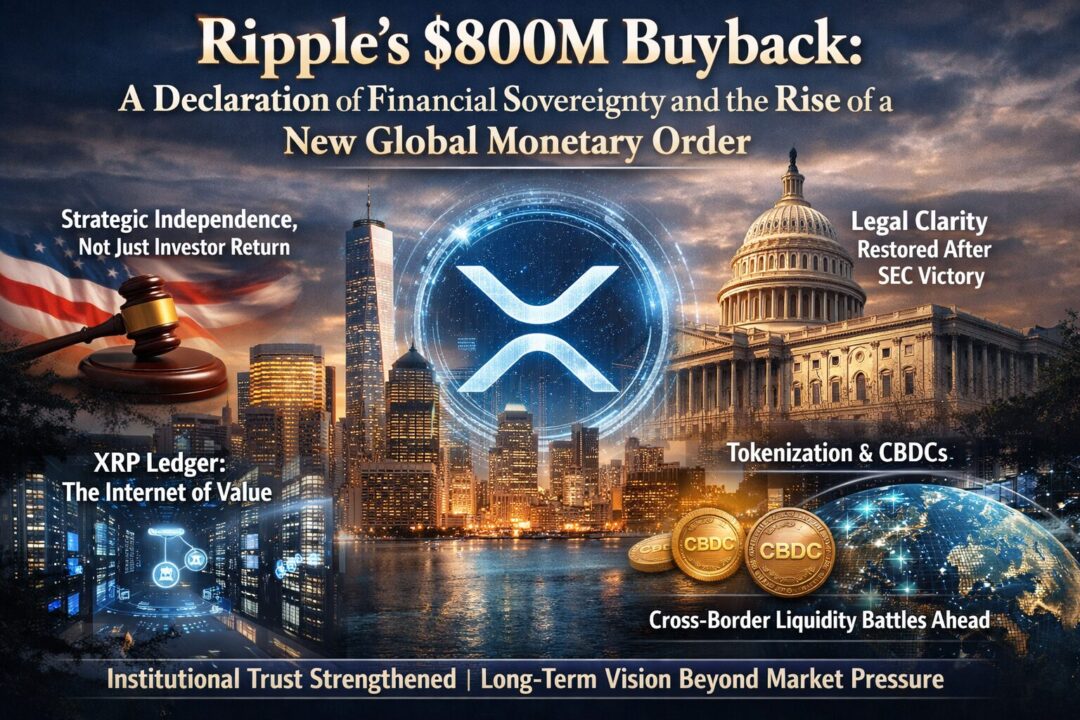
- Ripple’s ~$800 million share buyback signals strategic independence—not just investor return
- Legal clarity after the U.S. Securities and Exchange Commission battle strengthens institutional trust
- XRP Ledger is evolving into a foundational “Internet of Value” infrastructure
- Ripple’s private stance enables long-term strategy beyond quarterly market pressure
- Tokenization, CBDCs, and cross-border liquidity are the next battlegrounds
Introduction: Beyond a Buyback—A Strategic Declaration
Ripple’s decision to execute a massive share buyback—valued at approximately $800 million—has reverberated far beyond the cryptocurrency sector. While traditional financial narratives might interpret such a move as a shareholder reward mechanism, the deeper implication is far more profound: this is a deliberate rejection of dependency on public markets and a bold assertion of financial sovereignty.
In conventional startup trajectories, the ultimate milestone is an IPO. It represents validation, liquidity, and access to capital. Ripple, however, has chosen a radically different path. By buying back its own equity, the company is effectively reclaiming control—reducing external influence and insulating itself from volatile market sentiment.
This is not merely financial engineering. It is strategic positioning for a future where control over infrastructure—not just valuation—defines power.
Section 1: Financial Independence as a Competitive Weapon
Breaking Free from Market Expectations
Ripple’s buyback demonstrates that it has reached a level of financial maturity where it no longer requires external capital to sustain growth. This is a rare position, especially in the crypto industry, where many projects remain heavily reliant on venture capital or token issuance.
The implications are significant:
- No quarterly earnings pressure
- No forced alignment with short-term investor sentiment
- Full autonomy in strategic decision-making
This independence allows Ripple to act with speed and conviction—two critical advantages in a rapidly evolving financial landscape.
Capital as a Signal of Strength
An $800 million buyback is not just a financial maneuver—it is a statement of confidence. It signals that Ripple believes its intrinsic value far exceeds current external assessments.
Historically, such moves have been associated with mature, cash-generating giants. For a crypto-native company to deploy capital at this scale indicates a transition:
From speculative entity → to economic engine
Section 2: Legal Clarity—The Aftermath of the SEC Battle
From Uncertainty to Strategic Advantage
Ripple’s prolonged legal battle with the U.S. Securities and Exchange Commission was one of the most defining conflicts in crypto history.
While many projects collapsed under regulatory pressure, Ripple chose to fight—and ultimately secured partial legal clarity regarding XRP’s classification.
This outcome has had cascading effects:
- Institutional confidence has increased
- Banks and financial entities now have a clearer framework for engagement
- Regulatory risk—previously a major barrier—has significantly diminished
Legal Victory as a Brand Asset
In traditional markets, branding is built through marketing. In crypto, credibility is forged through survival.
Ripple’s ability to withstand years of legal scrutiny has transformed it into a symbol of resilience. The legal clarity surrounding XRP is now one of its strongest competitive advantages.
This is not just compliance—it is defensive moat creation.
Section 3: The XRP Ledger and the Internet of Value
From Payments Network to Global Infrastructure
At the core of Ripple’s strategy lies the XRP Ledger—a decentralized blockchain designed for fast, low-cost transactions.
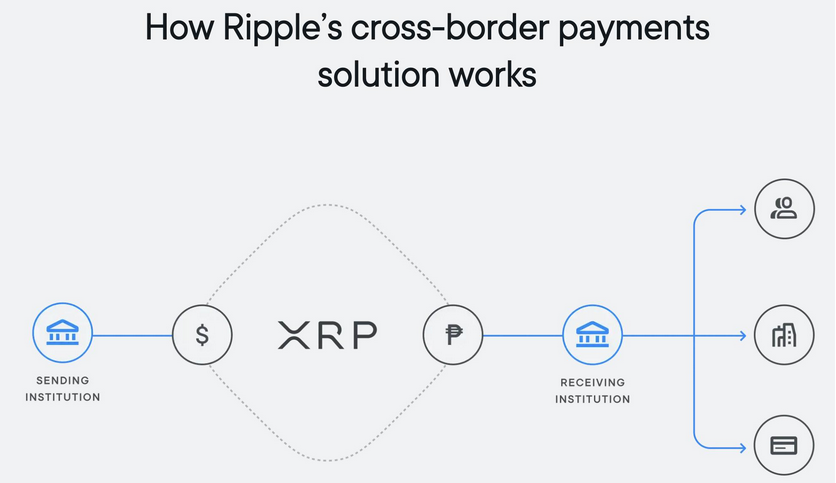
Unlike legacy systems such as SWIFT, which can take days to settle cross-border payments, XRP enables near-instant settlement—often within seconds.
This has profound implications:
- Liquidity is unlocked globally
- Idle capital trapped in nostro/vostro accounts is reduced
- Transaction costs are significantly lowered
The Internet of Value Vision
Ripple’s long-term vision is often described as the “Internet of Value”—a system where money moves as seamlessly as information.
This includes:
- Tokenization of real-world assets
- Integration with central bank digital currencies (CBDCs)
- Cross-chain interoperability
In this context, the XRP Ledger is not just a payment rail—it is a foundational layer for a new financial system.
Section 4: Why Staying Private Matters
Freedom Over Visibility
Choosing not to go public may seem counterintuitive, especially when valuations are high. However, public markets impose constraints:
- Short-term earnings expectations
- Regulatory disclosure burdens
- Shareholder activism
By remaining private, Ripple preserves:
- Strategic secrecy
- Long-term planning horizon
- Operational flexibility
A New Archetype for Tech Power
Ripple represents a new kind of financial power structure:
Not a bank.
Not a traditional tech company.
But a hybrid financial infrastructure entity.
This model is increasingly relevant in a world where blockchain blurs the lines between software and finance.
Section 5: Market Implications and Future Opportunities
Institutional Adoption Acceleration
With legal clarity and proven infrastructure, Ripple is well-positioned to capture institutional flows.
Key areas of growth include:
- Cross-border remittances
- Liquidity provisioning for banks
- Stablecoin and CBDC settlement layers
Tokenization and Yield Opportunities
For crypto investors seeking new revenue streams, Ripple’s ecosystem presents emerging opportunities:
- Tokenized assets (real estate, commodities)
- On-chain liquidity provision
- Infrastructure-layer investments
These are not speculative plays—they are utility-driven value creation mechanisms.
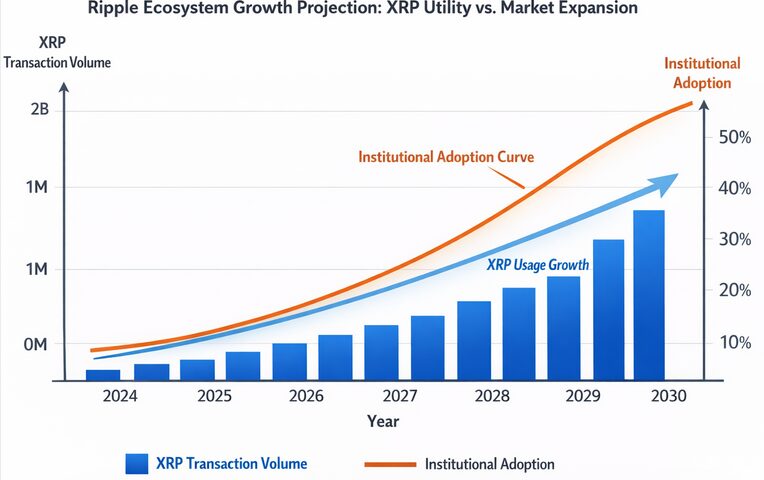
(Ripple Ecosystem Growth Projection: XRP Utility vs Market Expansion)
A forward-looking chart showing XRP transaction volume growth alongside institutional adoption curves.
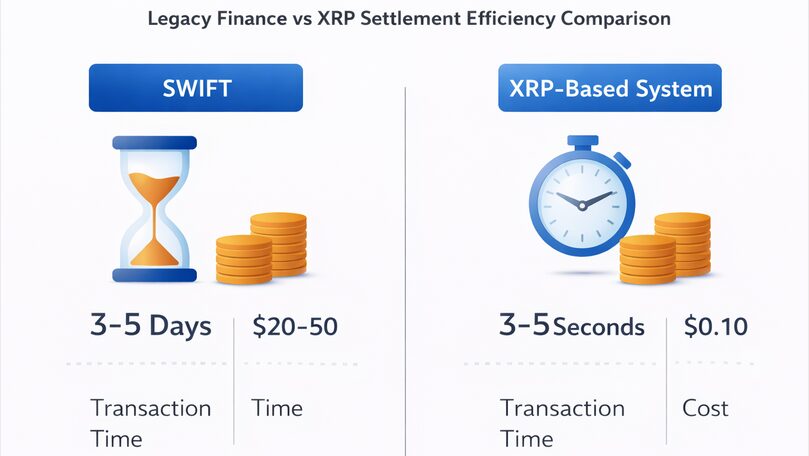
(Legacy Finance vs XRP Settlement Efficiency Comparison)
A comparative visualization of transaction time and cost between SWIFT and XRP-based systems.
Conclusion: A Redefinition of Power and Value
Ripple’s $800 million share buyback is not an isolated financial event—it is a milestone in the evolution of global finance.
It represents:
- The shift from dependency to autonomy
- The transformation of crypto firms into infrastructure giants
- The emergence of a new financial paradigm
By combining legal resilience, technological innovation, and financial independence, Ripple has positioned itself at the forefront of a structural transformation.
For investors, builders, and institutions alike, the message is clear:
The future of finance will not be built on legacy systems—it will be engineered by those who control the rails of value itself.