Key Takeaways :
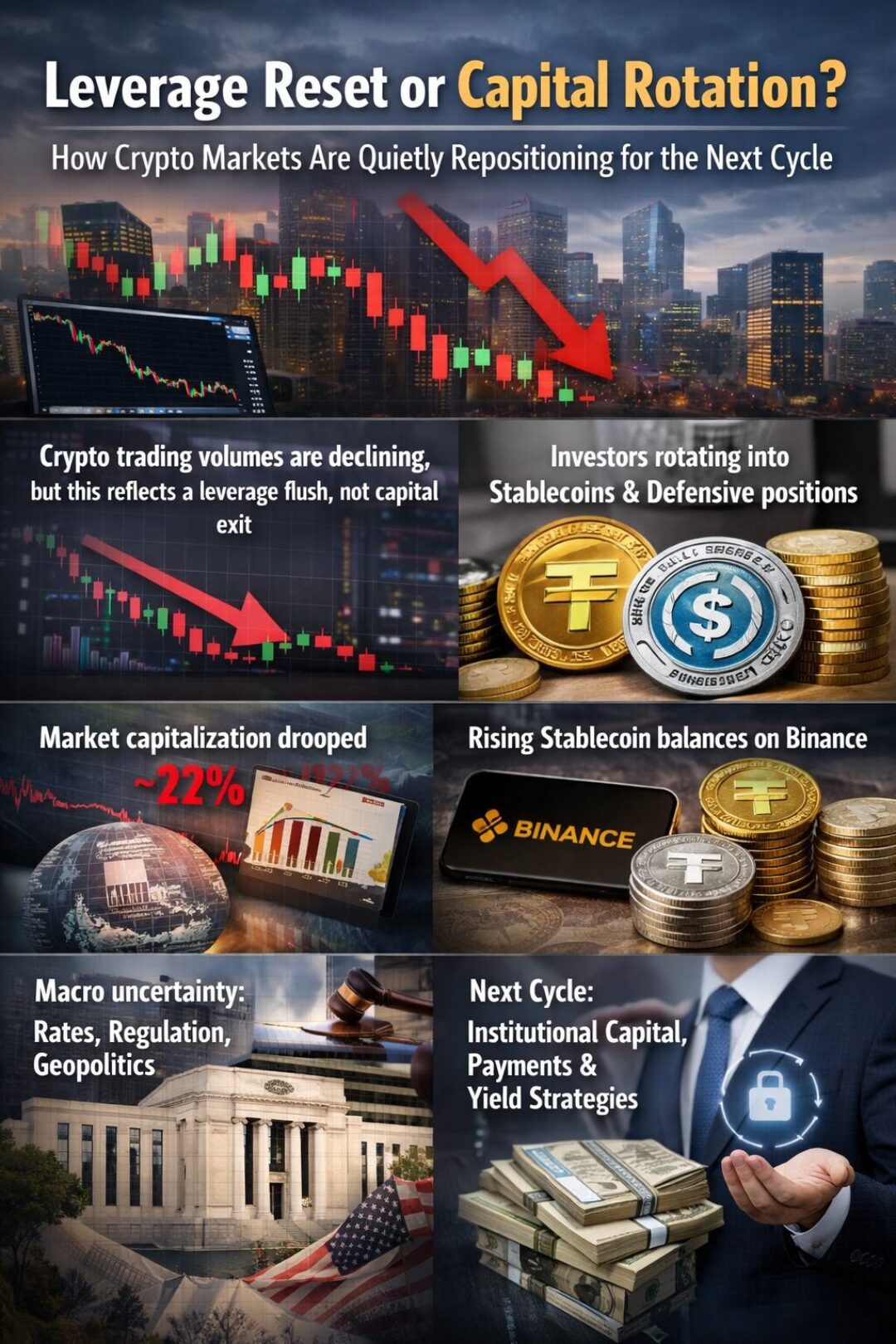
- Crypto trading volumes are declining, but this reflects a leverage flush, not capital exit
- Investors are rotating funds into stablecoins and defensive positions rather than leaving the market
- Market capitalization dropped ~22% in Q1 2026, signaling a cooling phase after excess speculation
- Rising stablecoin balances on exchanges like Binance indicate dry powder waiting to deploy
- Macro uncertainty (interest rates, regulation, geopolitics) is delaying risk-on behavior
- The next cycle may be driven by institutional capital, payment use cases, and yield strategies
1. A Market Misread: Declining Volume Does Not Mean Declining Interest
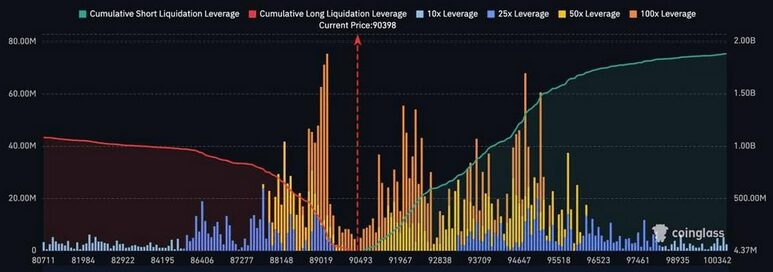
At first glance, the recent decline in cryptocurrency trading volumes appears alarming. Lower volumes are often interpreted as waning interest, reduced participation, and a potential exit of capital from the market. However, a deeper analysis—supported by insights from TokenInsight—suggests that this interpretation is fundamentally flawed.
Rather than signaling a collapse in demand, the current environment reflects what can best be described as a “leverage reset”. During the previous bull phase, excessive leverage—especially in derivatives markets—amplified both gains and risks. As macroeconomic uncertainty increased and volatility spiked, these leveraged positions were systematically unwound.
This process, often referred to as deleveraging, naturally leads to a drop in trading activity. When speculative positions are liquidated or voluntarily closed, volume declines—not because participants have disappeared, but because the market is transitioning from speculation to recalibration.
In this context, reduced volume should not be viewed as weakness. Instead, it is a necessary cleansing mechanism that removes unsustainable risk and prepares the market for more sustainable growth.
2. Capital Rotation: From Risk Assets to Stablecoin Liquidity
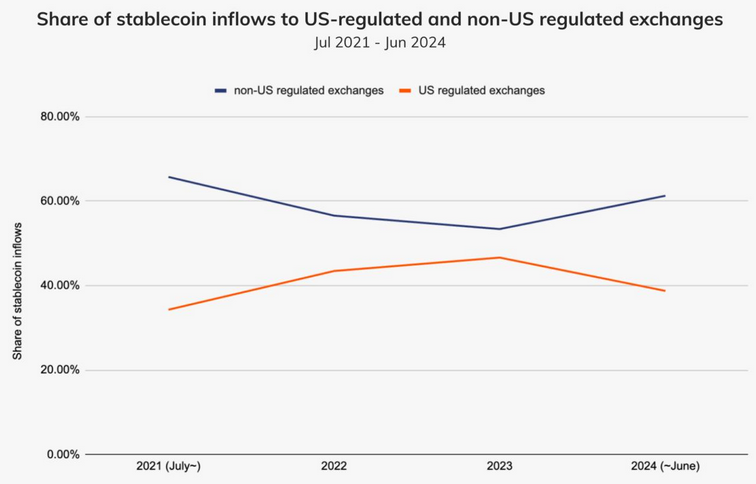
One of the most important dynamics currently unfolding is not capital exiting crypto—but capital changing form.
Investors are increasingly reallocating funds into stablecoins such as USDT and USDC. These assets, pegged to the U.S. dollar, provide a safe haven within the crypto ecosystem, allowing investors to maintain exposure to the market without being subjected to price volatility.
Data from Binance shows a notable increase in stablecoin balances, even as spot and derivatives trading volumes decline. This divergence is critical.
It indicates that:
- Capital is not leaving the ecosystem
- Investors are waiting for better entry points
- Liquidity is being strategically preserved
This behavior mirrors traditional financial markets, where investors rotate into cash or cash-equivalents during uncertain periods. In crypto, stablecoins serve this exact function—effectively acting as programmable cash with instant deployability.
3. The 22% Market Cap Drop: A Healthy Correction, Not a Collapse
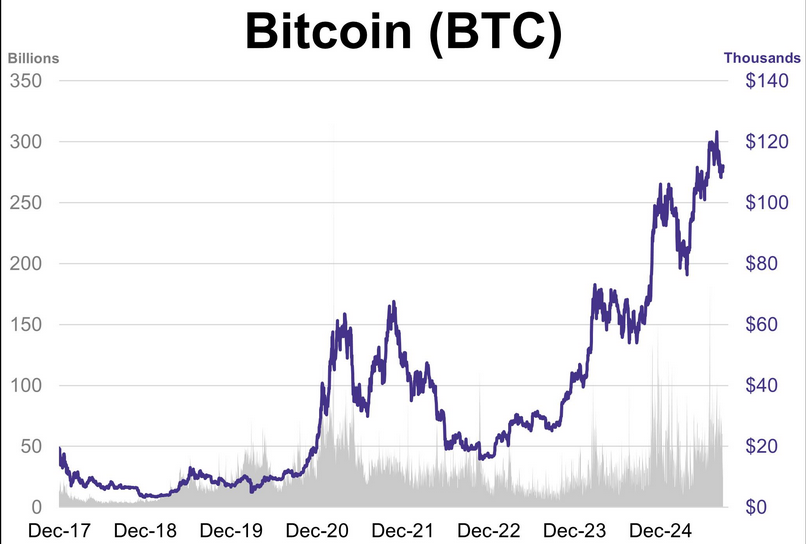
In Q1 2026, the total cryptocurrency market capitalization declined by approximately 22%. While this figure may seem significant, it is essential to contextualize it within the broader history of crypto markets.
Corrections of this magnitude are not only common—they are structurally necessary.
During periods of rapid growth, asset prices often become detached from fundamental value. Corrections realign expectations, remove excess speculation, and create a more stable foundation for future growth.
Importantly, this decline has not been accompanied by a proportional collapse in infrastructure, development activity, or institutional interest. On the contrary, many indicators suggest that the underlying ecosystem remains robust.
From this perspective, the 22% decline is less a sign of weakness and more a recalibration phase—a reset that positions the market for its next expansion cycle.
4. Macro Forces: Why Investors Are Waiting
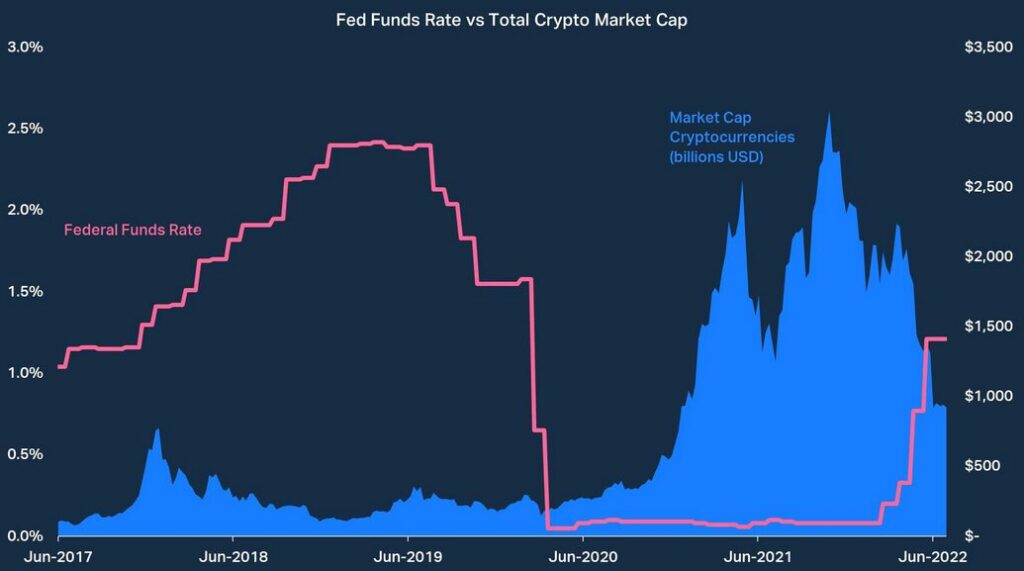
The hesitation among investors is not driven by a lack of interest in crypto, but by external macroeconomic variables that remain unresolved.
Three key factors are currently influencing market behavior:
Interest Rates
Central banks, particularly the Federal Reserve, continue to maintain relatively high interest rates. This increases the attractiveness of traditional yield-bearing assets, reducing the urgency to deploy capital into riskier crypto investments.
Regulatory Clarity
Ongoing regulatory developments across the United States, Europe, and Asia are creating uncertainty. Investors are waiting for clearer frameworks before committing significant capital.
Geopolitical Stability
Recent developments, such as easing tensions in the Middle East (including Iran-related negotiations), have reduced immediate risk, but not eliminated uncertainty. Markets remain sensitive to geopolitical shifts.
Together, these factors create a “wait-and-see” environment, where capital is preserved rather than aggressively deployed.
5. Stablecoins as Strategic Infrastructure, Not Just Parking Assets
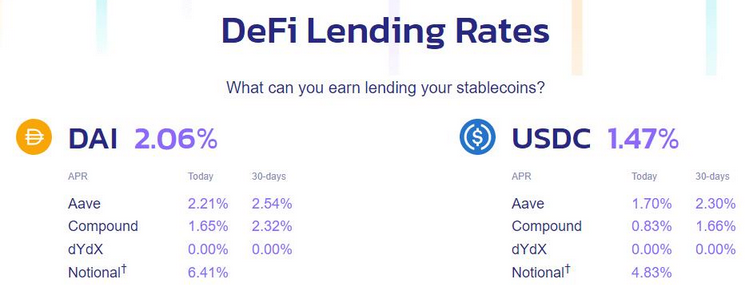
While stablecoins are often viewed as passive assets, their role in the current market is far more strategic.
They are increasingly being used for:
- Cross-border payments with near-instant settlement
- Treasury management for crypto-native and traditional firms
- Yield generation through DeFi lending and liquidity provision
- Liquidity routing across exchanges and trading venues
This evolution transforms stablecoins from simple “parking tools” into core financial infrastructure.
For businesses and investors, this opens new opportunities:
- Earning yield on idle capital
- Reducing FX and settlement costs
- Enabling programmable financial flows
In many ways, stablecoins represent the bridge between traditional finance and decentralized systems, aligning closely with emerging hybrid financial models.
6. What Comes Next: Positioning for the Next Crypto Cycle
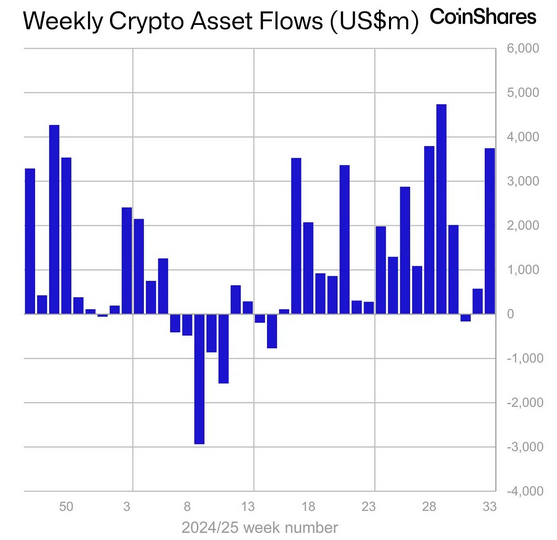
If the current phase is indeed a recalibration, the natural question becomes: what triggers the next cycle?
Several catalysts are likely:
- Rate cuts or monetary easing
- Clear regulatory frameworks
- Institutional inflows (ETFs, custody solutions)
- Expansion of real-world use cases (payments, tokenization)
When these conditions align, the capital currently sitting in stablecoins can rapidly re-enter the market, creating explosive upward momentum.
This is particularly relevant for investors seeking:
- Early-stage altcoin opportunities
- Yield-generating strategies
- Infrastructure plays (payments, custody, compliance)
The current environment, therefore, is not one of decline—but of strategic positioning.Insert Figure 1 Here
Leverage Flush vs Stablecoin Accumulation (Conceptual Diagram)
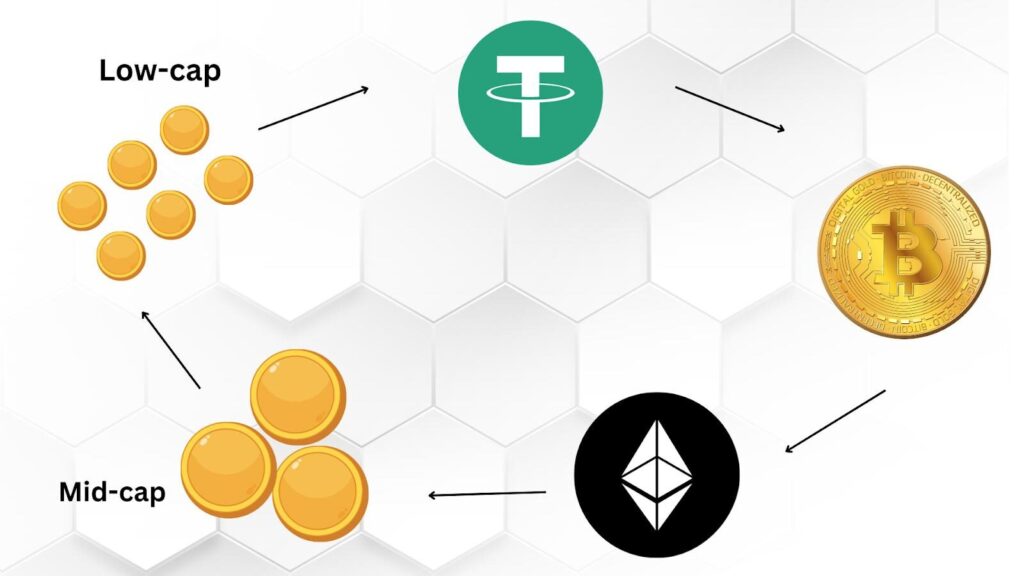
Capital Rotation Flow: Risk Assets → Stablecoins → Re-entry
Conclusion: Not a Retreat, but a Strategic Pause
The decline in crypto trading volumes is not a sign of fading interest or structural weakness. Instead, it reflects a maturing market undergoing a necessary reset.
Leverage has been flushed. Excess speculation has been reduced. Capital has not exited—it has repositioned.
Stablecoins now act as both a defensive shield and an offensive weapon, enabling investors to wait, adapt, and strike when conditions improve.
For those seeking the next wave of opportunity, the message is clear:
The market is not quiet because it is dying.
It is quiet because it is preparing.