Key Points :
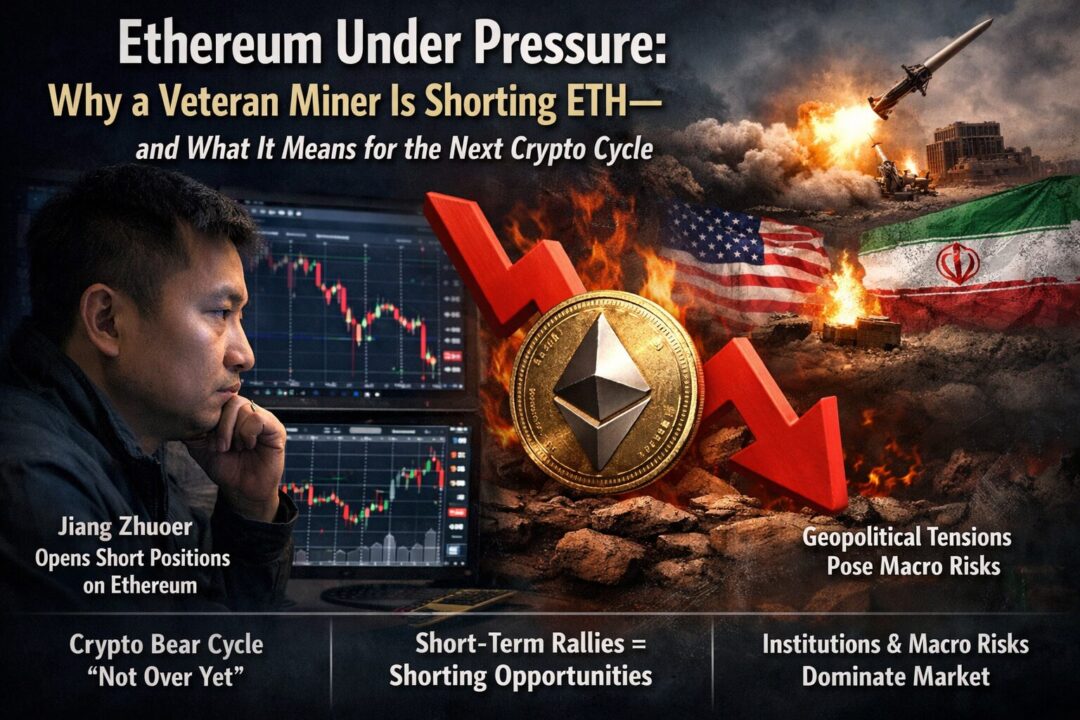
- A prominent former Chinese mining figure, Jiang Zhuoer, has opened short positions on Ethereum
- He believes the current crypto bear cycle is not over, despite recent price rebounds
- Geopolitical instability (e.g., tensions involving the U.S. and Iran) is seen as a core macro driver
- Short-term rallies are viewed as opportunities to increase short exposure, not trend reversals
- Broader market dynamics suggest institutional flows and macro risk still dominate crypto direction
1. A Contrarian Bet: Why ETH Is Being Shorted
The cryptocurrency market has always been shaped by strong personalities and bold calls, but few carry as much weight as those from early mining pioneers. One such figure, Jiang Zhuoer, has recently made headlines by revealing that he has taken a short position on Ethereum (ETH), signaling a bearish outlook for the market in the near to medium term.
Ethereum, currently trading around approximately $3,500–$3,800 (converted to USD equivalent), has shown resilience amid broader volatility. However, Jiang’s move suggests that this resilience may be misleading. According to him, the current upward price movements are not indicative of a sustainable recovery but rather temporary rebounds driven by short-term sentiment and event-based catalysts.
Shorting ETH in this context is not merely a speculative bet—it reflects a structural view of the market. Jiang’s thesis is rooted in the belief that the broader crypto ecosystem remains in a prolonged correction phase following the exuberance of previous cycles.
2. The Bear Market That Refuses to End
One of the most striking aspects of Jiang’s argument is his insistence that the bear market is still ongoing. This perspective contrasts sharply with the optimism seen among retail investors and even some institutional players who interpret recent price increases as the beginning of a new bull cycle.
From a historical standpoint, crypto bear markets are rarely linear. They often include multiple relief rallies—sharp upward movements that give the illusion of recovery before the market resumes its downward trend. Jiang categorizes the current market behavior within this pattern.
His strategy is clear: treat every rally as an opportunity to increase short exposure. This approach aligns with traditional macro trading strategies, where traders fade rallies in a downtrend rather than chasing upward momentum.
3. Geopolitics as a Hidden Driver of Crypto Markets
Beyond technical and market-cycle analysis, Jiang highlights a factor that is often underestimated in crypto discussions: geopolitics.
Recent developments, including reports of a ceasefire agreement between the United States and Iran, have temporarily boosted risk appetite across global markets. This has translated into upward movement in crypto assets, including Ethereum.
However, Jiang warns that such developments are fragile. The possibility of renewed conflict or escalating tensions could quickly reverse market sentiment. In this context, crypto is behaving increasingly like a macro asset, sensitive to global political and economic shifts.
This reflects a broader trend: as institutional participation in crypto grows, the market becomes more correlated with traditional financial systems and global events.
4. Institutional Flows and the New Market Structure
The cryptocurrency market of 2026 is fundamentally different from that of earlier cycles. Institutional capital now plays a significant role, influencing price movements in ways that were previously uncommon.
Large funds, ETFs, and corporate treasuries are increasingly involved in crypto markets. This has introduced new dynamics:
- Risk-on / risk-off behavior tied to macroeconomic conditions
- Increased sensitivity to interest rates, inflation, and geopolitical events
- More sophisticated trading strategies, including hedging and derivatives
In this environment, Ethereum is no longer just a technological platform—it is also a financial instrument subject to global capital flows.
Jiang’s bearish stance can be interpreted as a recognition of this shift. If macro conditions remain uncertain, capital may rotate away from risk assets, including crypto.
5. Ethereum’s Fundamental Strength vs. Market Reality
It is important to note that Jiang’s short position does not necessarily imply that Ethereum lacks fundamental value.
Ethereum remains the backbone of decentralized finance (DeFi), NFTs, and a wide range of blockchain applications. Its ecosystem continues to grow, with ongoing developments in scalability, staking, and Layer 2 solutions.
However, markets do not always move in line with fundamentals—especially in the short to medium term.
There is a growing divergence between:
- Long-term technological potential, and
- Short-term market pricing influenced by macro factors
This divergence creates opportunities for traders but also increases risk for investors who conflate innovation with immediate price appreciation.
6. Strategic Implications for Investors and Builders
For readers interested in new crypto assets, revenue opportunities, and practical blockchain applications, Jiang’s perspective offers several important lessons.
1. Separate Narrative from Price Action
A strong narrative—such as Ethereum’s dominance in DeFi—does not guarantee upward price movement. Market cycles and macro conditions can override fundamentals.
2. Understand Macro Sensitivity
Crypto is no longer isolated. Interest rates, geopolitical tensions, and global liquidity now play a critical role in determining price direction.
3. Look Beyond ETH
If Ethereum faces short-term pressure, alternative ecosystems may present opportunities. Emerging chains, specialized protocols, and niche applications could outperform in certain conditions.
4. Consider Yield and Utility
In a bearish or sideways market, yield-generating strategies and real-world use cases become more important than speculative price gains.
7. ETH Price Trend vs. Macro Events
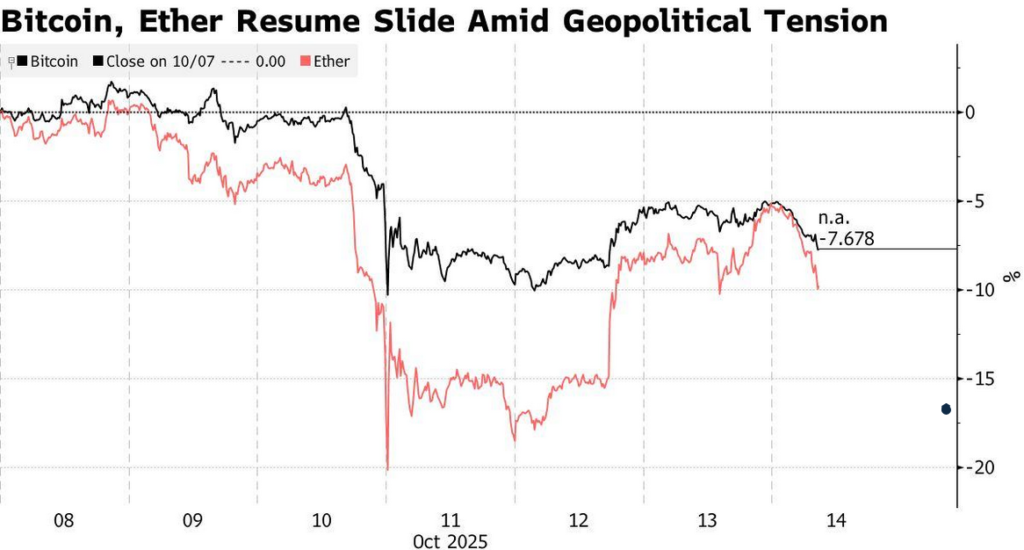
Ethereum price movements increasingly correlate with macroeconomic and geopolitical events.
8. The Bigger Picture: A Maturing Asset Class
The current situation reflects a broader transformation of the cryptocurrency market.
In earlier years, crypto was largely driven by internal dynamics—technological innovation, community growth, and speculative cycles. Today, it is deeply integrated into the global financial system.
This integration brings both opportunities and challenges:
- Greater liquidity and institutional participation
- Increased legitimacy and adoption
- Higher exposure to global risks and systemic shocks
Jiang’s bearish stance should be viewed within this context. It is not merely a call on Ethereum—it is a statement about the evolving nature of crypto as an asset class.
Conclusion: Navigating Uncertainty in the Next Phase of Crypto
The decision by Jiang Zhuoer to short Ethereum highlights a critical reality: the crypto market is entering a more complex and mature phase.
Short-term optimism, driven by events such as geopolitical de-escalation, may provide temporary relief. However, underlying uncertainties remain, particularly in the macro environment.
For investors and builders alike, the key takeaway is not to blindly follow bullish or bearish narratives but to develop a nuanced understanding of the market.
Ethereum’s long-term potential remains strong, but its short-term trajectory is far from certain.
In this environment, success will depend on:
- Strategic positioning
- Risk management
- A clear distinction between technological value and market timing