Key Takeaways :
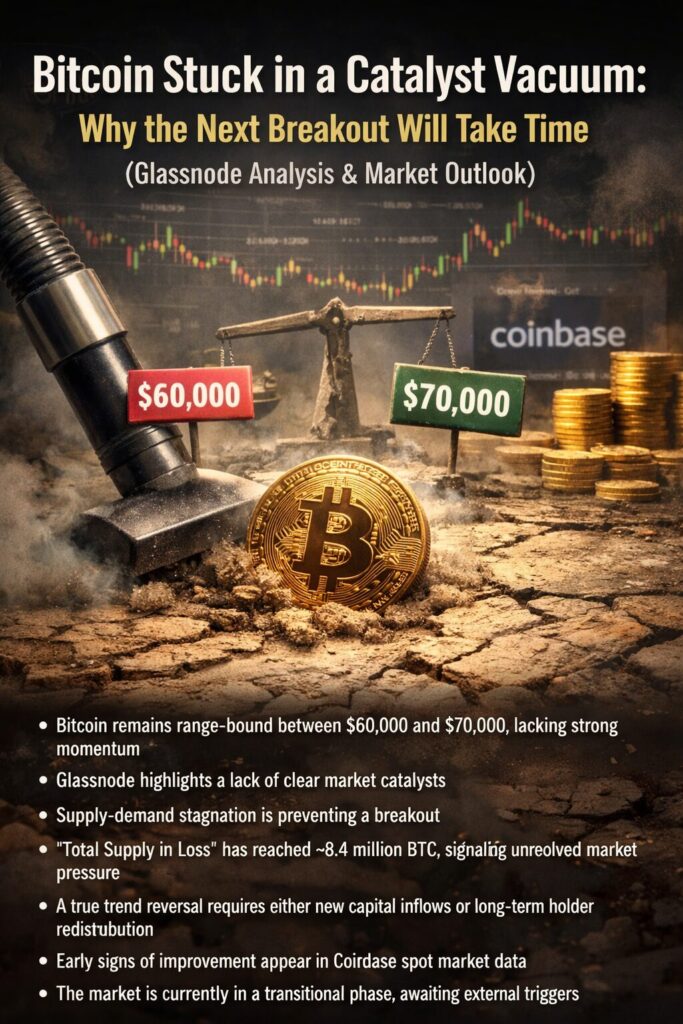
- Bitcoin is currently stuck in a $60,000–$70,000 range due to a lack of strong catalysts
- On-chain data from Glassnode indicates weak supply-demand momentum
- Over 8.4 million BTC are held at a loss, limiting upward pressure
- Realized losses must decline significantly to confirm a market bottom
- Early signs of demand recovery are emerging from Coinbase spot market activity
- Institutional flows, macro triggers, and new narratives will likely determine the next major move
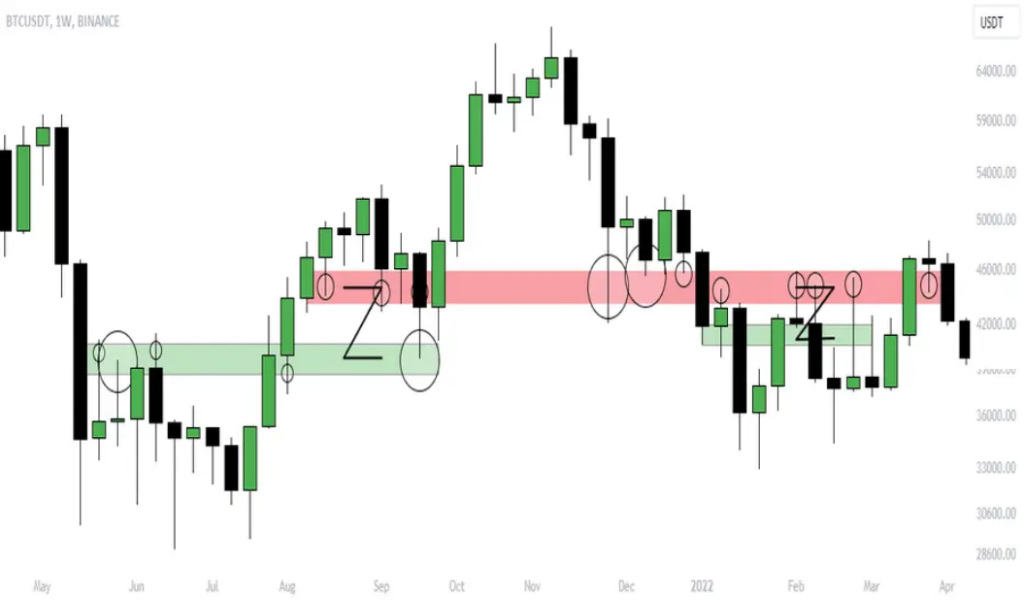
Bitcoin Price Range Visualization ($60K–$70K Consolidation)
A Market Without Momentum: Understanding Bitcoin’s Current Range
Bitcoin has entered what can best be described as a transitional equilibrium phase—a period where neither bulls nor bears hold decisive control. According to the latest weekly report by Glassnode, the market is experiencing a notable absence of strong catalysts, resulting in muted price action and limited directional conviction.
At present, Bitcoin is oscillating within a relatively tight band between $60,000 and $70,000. While this range reflects stability compared to previous cycles, it also signals a deeper structural issue: a lack of fresh capital inflow and insufficient incentive for large-scale repositioning.
Historically, Bitcoin breakouts—both upward and downward—have been driven by identifiable catalysts: macroeconomic shocks, regulatory breakthroughs, institutional adoption waves, or technological innovation. In contrast, the current environment lacks such triggers, leaving the market in a holding pattern.
This stagnation is not merely technical—it reflects a broader psychological equilibrium. Market participants are neither fearful enough to capitulate nor confident enough to aggressively accumulate. As a result, liquidity remains shallow, and volatility is suppressed.
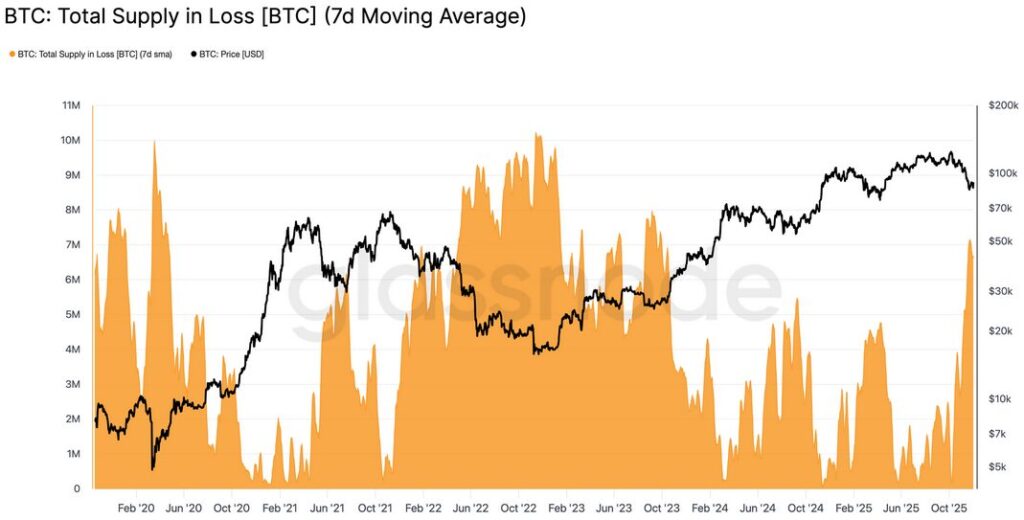
Supply in Loss Visualization (8.4M BTC)
The Weight of Unrealized Losses: A Hidden Barrier to Growth
One of the most critical indicators highlighted by Glassnode is “Total Supply in Loss.” This metric measures the amount of Bitcoin currently held at a price higher than the market value—effectively, coins sitting in unrealized loss positions.
Currently, this figure stands at approximately 8.4 million BTC, representing a significant portion of circulating supply. This creates a structural overhang in the market:
- Holders at a loss are less likely to sell at current prices
- But they are also likely to sell once breakeven is reached, creating resistance
- This suppresses momentum and slows upward price expansion
In practical terms, this means that even if Bitcoin begins to rise, it may encounter selling pressure at multiple price levels as previously underwater holders seek to exit positions.
Glassnode emphasizes that for a sustainable bottom to form, realized losses must decline—specifically, daily realized losses should fall below approximately $25 million. This would indicate that weak hands have been flushed out and that the market is transitioning toward stronger, conviction-driven ownership.
Demand Signals: A Subtle Shift in Coinbase Activity
Despite the overall lack of strong catalysts, there are early signs of demand recovery. Notably, the 30-day moving average of spot trading delta on Coinbase has recently turned slightly positive.
This may seem minor, but it carries important implications:
- Coinbase is widely regarded as a proxy for institutional and U.S.-based investor activity
- A positive delta suggests that buying pressure is beginning to exceed selling pressure
- This could mark the early stages of capital re-entry into the market
However, this signal alone is not sufficient to drive a breakout. It must be accompanied by broader liquidity inflows, macro alignment, and sustained investor confidence.
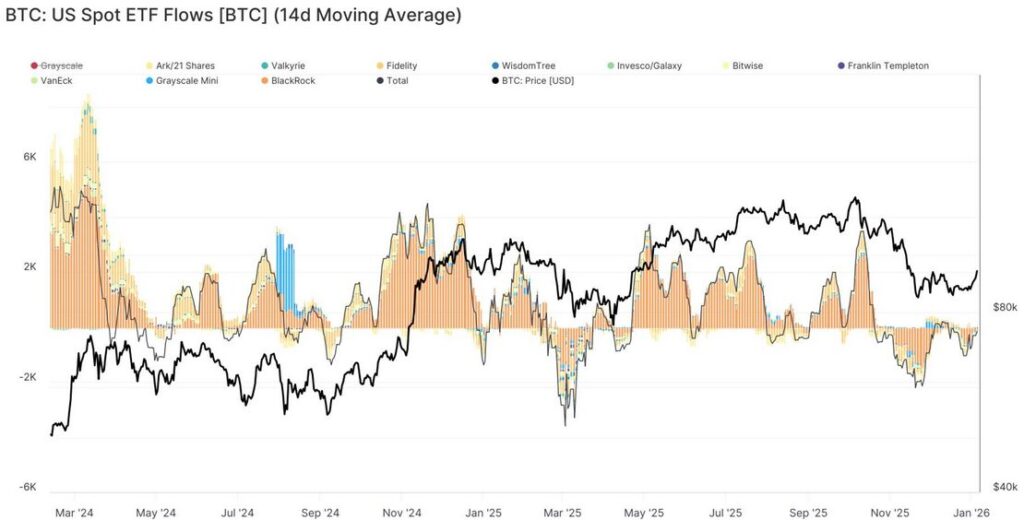
Institutional Flow and Market Drivers
Where Will the Catalyst Come From? Three Possible Scenarios
The central question facing the market is simple: What will trigger the next breakout?
Based on current conditions, three primary scenarios emerge:
1. Capitulation and Reset (Bearish-to-Bullish Transition)
A sharp price decline could force remaining weak holders to exit, accelerating redistribution. While painful, this process often sets the stage for stronger rallies by clearing excess supply.
2. Slow Accumulation and Structural Rotation
A prolonged sideways period could allow long-term investors and institutions to gradually accumulate Bitcoin. This scenario aligns with historical “accumulation phases” seen in previous cycles.
3. External Catalyst (Macro or Institutional Shock)
The most powerful trigger would likely come from outside the crypto ecosystem, such as:
- Expansion of Bitcoin ETF adoption
- Central bank policy shifts (rate cuts, liquidity injections)
- Sovereign or corporate Bitcoin treasury adoption
- Regulatory clarity in major markets
Beyond Bitcoin: Emerging Trends Investors Should Not Ignore
While Bitcoin remains the anchor of the crypto market, the current stagnation has led many investors to explore alternative opportunities.
Key trends include:
- Layer 1 competition (e.g., high-throughput chains competing with Ethereum)
- Real-world asset (RWA) tokenization, bridging traditional finance and blockchain
- Stablecoin infrastructure expansion, particularly in cross-border payments
- Decentralized identity and compliance layers, critical for regulated markets
These sectors may offer higher short-term growth potential compared to Bitcoin’s current range-bound behavior.
Strategic Implications: What Smart Investors and Builders Should Do
Given the current environment, a strategic approach is essential:
For Investors
- Focus on accumulation during low-volatility periods
- Monitor on-chain metrics such as supply in loss and realized losses
- Diversify into emerging sectors with strong narratives
For Builders
- Use this period to develop infrastructure and products
- Align with regulatory trends and compliance frameworks
- Prepare for the next cycle by building user acquisition channels
This phase is less about rapid gains and more about positioning for the next expansion cycle.
Conclusion: A Market Waiting for Conviction
Bitcoin’s current state is not one of weakness—but of indecision. The absence of clear catalysts has created a market that is stable yet directionless, with underlying structural tensions.
The data from Glassnode makes it clear: a breakout is not impossible—but it will require either internal market reset or external shock.
For those paying attention, this is not a period of inactivity—it is a period of preparation.
The next major move in Bitcoin will not come quietly. And when it arrives, it will likely redefine the market landscape once again.