
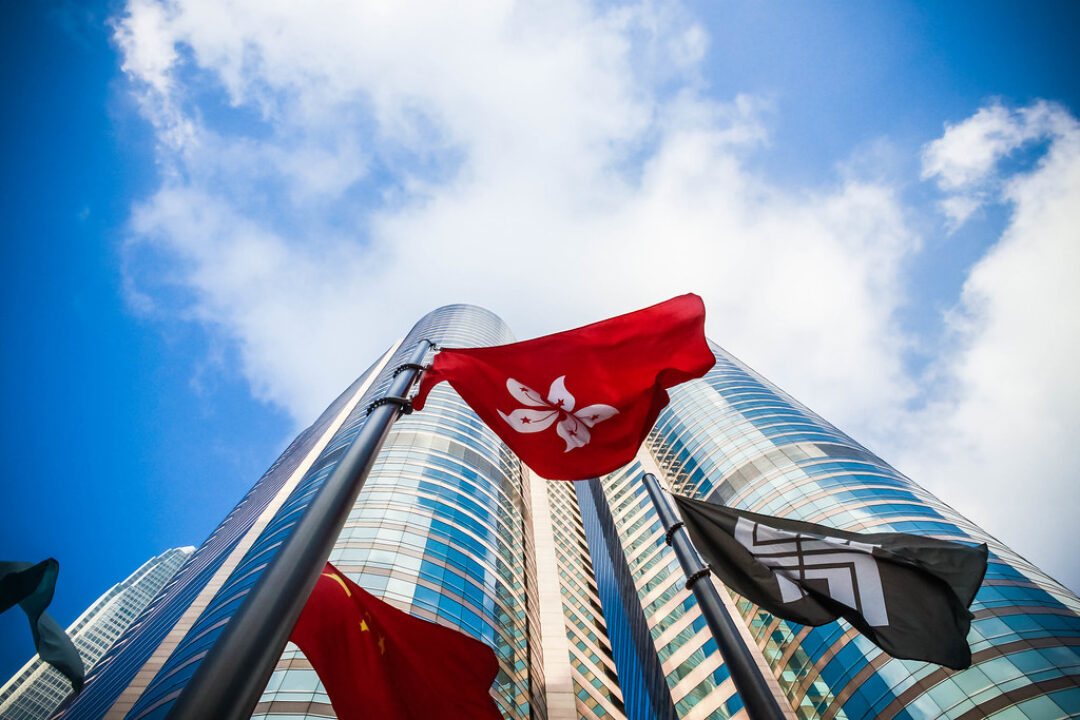
Hong Kong is working to restore investor confidence after Beijing’s crackdown on overseas investment, highlighting record initial public offering (IPO) fundraising, digital asset growth, and the presence of over 11,000 foreign firms.
In a Bloomberg inclusive, Hong Kong Financial Secretary Paul Chan highlights that the city is positioning itself as Asia’s gateway for digital finance despite mounting geopolitical pressures.
Historical HK IPO Statistics
Hong Kong has long been a global hub for initial public offerings (IPOs), competing with New York and London for listings.
In recent years, the city has seen IPO fundraising surpass HK$280 billion, placing it ahead of both the New York Stock Exchange and NASDAQ on several metrics.
This is a remarkable achievement given the challenges posed by the 2020 National Security Law, which initially raised concerns among Western investors about rule-of-law protections.
The strength of Hong Kong’s IPO market underscores its resilience.
Despite political turbulence, the city continues to attract international capital, with foreign chambers of commerce reporting positive business outlooks at multi-year highs.
These statistics form the backbone of Hong Kong’s confidence campaign, demonstrating that the city remains a competitive financial center even under Beijing’s tightening grip.
The Beijing Suppression
Beijing’s crackdown on overseas investment has unsettled global markets.
The Chinese government has imposed stricter controls on outbound capital flows, limiting the ability of domestic firms to invest abroad.
This policy is part of a broader effort to safeguard China’s financial stability and prevent capital flight, but it has had ripple effects across Asia.
For Hong Kong, the crackdown poses a reputational challenge. As China’s financial gateway, the city has historically thrived on its openness and international connectivity.
Restrictions on overseas investment risk undermining this identity, raising questions about whether Hong Kong can maintain its role as a freewheeling hub for global finance.
Neighboring Asian economies, such as Singapore, have sought to capitalize on these uncertainties by positioning themselves as alternative destinations for international capital.
Hong Kong’s Take on Digital Assets
In contrast to mainland China’s blanket ban on cryptocurrency trading and mining, Hong Kong has embraced digital assets as a differentiator.
The city has rolled out regulatory frameworks for stablecoin issuers, tokenized bonds, and digital asset custody, providing clear legal pathways for institutional participation.
By the end of 2025, Hong Kong banks held over HK$14 billion in digital assets, representing a 180% year-over-year increase.
The issuance of the world’s largest digital green bond, worth HK$10 billion in multi-currency denomination, further highlights Hong Kong’s ambition to lead in digital finance.
These initiatives signal that Hong Kong is not only surviving Beijing’s crackdown but actively carving out a niche in the digital asset space.
Financial Secretary Paul Chan has emphasized that digital assets are central to Hong Kong’s strategy for maintaining competitiveness. By offering institutional-grade compliance frameworks, the city aims to attract global investors who seek clarity and security in an otherwise uncertain regulatory environment.
What to Look Out for in Hong Kong’s Digital Asset Space
Looking ahead, Hong Kong’s digital asset ecosystem will continue to evolve. Key areas to watch include:
- Stablecoin regulation: Hong Kong’s licensing framework for stablecoin issuers could set a precedent for other jurisdictions, balancing innovation with investor protection.
- Institutional adoption: The rapid growth in bank-held digital assets suggests that institutional players are increasingly comfortable with Hong Kong’s regulatory environment.
- Tokenized financial instruments: The success of tokenized bonds and green bonds may pave the way for broader adoption of blockchain-based securities.
- Regional competition: Singapore and other Asian financial centers will continue to challenge Hong Kong’s dominance, particularly if geopolitical tensions persist.
Ultimately, Hong Kong’s future in digital finance will depend on its ability to maintain openness while navigating Beijing’s restrictions. The city’s embrace of digital assets offers a pathway to resilience, but the balance between autonomy and alignment with mainland China remains delicate.




