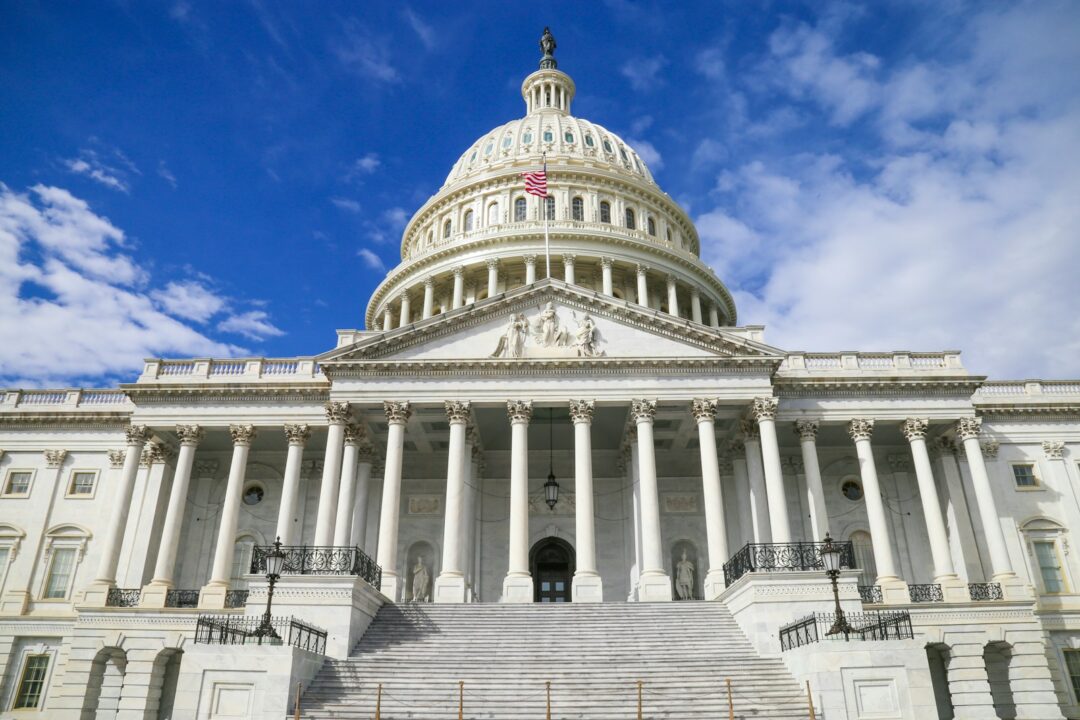
The U.S. crypto market structure bill known as the CLARITY Act has taken a major step forward after winning bipartisan approval in the Senate Banking Committee, giving the digital asset industry one of its most important legislative victories of 2026.
The committee advanced the bill in a 15-9 vote on May 14, 2026, with all Republicans and two Democrats supporting the measure. The vote followed months of negotiations over stablecoin rewards, market oversight, investor protection, decentralized finance, and ethics rules involving political figures and crypto-related business interests. Reuters reported that Senators Ruben Gallego and Angela Alsobrooks joined Republicans in supporting the measure, though both indicated that further negotiations may still affect their final position.
For the crypto industry, the vote is significant. The CLARITY Act would create a clearer federal framework for digital assets and place much of crypto spot-market oversight under the Commodity Futures Trading Commission, a long-standing goal of many crypto firms. But the bill is not yet law. It still faces a difficult path through the full Senate, where the 60-vote threshold may become the decisive obstacle.
Why the CLARITY Act Matters
The CLARITY Act is designed to solve one of the biggest problems in U.S. crypto regulation: uncertainty.
For years, crypto companies have faced unclear rules over whether digital assets should be treated as securities, commodities, payment instruments, or something else. That uncertainty has affected exchanges, brokers, custodians, stablecoin issuers, DeFi platforms, software developers, and investors.
The Senate Banking Committee’s market structure bill aims to establish clearer protections for digital asset market participants while defining the regulatory roles of the SEC and CFTC. The committee’s section-by-section summary describes the bill as a framework to establish protections for market participants and create clearer rules for digital asset activity.
For users asking basic questions such as “how do I buy cryptocurrency,” “where do I buy bitcoins,” or “can I buy crypto with credit card?”, the CLARITY Act may sound technical. But it could directly influence the platforms those users rely on. Clearer rules may affect exchange registration, custody standards, trading disclosures, token listings, and customer protection.
The 15-9 Vote Was a Major Crypto Industry Win
The Senate Banking Committee vote was a breakthrough because the bill had previously faced delays and disputes.
After months of negotiation, the committee released updated text before the May 14 markup. Galaxy Digital’s analysis noted that the new text followed months of discussion and attempted to resolve issues that had blocked earlier movement, including stablecoin rewards and treatment of software developers.
The final committee vote showed that the bill has some bipartisan support, but not overwhelming bipartisan consensus. Two Democrats supported it, while several others opposed it or demanded additional changes.
That matters because a committee win is not the same as a Senate floor win. To pass the full Senate, the bill may need at least 60 votes to overcome procedural hurdles. Barron’s reported that support from at least seven Democrats may be needed to avoid a filibuster.
The crypto industry has won the first major test. The next test is harder.
The Bill May Need to Merge With Agriculture Committee Work
The CLARITY Act’s next stage may involve coordination with a similar market structure bill from the Senate Agriculture Committee.
This is important because crypto oversight is split across regulatory jurisdictions. The Senate Banking Committee focuses heavily on securities, banking, investor protection, stablecoins, and market structure. The Senate Agriculture Committee is central because the CFTC falls under its jurisdiction.
Earlier Senate Agriculture Committee work has focused on digital commodity intermediaries and CFTC authority over digital commodity markets. Legal commentary noted that the Agriculture Committee’s work would still need to be reconciled with the Senate Banking Committee’s companion legislation and with the House’s approach.
That means the CLARITY Act is not simply moving as one finished package. It may still require alignment among Senate committees, House lawmakers, regulators, and party leadership before final passage.
For investors, this means optimism is justified, but certainty is not.
Elizabeth Warren and Democratic Critics Push Back
Senator Elizabeth Warren and other Democratic critics have raised concerns about the bill’s investor-protection standards, banking provisions, DeFi treatment, and risks of illicit finance.
Their argument is that the bill may give the crypto industry too much flexibility without enough safeguards. Concerns include whether DeFi platforms receive overly broad protections, whether investor protections are strong enough, and whether the bill adequately addresses money laundering, sanctions evasion, fraud, and conflicts of interest.
Those objections did not stop the bill from advancing out of committee. But they remain important because the full Senate will require broader Democratic support.
The bill’s backers may need to negotiate further on consumer protection, illicit finance controls, DeFi definitions, and ethics guardrails before reaching the 60-vote threshold.
Ethics Rules Could Decide the Bill’s Fate
One of the most politically sensitive issues is ethics.
Several Democrats have demanded provisions that would prevent senior government officials or political figures from profiting from crypto-related ventures while shaping crypto policy. Barron’s reported that Democrats warned they may oppose the final bill unless it includes ethics provisions addressing concerns around President Trump and his family’s crypto involvement.
This issue could become decisive.
Crypto policy is no longer a purely technical debate about token classification. It is also a political debate about conflicts of interest, financial power, and public trust.
Cody Carbone of the Digital Chamber has argued that ethics negotiations may be crucial for securing enough Senate votes. That reflects the political reality: even lawmakers who support crypto market structure reform may hesitate if the bill becomes associated with personal financial benefit for political figures.
For the crypto industry, this creates a delicate challenge. The industry wants fast regulatory clarity, but rushing without resolving ethics concerns could weaken bipartisan support.
Stablecoin Rewards Were One of the Biggest Negotiation Points
Stablecoin rewards were another major obstacle.
Banks and crypto companies have been fighting over whether crypto platforms should be allowed to pay users rewards or yield on stablecoin balances. Banks argue that yield-bearing stablecoins could compete with deposits and weaken traditional lending. Crypto firms argue that overly broad restrictions would protect banks from competition and limit innovation.
The recent compromise reportedly allows rewards tied to platform usage, transactions, or activity, while prohibiting bank-like interest on idle stablecoin deposits. Barron’s described this as a key breakthrough that helped the bill move forward.
That compromise matters because stablecoins are central to crypto trading, payments, remittances, DeFi, and cross-border settlement.
If the CLARITY Act becomes law, its stablecoin reward language could shape how platforms such as Coinbase Incorporated, payment companies, and global exchanges design future products.

Why Banks Are Still Expected to Fight
The banking industry may not be finished opposing the bill.
Banks are concerned that crypto platforms could offer payment, settlement, custody, lending-adjacent, and stablecoin products without being regulated in the same way as banks. The American Bankers Association has urged lawmakers to apply a “same risk, same regulation” approach to digital assets.
This banking opposition matters because banks remain powerful in Washington.
Even if the crypto industry has gained momentum, banking groups may continue pushing for tighter restrictions on stablecoin rewards, custody, DeFi, and crypto-related banking activities.
For the CLARITY Act to pass, lawmakers may need to balance crypto innovation with banking-sector concerns.
The Legislative Calendar Is Tight
The timing is another problem.
The Senate has limited working days before scheduled breaks and the election calendar begins to dominate political attention. Barron’s reported that the bill must navigate the Senate and House process before the November midterms if it is to become law this year.
That creates pressure on lawmakers.
If the bill moves quickly, it may retain momentum from the committee vote. If negotiations drag on, political attention may shift elsewhere. Election-season politics may also make bipartisan compromise harder, especially if ethics provisions and Trump-related crypto concerns remain unresolved.
This is why the current window matters. The CLARITY Act has momentum now, but legislative momentum can fade quickly.
What This Means for Bitcoin and BTCUSDT Traders
For Bitcoin traders, the CLARITY Act is a regulatory catalyst.
BTC has already responded positively to progress on the bill, with crypto-linked stocks such as Coinbase and Robinhood also reacting to the committee vote. Barron’s reported that Coinbase shares initially rose after the bill advanced, though momentum later faded as investors considered the remaining legislative hurdles.
For BTCUSDT traders, the key issue is whether the bill becomes a durable bullish catalyst or a short-term “buy the rumor, sell the news” event.
If the bill continues advancing, it could support institutional inflows, strengthen exchange confidence, and improve the regulatory narrative. If it stalls at the 60-vote threshold, Bitcoin may give back some policy-driven gains.
This is why traders should not rely only on headlines. They should watch price levels, derivatives positioning, ETF flows, funding rates, and broader liquidity conditions.
Why Global M2 Still Matters
Even if the CLARITY Act becomes law, Bitcoin will still depend on macro liquidity.
Many investors track global M2, the global M2 chart, and the global M2 money supply chart because liquidity conditions influence risk assets. When global liquidity expands, Bitcoin and other crypto assets often receive a more supportive backdrop. When liquidity tightens, positive crypto news may have less market impact.
The CLARITY Act could improve the regulatory environment, but liquidity determines how much capital can flow into the market.
In practical terms, regulatory clarity opens the door. Global liquidity decides how many investors walk through it.
Trading Around Policy Events: Order Discipline Matters
Policy-driven Bitcoin rallies can be volatile.
This is why traders often search for limit vs stop order, stop order vs limit order, and stop limit vs stop order when Bitcoin reacts to legislative events.
A limit order allows traders to set the price they are willing to buy or sell. A stop order can help manage risk or enter a breakout. A stop-limit order gives more control over execution price but may not fill if the market moves too quickly.
In markets driven by congressional votes, regulatory headlines, and prediction-market odds, price can move sharply in both directions. Traders need a plan before the event, not after the candle has already moved.
What This Means for Beginners Buying Crypto
For beginners searching “buying bitcoins,” “how do I buy cryptocurrency,” “where do I buy bitcoins,” or “buy crypto with credit card,” the CLARITY Act may seem distant. But it matters because regulation shapes the platforms they use.
Clearer rules may improve exchange registration, custody protections, trading disclosures, and oversight. That could make crypto markets easier to understand and safer over time.
However, beginners should not buy Bitcoin only because a bill advanced from committee. Crypto remains volatile, and legislation can still fail, change, or face delays.
Anyone planning to buy crypto should verify the platform, understand fees, avoid phishing links, protect bank card information, and use proper wallet security.
Cold Wallet vs Hot Wallet Still Matters
Regulatory clarity does not remove personal security risk.
Investors still need to understand cold wallet vs hot wallet. A hot wallet is connected to the internet and useful for trading or DeFi. A cold wallet stores private keys offline and is often better for long-term holdings.
That is why many investors compare Ledger vs Trezor before choosing a hardware wallet.
Even if the CLARITY Act improves market structure, it will not protect users who share seed phrases, click fake links, or send funds to scammers. Legal clarity helps the industry. Security discipline protects the individual.
Why the CLARITY Act Matters Outside the United States
U.S. crypto regulation often shapes global standards.
If the CLARITY Act becomes law, global exchanges, wallet providers, stablecoin companies, custodians, and payment firms may adjust their compliance models. U.S. rules can influence product design even for platforms serving non-U.S. users, including major international exchanges such as Bybit global.
This matters for markets such as the Philippines, where users often search BSP meaning to understand financial regulation. BSP stands for Bangko Sentral ng Pilipinas, the central bank of the Philippines. The BSP supervises banks, electronic money issuers, operators of payment systems, and certain virtual asset service providers.
If the U.S. creates a clearer crypto market structure, regulators in Asia and other regions may study its approach to token classification, stablecoin rewards, DeFi, custody, and investor protection.
Investor Takeaway: Momentum Is Real, but Final Passage Is Not Guaranteed
The CLARITY Act’s committee approval is a major victory for the crypto industry.
It shows bipartisan support exists. It shows lawmakers are willing to move toward a clearer digital asset framework. It shows the stablecoin reward dispute can be negotiated. It also gives exchanges, investors, and institutions a stronger reason to expect eventual U.S. crypto regulation.
But the remaining obstacles are serious.
The bill must pass the full Senate. It may need 60 votes. It may need stronger ethics provisions. It may need reconciliation with Agriculture Committee and House work. It must move through a tight calendar before breaks and elections slow the process.
The market is right to be optimistic. It is also right to remain cautious.
Conclusion: The CLARITY Act Has Momentum, but the Hardest Vote Is Still Ahead
The CLARITY Act has advanced further than many previous U.S. crypto market structure efforts. The Senate Banking Committee’s 15-9 vote marks a historic step toward clearer rules for digital assets, exchanges, stablecoins, DeFi, and institutional market participation.
But the bill is not law yet.
Its future depends on Senate negotiations, the 60-vote threshold, ethics provisions, banking-sector opposition, DeFi protections, and the legislative calendar. The upcoming breaks and election cycle make timing critical.
For the crypto industry, this is a major opportunity. For Bitcoin traders, it is a powerful but uncertain catalyst. For institutions, it could become the foundation for broader participation. For beginners, it may eventually mean clearer and safer access to crypto markets.
The CLARITY Act is moving forward.
Now the question is whether it can survive the final political test.