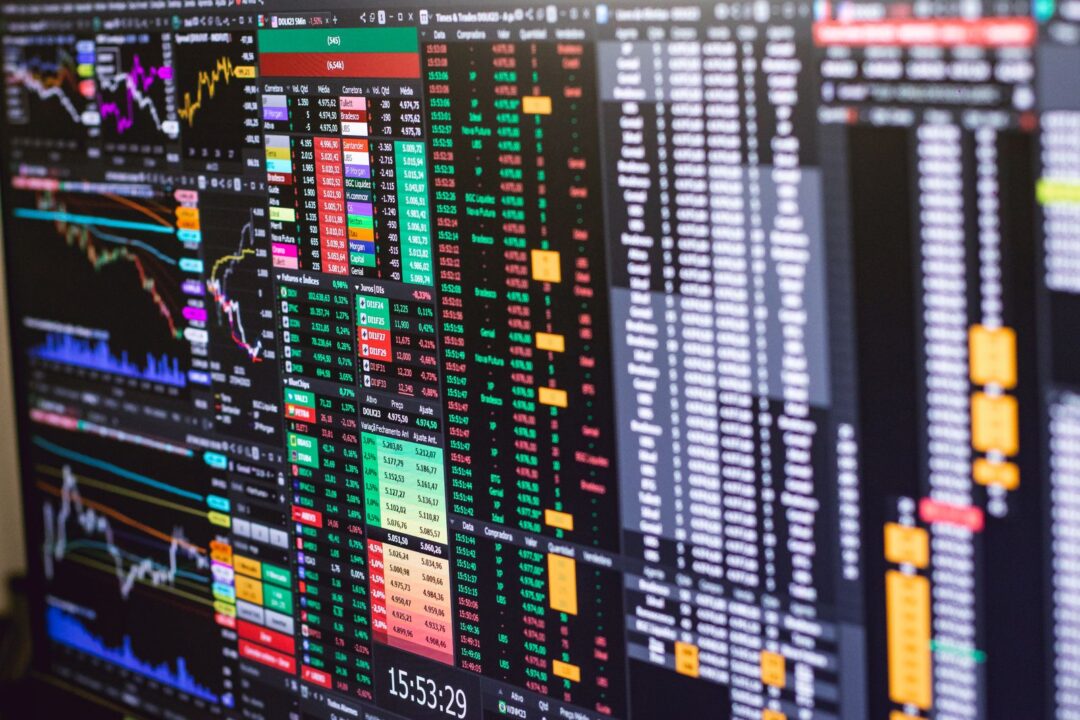
Bloomberg has launched a dedicated stablecoin dashboard on the Bloomberg Terminal, giving institutional investors real‑time, on‑chain visibility into one of the fastest‑growing segments of digital finance.
Powered by blockchain‑data provider Allium, the dashboard delivers hourly updates on stablecoin supply, mints, burns, transfers, and velocity—integrating crypto‑native analytics directly into the workflows used by banks, asset managers, and trading desks worldwide.
As stablecoins surpass USD 300 billion in circulating supply, Bloomberg’s hints at a new phase in institutional adoption: one defined by transparency, data rigor, and integration with traditional market infrastructure.
What the Dashboard Offers
Announced on September 30, 2026, Bloomberg’s new stablecoin dashboard is now available to all Terminal users through the RWAS <GO> function.
The dashboard covers every stablecoin with more than USD 100 million in circulating supply—representing more than 98% of the global market—and includes selected smaller and non‑USD‑pegged assets.
The dashboard provides hourly on‑chain data for key metrics such as circulating supply, mints, burns, transfer volume, and velocity. Historical data is updated daily.
Users can compare stablecoins side‑by‑side, drill into individual assets, analyze activity across blockchain networks, and filter stablecoins by peg type, including fiat currencies, commodities, and other reference assets.
Bloomberg emphasized that the dashboard integrates seamlessly with existing Terminal tools used for fixed income, FX, and money‑market analysis, allowing institutional users to evaluate stablecoin activity within the same environment they use for traditional financial instruments.
The launch builds on Bloomberg’s decade‑long digital‑asset strategy. Bitcoin pricing has been available on the Terminal since 2014, and Bloomberg now provides spot pricing, reference data, identifiers, and benchmarks for 50 institutionally relevant cryptocurrencies.
The company also offers Crypto Exposure Analytics to help compliance teams identify direct and indirect crypto exposure across portfolios.
Importance of Dashboard Data
Bloomberg’s stablecoin dashboard matters because it addresses one of the biggest gaps in institutional crypto adoption: reliable, consolidated, and real‑time on‑chain data.
Until now, institutions relied on a fragmented mix of blockchain explorers, analytics platforms, and proprietary tools to track stablecoin activity. Bloomberg’s dashboard centralizes this information within the Terminal, reducing operational friction and improving data quality.
The dashboard also shows the growing importance of stablecoins in global finance. Stablecoins now exceed USD 300 billion in circulating supply and serve as critical infrastructure for settlement, cross‑border payments, and liquidity management.
Stablecoins’ role in connecting digital‑asset markets with traditional finance continues to expand, especially as institutions explore tokenized deposits, digital bonds, and blockchain‑based settlement networks.
Moreover, the dashboard also enhances transparency at a time when regulators are increasing scrutiny of stablecoin reserves, yields, and market behavior.
The European Central Bank, for example, has pushed to widen stablecoin yield bans, reflecting concerns about systemic risk. Bloomberg’s dashboard provides the data institutions need to evaluate stablecoin stability, reserve behavior, and market flows.
It also strengthens Bloomberg’s position as a leading provider of digital‑asset data. Through integration of on‑chain analytics into traditional market tools, Bloomberg is helping institutional investors navigate the convergence of tokenized finance and conventional markets.