
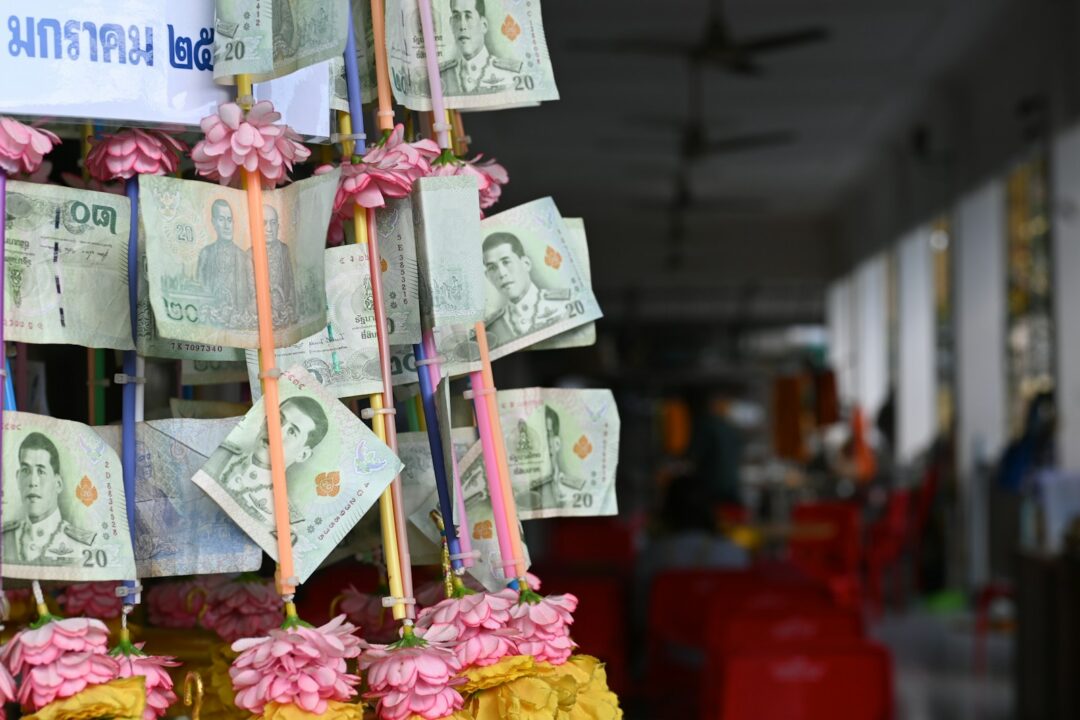
Thailand takes a significant step toward modernizing its financial system with the Bank of Thailand’s announcement that it is moving forward with a proposed regulated, baht‑backed stablecoin framework.
The Bank of Thailand’s stablecoin plan was announced through official statements by Governor Vitai Ratanakorn at the “Capital with Purpose” conference hosted by efinanceThai, intenting to integrate blockchain‑based settlement systems into its financial infrastructure while maintaining strict regulatory oversight.
Governor Ratanakorn explained that the stablecoin initiative is part of Thailand’s multi‑year digital finance roadmap, which includes regulatory sandboxes, programmable payment trials, and enhanced oversight of digital payment providers.
The stablecoin will not be a central bank digital currency (CBDC). Instead, it will be issued by regulated private entities under strict rules set by the central bank.
This approach mirrors emerging global models where stablecoins operate within regulated environments rather than being directly issued by central banks.
The central bank confirmed that it will launch a public consultation before the end of 2026 to gather feedback from financial institutions, fintech companies, and the public. The consultation will shape the final regulatory framework governing the issuance and use of the baht‑backed stablecoin.
What are Stablecoins?
Stablecoins are digital tokens designed to maintain a stable value by being backed by reserve assets such as fiat currency, government securities, or other financial instruments.
Unlike cryptocurrencies such as Bitcoin, whose prices fluctuate based on market demand, stablecoins aim to provide predictable value suitable for payments, settlement, and financial applications.
Stablecoins have become a critical component of digital finance globally. They facilitate faster cross‑border payments, support decentralized finance (DeFi) applications, and provide a bridge between traditional financial systems and blockchain networks.
However, unregulated stablecoins can pose risks, including insufficient reserves, lack of transparency, and exposure to market manipulation.
This has led regulators worldwide—including the Bank of England, the Monetary Authority of Singapore, and the European Union under MiCA—to establish frameworks governing stablecoin issuance and use.
Nature of the Proposed Baht Stablecoin
The 1:1 baht stablecoin is designed as a digital token that maintains a fixed value equal to one Thai baht.
According to the Bank of Thailand, every token must be fully backed by Thai baht reserves held at licensed financial institutions. This one‑to‑one backing ensures that each digital token can be redeemed for its equivalent value in fiat currency, providing stability and reducing volatility.
In its initial phase, the stablecoin will be restricted to settlement between regulated financial institutions. Retail use, consumer payments, and broader public access will be evaluated only after regulators assess the system’s performance and associated risks.
This phased approach allows the central bank to test blockchain‑based settlement mechanisms in a controlled environment before considering wider adoption.
The Bank of Thailand emphasized that the stablecoin is not intended to replace cash or existing digital payment systems. Instead, it is meant to enhance settlement efficiency, support blockchain‑based financial services, and provide a regulated alternative to privately issued stablecoins that may pose risks to monetary stability.
Rising Thai Crypto Adoption
Thailand is one of Southeast Asia’s more active crypto markets, with millions of retail users and several licensed digital asset exchanges operating under the supervision of the Thailand Securities and Exchange Commission (SEC).
Crypto adoption accelerated between 2021 and 2024, driven by retail trading, digital investment products, and growing interest in blockchain‑based financial services.
The country has also made significant progress in integrating crypto and digital finance. Thailand’s SEC licenses digital asset exchanges, brokers, and dealers, requiring them to meet strict cybersecurity, custody, and disclosure standards.
The central bank has conducted multiple trials involving programmable payments and cross‑border settlement using blockchain technology, including collaborations with the Hong Kong Monetary Authority and the Bank for International Settlements.
Despite strong adoption, Thailand maintains a cautious stance toward consumer‑facing crypto payments.
In 2022, the SEC banned the use of cryptocurrencies for retail payments, citing risks to financial stability. This regulatory position remains in place, reinforcing the need for regulated digital payment instruments such as the proposed baht stablecoin.




