
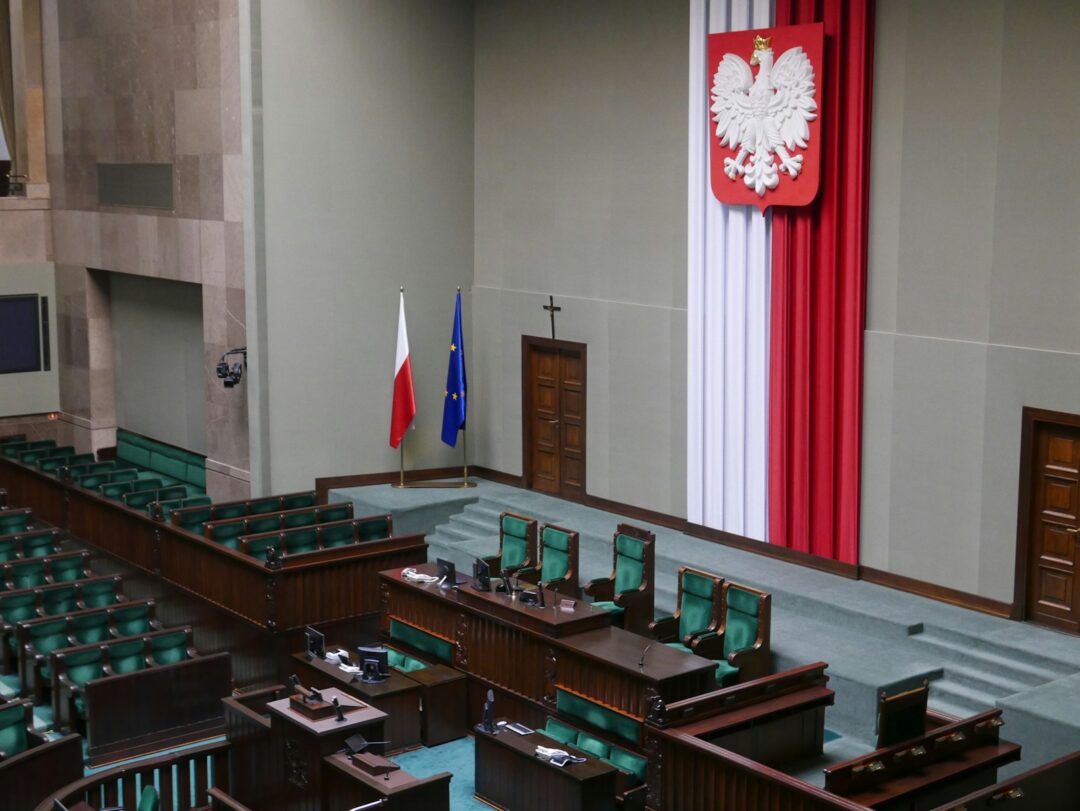
Poland’s parliament has entered a tense and complicated phase in its effort to regulate digital assets. On May 12, 2026, lawmakers in the Sejm, the lower house of the Polish Parliament, began debating four separate cryptocurrency bills, each offering a different vision for oversight. At the same time, the opposition Law and Justice (PiS) party introduced a surprise proposal to ban all crypto activity outright, throwing the legislative process into disarray.
The Four Competing Bills
The government’s draft bill is designed to align Poland with the EU’s Markets in Crypto‑Assets (MiCA) framework. It grants regulators broad powers to inspect exchanges and imposes fines of up to 25 million PLN ($6.9 million) for obstructing oversight.
President Karol Nawrocki’s version mirrors much of the government’s plan but caps penalties at 20 million PLN ($5.5 million), reflecting concerns about proportionality.
The centrist Poland 2050 party has put forward a bill emphasizing consumer protection, requiring stricter reporting standards and transparency from exchanges. Meanwhile, the libertarian‑leaning Confederation party has drafted legislation aimed at limiting regulatory overreach, arguing that innovation should not be stifled by heavy-handed rules.
These four bills emerged after two presidential vetoes of earlier crypto legislation, forcing lawmakers to revisit the issue with fresh proposals.
The Ban Proposal
The PiS party’s sudden withdrawal of support for regulatory bills and its submission of a crypto ban proposal shocked the chamber. The ban would outlaw all crypto asset activity in Poland, from trading to payments. Sejm Speaker Włodzimierz Czarzasty acknowledged the chaos, saying parliament must first complete work on the four bills before considering the ban. He described the situation as a “devil’s dance,” reflecting the political maneuvering at play.
Political Flashpoints
Debate has centered on the scope of regulatory powers. The government and presidential drafts differ on maximum fines, while opposition parties argue over how much authority the Polish Financial Supervision Authority (KNF) should have to freeze accounts suspected of illicit activity.
Complicating matters further are allegations surrounding Zondacrypto, a major Polish exchange. Reports of withdrawal problems and alleged links to organized crime have fueled calls for stricter rules. Some lawmakers claim political financing may also be entangled with crypto firms, intensifying scrutiny.
Why It Matters
The outcome of these debates will determine whether Poland embraces a regulated crypto market aligned with EU standards or isolates itself with a ban. A regulatory framework could attract institutional investment and provide legal clarity, while a ban risks driving businesses abroad and undermining Poland’s role in Europe’s digital economy.
The timing is critical. Across the EU, member states are preparing to implement MiCA, which harmonizes crypto regulation. Poland’s decision will signal whether it intends to integrate with this framework or diverge sharply.
For investors, the uncertainty is already damaging. Exchanges are reluctant to expand operations without clarity, and retail traders fear sudden restrictions. For policymakers, the challenge is balancing innovation with protection, ensuring Poland does not become a haven for fraud while still encouraging legitimate growth.
Final Thought
Poland’s crypto future hangs in the balance. The four bills represent competing visions of regulation, while the PiS ban proposal threatens to derail progress entirely. For investors and exchanges, the uncertainty is already damaging. For policymakers, the challenge is to balance innovation with protection, aligning with EU standards while addressing domestic scandals. The debates this week will be decisive, shaping whether Poland emerges as a credible hub for digital assets or retreats into prohibition.


