
Key Takeaways :
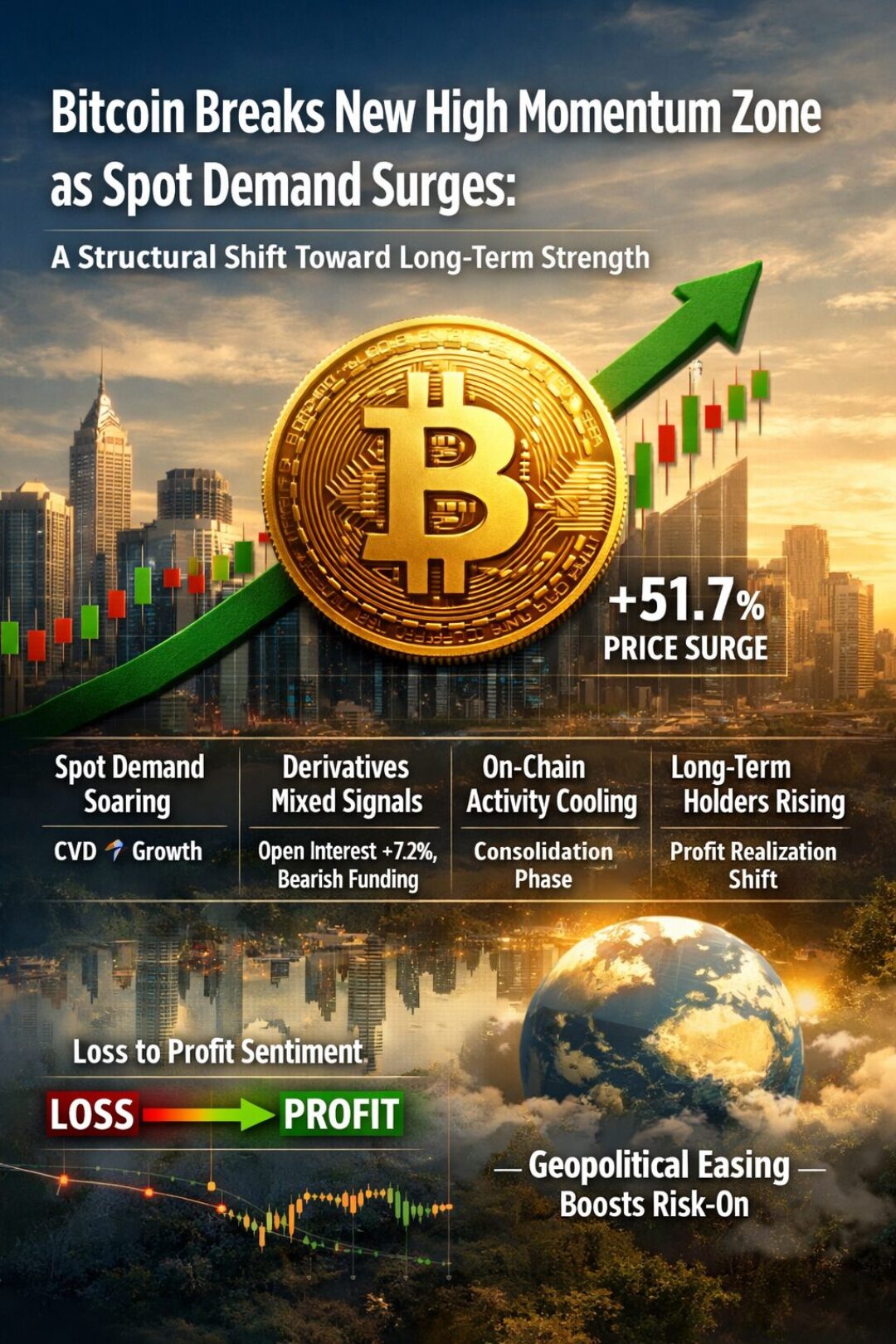
- Bitcoin price momentum has surged by +51.7%, breaking into a new high range
- Spot market demand is rising sharply, supported by CVD (Cumulative Volume Delta) growth
- Derivatives show mixed signals: Open Interest +7.2%, but funding rates turned bearish
- On-chain activity is cooling, indicating a consolidation phase rather than hype
- Long-term holders are gaining dominance while speculative capital declines
- Market sentiment shifts from loss realization → profit realization
- Macro tailwinds (geopolitical easing) support a renewed risk-on environment
1. A New Phase of Momentum: Bitcoin Reclaims Strength
Bitcoin Price Momentum Trend
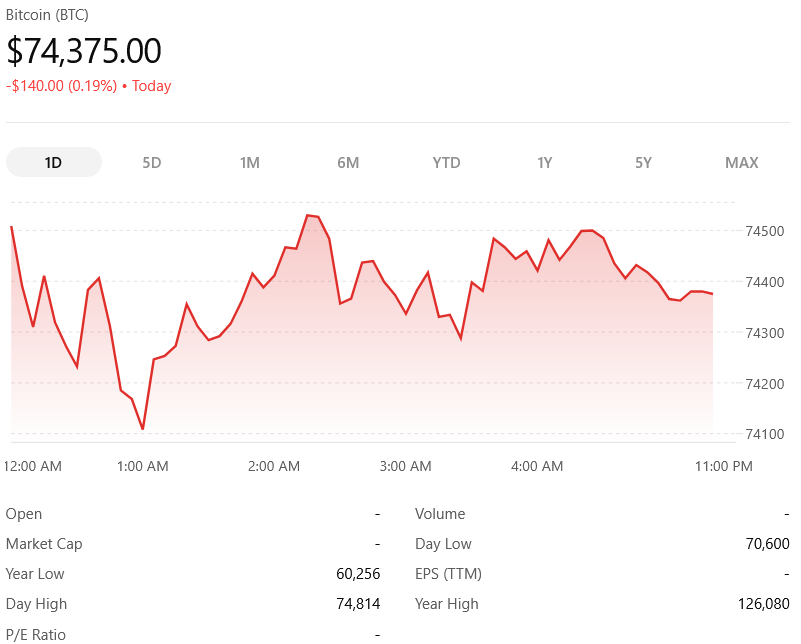
(Graph showing BTC price vs momentum index rising sharply into new highs)
Bitcoin has entered a renewed phase of bullish momentum, with on-chain analytics indicating a structural shift rather than a temporary rally. According to insights from Glassnode, Bitcoin’s price momentum has surged by approximately 51.7%, pushing the asset beyond its previous high momentum zone.
This development is particularly important because momentum, unlike price alone, reflects the strength and sustainability of a trend. When momentum breaks previous highs, it often signals not just price appreciation, but capital conviction entering the market.
In USD terms, Bitcoin is trading in a range that reflects increasing institutional and high-net-worth participation, suggesting that this rally is not merely retail-driven but structurally supported.
Unlike previous cycles where momentum spikes were accompanied by excessive speculation, the current move appears more grounded, supported by real capital inflows and strategic positioning.
2. Spot Market Dominance: Real Demand Driving the Rally
CVD and Spot Volume Growth
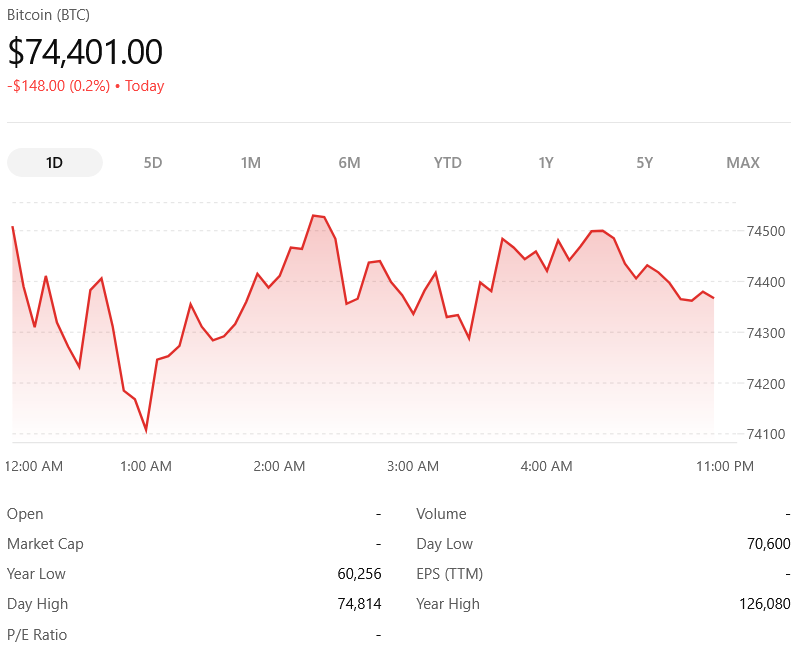
(Graph showing rising CVD and increasing spot trading volume)
One of the most critical signals in the current market is the rise in spot-driven demand.
The Cumulative Volume Delta (CVD)—a metric that tracks net buying vs selling pressure—has shown a clear upward trajectory. This indicates that buyers are aggressively absorbing sell-side liquidity, a hallmark of strong bullish conviction.
At the same time, spot trading volumes have increased significantly. This combination suggests:
- Investors are buying actual Bitcoin, not just derivatives exposure
- Capital entering the market is less leveraged and more stable
- The rally is being driven by ownership transfer, not speculative churn
This trend aligns with a broader shift seen across crypto markets in 2025–2026, where institutional investors increasingly favor spot exposure through ETFs, custodial solutions, and direct purchases.
For readers seeking new income opportunities, this is a key insight:
Markets driven by spot demand tend to have lower liquidation risk and more sustainable upward trends, making them more suitable for medium- to long-term positioning strategies.
3. Derivatives Market: Rising Leverage with Underlying Caution
Open Interest vs Funding Rate Divergence
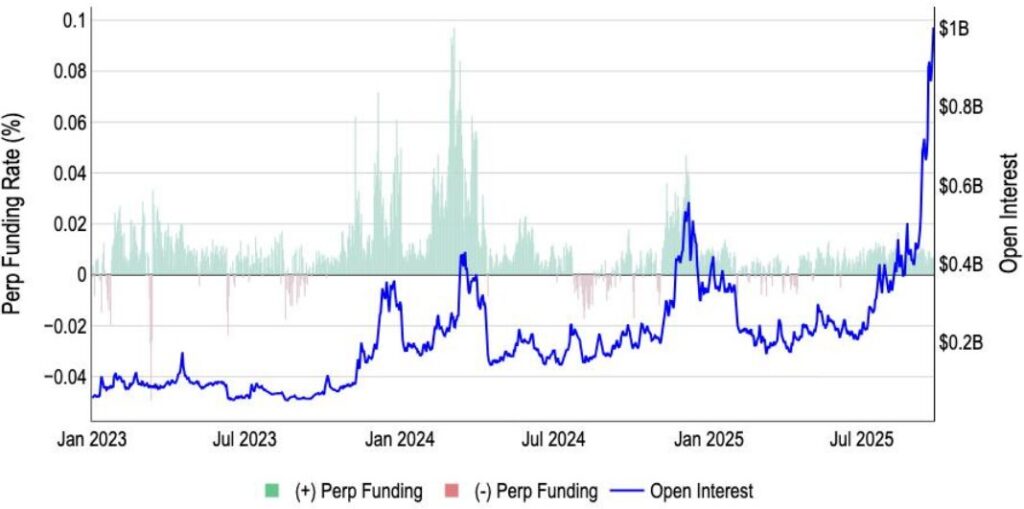
(Graph showing OI increasing while funding rates decline sharply)
While the spot market shows strength, the derivatives market presents a more nuanced picture.
- Open Interest (OI) has increased by approximately 7.2%, indicating growing participation
- However, funding rates have dropped by 198.6%, shifting toward short bias
This divergence suggests that while traders are entering positions, they are doing so with increased hedging or bearish expectations.
In practical terms:
- Some participants are betting against the rally (short positions)
- Others may be hedging spot exposure with derivatives
- The market is not euphoric—there is still skepticism and caution
Options markets reinforce this view. While bearish bias has eased, declining volatility spreads indicate that traders expect controlled price movements rather than explosive upside.
For advanced traders and builders:
This environment is ideal for strategies such as:
- Market-neutral arbitrage
- Funding rate capture
- Structured yield products
These are precisely the kinds of practical blockchain-based financial applications that are gaining traction in the current cycle.
4. On-Chain Reality: A Market in Consolidation, Not Mania
Despite rising prices, on-chain activity tells a different story.
- Active addresses have slightly decreased
- Transaction volumes are modestly down
This indicates that the market is currently in a consolidation phase, where prices stabilize after a strong move rather than entering speculative frenzy.
This is a critical distinction.
In past bull markets, price increases were accompanied by:
- Explosive user growth
- High transaction congestion
- Retail-driven speculation
Today’s environment is more measured.
This suggests:
- The rally is being driven by capital rotation, not new user influx
- Market participants are strategically accumulating, not chasing momentum
- The foundation is being built for a longer-term structural uptrend
5. The Rise of Long-Term Holders: A Structural Shift
One of the most significant developments is the increasing dominance of long-term holders.
Short-term speculative capital—often responsible for volatility—has decreased. In contrast, long-term holders are accumulating and maintaining positions.
This shift has profound implications:
- Reduced sell pressure during corrections
- Increased price stability
- Stronger support levels
In historical cycles, when long-term holders dominate, Bitcoin tends to enter a more mature and resilient phase.
For investors, this means:
The market is transitioning from a trading-driven environment to a holding-driven environment, which typically favors:
- Strategic accumulation
- Yield generation via staking/DeFi integrations (where applicable)
- Infrastructure plays rather than pure speculation
6. Investor Psychology: From Fear to Profit Realization
Another key signal is the shift in investor psychology.
Previously, much of the circulating supply was in an unrealized loss position. Today, a significant portion is in profit.
This changes behavior fundamentally:
- Investors are less likely to panic sell
- Profit-taking becomes the dominant action
- Market sentiment turns constructively bullish
This transition—from “cutting losses” to “locking in gains”—is a hallmark of mid-to-late cycle expansion phases.
7. Macro Tailwinds: Risk-On Environment Returns
Beyond crypto-specific metrics, macroeconomic conditions are also supportive.
Easing geopolitical tensions and improving global liquidity conditions are driving a risk-on sentiment across markets.
Bitcoin, increasingly viewed as both:
- A risk asset (like tech stocks)
- A store of value (like digital gold)
benefits from this dual positioning.
Recent trends across global markets show:
- Institutional capital rotating back into crypto
- Increased correlation with equities during risk-on phases
- Growing acceptance of Bitcoin as a portfolio diversification tool
8. Strategic Implications: Where the Opportunities Are
For readers seeking actionable insights and new revenue opportunities, the current market structure offers several key directions:
A. Spot Accumulation Strategies
Focus on gradual accumulation rather than leveraged speculation.
B. Yield Generation
Leverage:
- Funding rate arbitrage
- Liquidity provision
- Structured crypto products
C. Infrastructure & Application Layer
Opportunities are expanding in:
- Custody solutions
- On-chain analytics
- Payment and remittance rails
- Cross-border stablecoin settlements
These align closely with real-world blockchain adoption trends.
Conclusion: A Stronger, More Mature Bitcoin Market
Bitcoin’s latest momentum surge is not just another rally—it represents a structural evolution of the market.
- Spot demand is leading
- Long-term holders are dominant
- Speculative excess is contained
- Macro conditions are supportive
This combination creates a market that is:
- Less fragile
- More sustainable
- Rich in strategic opportunities
For investors and builders alike, the message is clear:
The next phase of crypto growth will not be driven purely by hype, but by real capital, real use cases, and disciplined strategies.



