

Key Points :
- The CLARITY Act is approaching a critical Senate Banking Committee markup in April 2026.
- Long-standing disputes between regulators and industry stakeholders have significantly narrowed.
- The bill aims to clearly define jurisdiction between the U.S. Securities and Exchange Commission (SEC) and the Commodity Futures Trading Commission (CFTC).
- Stablecoin yield rules remain the most contentious issue between crypto firms and traditional banks.
- If passed, the law could unlock institutional capital flows and accelerate blockchain adoption globally.
1. A Turning Point: CLARITY Act Moves Toward April Vote
The United States is approaching what may become the most consequential regulatory milestone in the history of digital assets. The CLARITY Act, a long-debated crypto market structure bill, is now entering its final legislative phase, with a Senate Banking Committee markup expected within April 2026.
For years, the absence of clear regulatory boundaries has created a fragmented and uncertain operating environment for crypto companies. Exchanges, token issuers, and investors have been forced to navigate an ambiguous legal landscape, often making strategic decisions under regulatory risk rather than clear guidance.
The CLARITY Act aims to resolve this uncertainty by establishing a formal framework for digital asset oversight. Most notably, it seeks to define which assets fall under securities law (regulated by the SEC) and which qualify as commodities (regulated by the CFTC). This distinction has been one of the most contentious and unresolved issues in U.S. crypto policy.
Recent statements from senior advisors within the administration indicate that previously “unsolvable” disagreements have now been significantly reduced. This shift suggests that political alignment—once considered unlikely—may finally be within reach.
2. The Core Framework: SEC vs. CFTC Jurisdiction Clarified
At the heart of the CLARITY Act lies a structural redefinition of how digital assets are categorized and regulated.
Historically, the SEC has taken an expansive view, treating many tokens as securities under the Howey Test. Meanwhile, the CFTC has asserted authority over cryptocurrencies as commodities, particularly for derivatives markets. This regulatory overlap has led to enforcement conflicts, legal uncertainty, and inconsistent compliance standards.
The CLARITY Act introduces a functional classification system:
- Securities-like tokens (investment contracts) → regulated by SEC
- Decentralized commodities (e.g., Bitcoin-like assets) → regulated by CFTC
- Hybrid or evolving assets → subject to transition frameworks
This framework is expected to bring immediate clarity to crypto exchanges, enabling them to structure listings, custody solutions, and trading services with defined compliance obligations.
For developers and entrepreneurs, this clarity reduces regulatory friction and lowers barriers to launching new blockchain-based products.
3. Stablecoins: The Final Battleground
Despite progress across most areas, stablecoin regulation remains the most difficult issue to resolve.
The central debate revolves around whether stablecoin issuers—or associated platforms—should be allowed to offer yield or interest to holders.
Industry Perspective
Crypto companies argue that yield-bearing stablecoins are essential for innovation and competitiveness. They point to decentralized finance (DeFi) ecosystems where yield generation is a core function, enabling users to earn returns on idle assets.
Platforms like Coinbase have already explored reward mechanisms through intermediaries, creating a model that operates in regulatory gray areas.
Banking Sector Concerns
Traditional financial institutions, represented by organizations such as the American Bankers Association, warn of “deposit flight.” They argue that if stablecoins offer competitive yields, customers may withdraw funds from banks, reducing the lending capacity of regional institutions.
This concern is particularly acute in the U.S., where small and mid-sized banks play a critical role in local economic financing.
Government Analysis
Interestingly, recent analysis from the White House Council of Economic Advisers suggests that the impact of stablecoin yields on traditional banking may be limited. However, this conclusion has been strongly contested by banking economists, highlighting the complexity of the issue.
The final compromise on stablecoin yields will likely determine whether the CLARITY Act passes swiftly or faces further delays.
4. Market Impact: Institutional Capital and New Revenue Streams
If enacted, the CLARITY Act could trigger a structural shift in global crypto markets.
Institutional Entry
Clear regulations are widely seen as a prerequisite for large-scale institutional participation. Asset managers, pension funds, and banks have remained cautious due to legal uncertainty. With defined rules, these players may significantly increase their exposure to digital assets.
This trend has already begun with Bitcoin ETFs and tokenized assets, and the CLARITY Act could accelerate it further.
Exchange Evolution
Crypto exchanges operating in the U.S. will gain a roadmap for compliance, enabling them to expand services such as:
- Tokenized securities trading
- Cross-border settlement infrastructure
- Hybrid fiat-crypto payment systems
New Yield Opportunities
For investors seeking new income streams, regulatory clarity opens doors to:
- Regulated staking products
- Yield-bearing stablecoin frameworks (if approved)
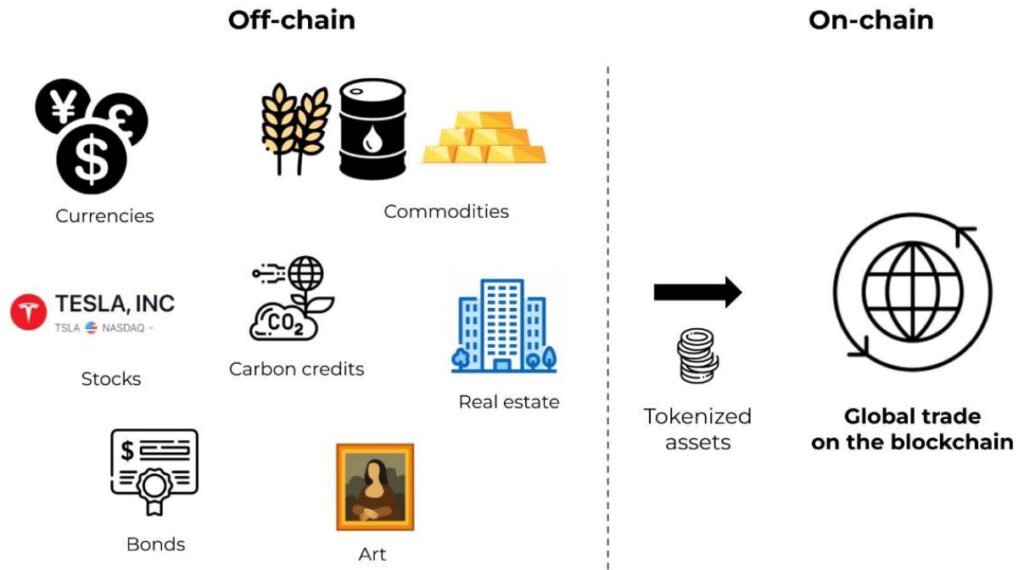
- Tokenized real-world assets (RWAs)
These developments align with a broader trend of integrating blockchain into traditional finance, often referred to as “financial convergence.”
5. Global Implications: A Race for Regulatory Leadership
The significance of the CLARITY Act extends far beyond the United States.
Jurisdictions such as the European Union (with MiCA), Singapore, and the UAE have already established comprehensive crypto regulations. The U.S., despite being a major financial hub, has lagged behind due to internal disagreements.
If the CLARITY Act is passed:
- The U.S. could regain leadership in crypto innovation
- Global companies may prioritize U.S. market entry
- Regulatory standards may influence international frameworks
Conversely, failure to pass the bill could push innovation offshore, benefiting more crypto-friendly jurisdictions.
6. Timeline and Urgency: A Narrow Window
The legislative timeline remains tight.
- Senate Banking Committee markup: expected April 2026
- Senate floor vote: within weeks after committee approval
- House reconciliation and presidential signing: shortly thereafter
However, analysts warn that missing the April window could delay passage until 2027 due to political cycles.
This urgency has prompted coordinated pressure from regulators, including the SEC and CFTC leadership, as well as the Treasury Department.
7. Strategic Outlook for Crypto Investors and Builders
For readers seeking new crypto assets, revenue opportunities, and practical blockchain applications, the CLARITY Act represents a pivotal inflection point.
What to Watch
- Final decision on stablecoin yield rules
- SEC vs. CFTC jurisdiction boundaries
- Exchange compliance frameworks
Where Opportunities May Emerge
- U.S.-compliant exchanges and infrastructure providers
- Stablecoin ecosystems with regulatory approval
- Tokenization platforms bridging real-world assets and blockchain
Risk Considerations
- Regulatory overreach could limit innovation
- Delays may create short-term market volatility
- Divergence between U.S. and global regulations
Regulatory Impact Flow Diagram
Conclusion: A Defining Moment for Crypto’s Future
The CLARITY Act represents more than just another piece of legislation—it is a foundational moment that could redefine the trajectory of the global digital asset industry.
By resolving long-standing regulatory ambiguity, the United States has the opportunity to unlock innovation, attract institutional capital, and establish itself as a leader in the next phase of financial evolution.
However, the outcome hinges on one critical issue: the balance between innovation and financial stability, embodied in the debate over stablecoin yields.
For investors, builders, and policymakers alike, the coming weeks may determine not only the future of U.S. crypto regulation but also the direction of the global blockchain economy.



