

Main Points :
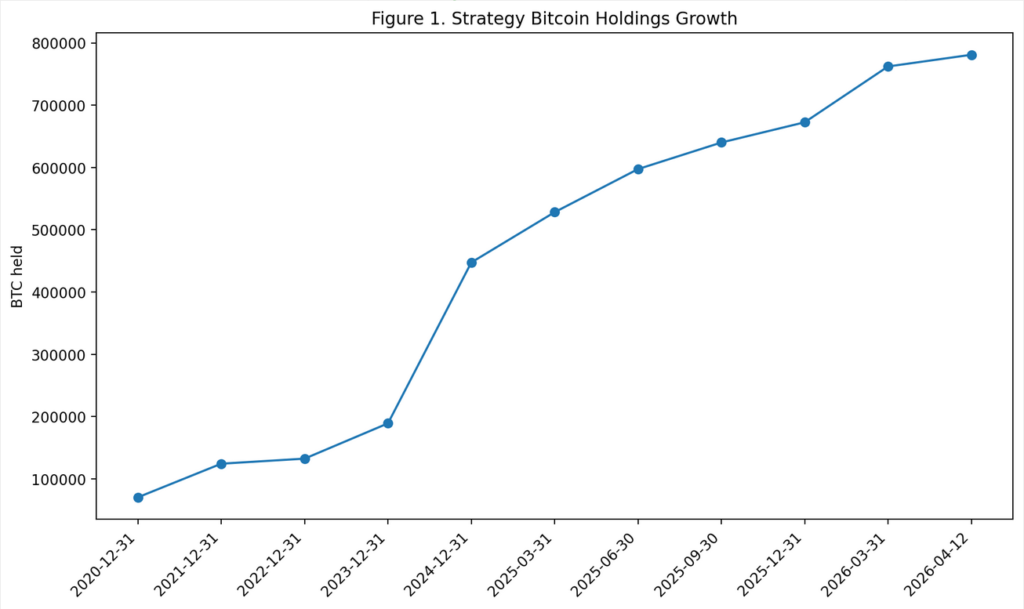
- Strategy bought 13,927 BTC for about $1.00 billion between April 6 and April 12, 2026, bringing total holdings to 780,897 BTC.
- The company funded the purchase through sales of its STRC preferred shares rather than common stock, highlighting an evolving capital-markets playbook for corporate Bitcoin accumulation.
- Strategy’s average cost basis across all holdings is about $75,577 per BTC, while Bitcoin is currently trading around $74,431, meaning the company remains close to break-even but still below its aggregate average entry price.
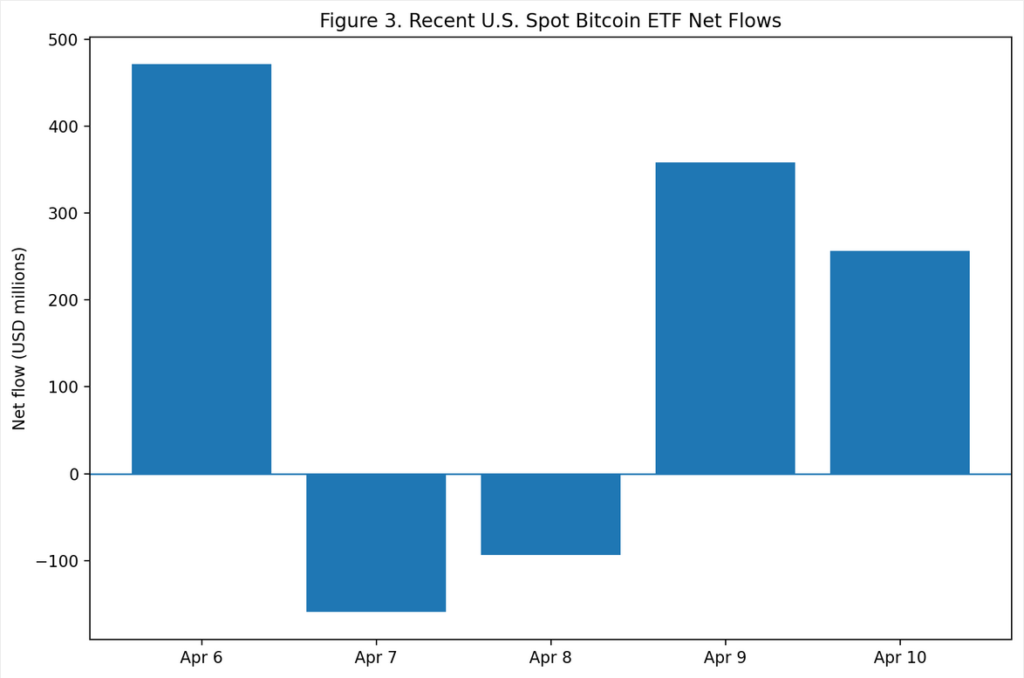
- Recent U.S. spot Bitcoin ETF flows show that institutional demand has not disappeared, even as volatility and geopolitical risk continue to pressure price action.
- For investors and builders, the real story is not only that Strategy bought more Bitcoin, but that Bitcoin treasury strategy is becoming a repeatable financing model with wider implications for crypto markets and real-world blockchain adoption.
A Billion-Dollar Purchase That Keeps the Market Watching
Strategy, the company led by Michael Saylor, announced on April 13, 2026 that it had acquired another 13,927 BTC during the period from April 6 through April 12. According to its SEC filing, the purchase cost about $1.00 billion, and the average acquisition price for this latest tranche was $71,902 per Bitcoin. That lifted the company’s total Bitcoin position to 780,897 BTC, acquired for a cumulative cost of roughly $59.02 billion, with an overall average purchase price of $75,577 per BTC.
That number alone is staggering, but the market significance goes beyond size. Strategy is no longer just a software company with a large Bitcoin position. It is increasingly functioning as a capital structure built around Bitcoin exposure, using multiple security types to attract different investor classes while expanding its treasury reserves. The company itself describes this treasury strategy as a way of giving investors varying degrees of economic exposure to Bitcoin through equity and fixed-income-like instruments.
Saylor had hinted at the move before the official announcement, posting on X with the phrase “Think Bigger” alongside the familiar chart of the company’s Bitcoin accumulation. That pattern has become part of the market theater around Strategy’s buying program, but the deeper issue is that these purchases are no longer surprising. They are becoming routine.
The Funding Matters as Much as the Bitcoin
One of the most important aspects of this latest purchase is how it was funded. The SEC filing states that the Bitcoin was purchased using proceeds from shares sold under the company’s at-the-market program. Reporting around the filing indicates the company raised the full amount through STRC preferred share issuance, with more than 10 million shares sold. Strategy’s own STRC materials show that, as of April 2026, the variable annualized dividend rate on STRC stands at 11.50%.
That financing choice matters because it shows an evolution in Strategy’s capital stack. In earlier phases, the company leaned heavily on common equity issuance and convertible debt. Now, preferred securities are playing a more visible role. This allows Strategy to keep buying Bitcoin while broadening the investor base beyond pure common-equity buyers who simply want leveraged BTC exposure. In practical terms, Strategy is engineering different wrappers for Bitcoin risk: common stock for one audience, convertibles for another, and preferred stock for investors seeking a defined income stream paired with indirect exposure to Bitcoin upside.
That makes Strategy important not only as a Bitcoin holder, but also as a case study in how digital-asset treasury models may spread. If this structure continues to attract capital, other listed companies may try to replicate parts of it. The broader implication is that Bitcoin is moving further into corporate finance, not merely as a reserve asset, but as the anchor for new fundraising structures.
Near Break-Even Is Not the Same as Risk-Free
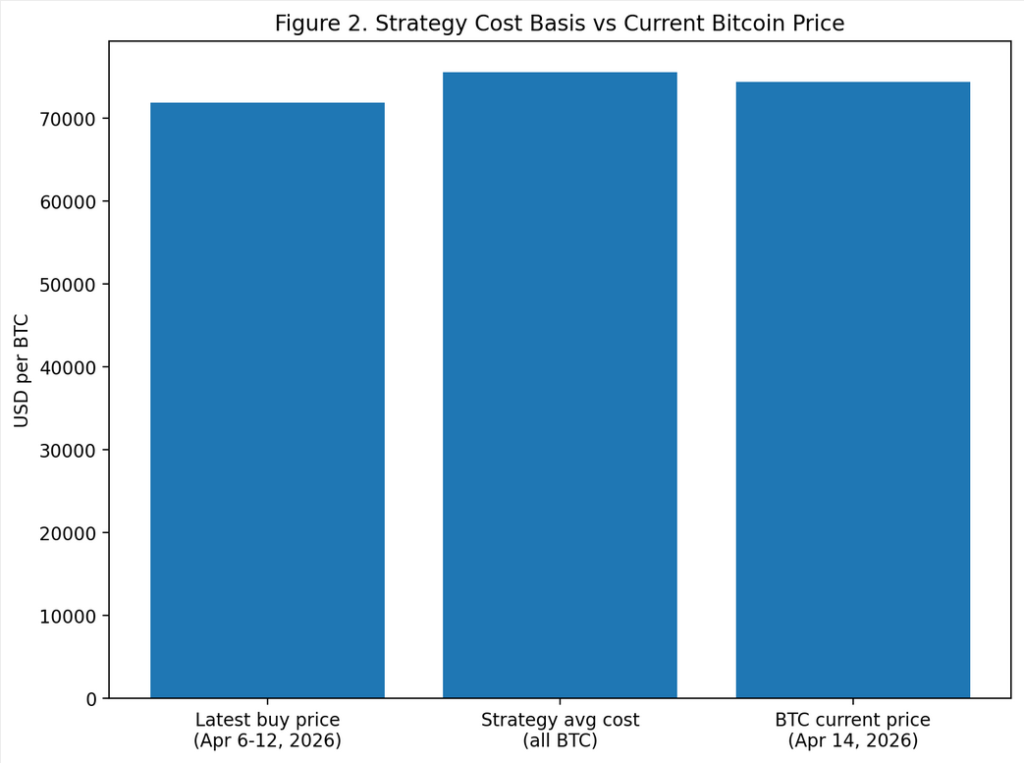
At the time of writing, Bitcoin is trading at about $74,431. That is above the price of Strategy’s most recent purchase, but still below the company’s average acquisition cost across its full holdings, which stands at $75,577. In other words, the latest buy looks well-timed relative to current market levels, but the entire position remains slightly under water on a mark-to-market basis.
This nuance matters because recent coverage has sometimes framed Strategy only through unrealized gains or losses. Earlier this month, the company disclosed a roughly $14.46 billion unrealized digital-asset loss for the first quarter of 2026 as of March 31, reflecting Bitcoin’s sharp decline during the quarter. That headline was dramatic, but it did not mean Strategy’s thesis had failed. It meant the company had chosen volatility rather than avoiding it.
The latest market recovery has narrowed some of that gap. Strategy’s own BTC metrics page showed Bitcoin around $72,203 when its dashboard was last updated on April 13, while the real-time finance quote now places BTC higher, at roughly $74,431. That rebound illustrates why Strategy continues buying into weakness: the firm is not trading around short-term fear, but averaging into a long-duration conviction position.
Still, this does not make the model safe. Preferred stock carries payment expectations. Convertible debt creates future claims. Common shareholders remain exposed to both Bitcoin volatility and corporate financing risk. Strategy’s model can look brilliant during recovery phases, but it remains highly dependent on capital market access and on Bitcoin preserving long-term upside relative to its financing costs.
Bitcoin’s Price Context: Weakness, Recovery, and Institutional Demand
To understand why this purchase matters now, we also need to look beyond Strategy. Bitcoin has been trading in a volatile range after falling significantly from its October 2025 peak above $126,000. Recent reports tied some of the weakness to geopolitical tensions in the Middle East and the broader risk-off mood in financial markets. Even so, Bitcoin’s current price has recovered meaningfully from recent lows, with today’s quote near $74,431 after an intraday low of $70,600.
At the same time, ETF data shows that institutional participation remains active rather than absent. Farside’s recent U.S. spot Bitcoin ETF flow data shows a strong net inflow of $471.4 million on April 6, followed by outflows on April 7 and April 8, and then a renewed positive turn with $358.1 million on April 9 and $256.7 million on April 10. That pattern does not suggest one-way euphoria, but it does show that deep pools of capital are still engaging with Bitcoin around this price zone.
This is where Strategy’s latest purchase becomes symbolically powerful. The company bought aggressively into a period where sentiment was mixed, not euphoric. That reinforces Saylor’s long-standing message that Bitcoin should be treated as a strategic treasury asset accumulated across cycles rather than a short-term trade. Whether one agrees with that philosophy or not, Strategy is executing it with unusual consistency.
Why This Story Matters to Crypto Investors Looking for the Next Opportunity
For readers searching for new crypto assets, the immediate takeaway is not that Strategy itself is a new token opportunity. It is that Bitcoin remains the center of gravity for capital formation in digital assets. When large pools of capital still organize themselves around Bitcoin, that affects liquidity, sentiment, and risk appetite across the entire market. Stronger confidence in BTC frequently becomes the condition that allows capital to rotate later into Ethereum, Solana, XRP, DeFi infrastructure, tokenized real-world assets, and other emerging narratives. This is an inference based on recurring crypto market behavior and on the continued institutional focus around BTC vehicles and treasury strategies.
For readers looking for the next revenue source, Strategy’s example is also relevant because it shows where money is being made around crypto even outside direct token speculation. The monetizable layers increasingly include treasury strategy, structured securities, ETF distribution, custodial infrastructure, risk analytics, reporting systems, and corporate advisory services for digital-asset balance sheet management. In other words, the next profitable crypto business may not always be a new coin. It may be a financial product, compliance system, analytics tool, or capital-market wrapper built around the asset class. This interpretation is consistent with Strategy’s investor messaging and with the broader rise of corporate Bitcoin treasury frameworks.
For readers interested in practical blockchain use, Strategy may seem at first like a purely financial story. But in reality it matters because treasury adoption is one of the clearest real-world use cases for digital assets. A corporate treasury that treats Bitcoin as a reserve asset is already a form of practical blockchain deployment. It connects public blockchain infrastructure to listed-company finance, securities issuance, investor relations, and accounting treatment. That is not as flashy as a new meme coin, but it is often more durable.
The Bigger Question: Can This Model Spread?
The most important long-term question is whether Strategy remains unique or becomes a prototype. Data from corporate Bitcoin adoption trackers suggests that public-company treasury adoption broadened significantly during 2025, with hundreds of thousands of BTC added by corporations over the year. Strategy is still the dominant player by a huge margin, but the concept is no longer isolated.
If Bitcoin stabilizes and capital markets remain open, more companies may experiment with treasury accumulation, especially firms with strong equity stories, loyal shareholder bases, or access to specialized financing structures. On the other hand, if Bitcoin weakens sharply for an extended period, the market may become more selective and favor only the best-capitalized or most credible issuers. Strategy’s size gives it an advantage, but it also makes it the stress test for the whole model.
That is why this latest $1 billion purchase matters far beyond one company’s balance sheet. It is another signal that the corporate Bitcoin treasury playbook is not pausing. It is evolving.
Conclusion
Strategy’s latest purchase of 13,927 BTC for about $1 billion is significant not just because it lifts total holdings to 780,897 BTC, but because it demonstrates the continued maturation of Bitcoin as a treasury asset and as the foundation for new capital-market structures. The company is still slightly below its average cost basis at current BTC prices, so this is not a simple victory lap. It is a leveraged, high-conviction, high-volatility strategy that depends on long-term Bitcoin appreciation and continued access to financing.
Yet that is exactly why markets keep watching. Strategy is testing whether Bitcoin can sit at the center of a modern corporate funding machine. So far, despite volatility, the answer appears to be yes. For crypto investors, that matters because it supports the asset class at its core. For entrepreneurs, it matters because it points to new business models around treasury services, capital structuring, and digital-asset infrastructure. And for anyone interested in practical blockchain use, it is a reminder that some of the most important adoption stories are not happening in consumer apps alone, but inside balance sheets, boardrooms, and securities markets.



