
Key Takeaways :
- Bitcoin’s ~50% drop (from $126,080 to $62,822) may already reflect quantum computing risks
- Investment bank Bernstein argues the threat is manageable, not existential
- Post-quantum cryptography and zero-knowledge technologies are advancing rapidly
- A 3–5 year transition window is seen as sufficient for protocol upgrades
- Institutional players like BlackRock could accelerate consensus and migration
- New proposals such as BIP-360 signal active mitigation efforts
- The real risk lies in inactive wallets (~1.7M BTC) and slow adoption timelines
1. Bitcoin’s 50% Drawdown: Market Panic or Rational Pricing?
(Bitcoin Price Drop Visualization)
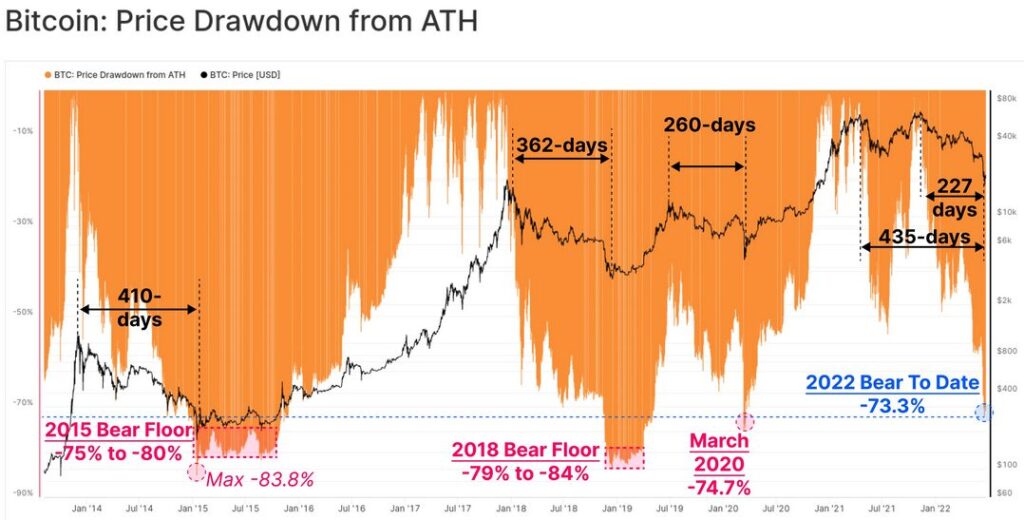
Bitcoin’s sharp decline from $126,080 to $62,822 has sparked intense debate across financial markets. While many retail participants initially attributed the sell-off to macroeconomic tightening or ETF outflows, a more nuanced explanation has emerged: the pricing-in of quantum computing risk.
According to Bernstein’s analysis, this was not a panic-driven collapse but rather a forward-looking repricing of technological risk. Markets, especially in crypto, are notoriously reflexive—when a credible existential narrative appears, it is often priced in aggressively and early.
This interpretation aligns with broader historical behavior in crypto markets. From regulatory crackdowns to exchange failures, Bitcoin has repeatedly demonstrated its ability to over-discount risk in the short term before stabilizing as clarity improves.
2. The Quantum Threat: From Theory to Market Catalyst
(Quantum vs Classical Computing Diagram)
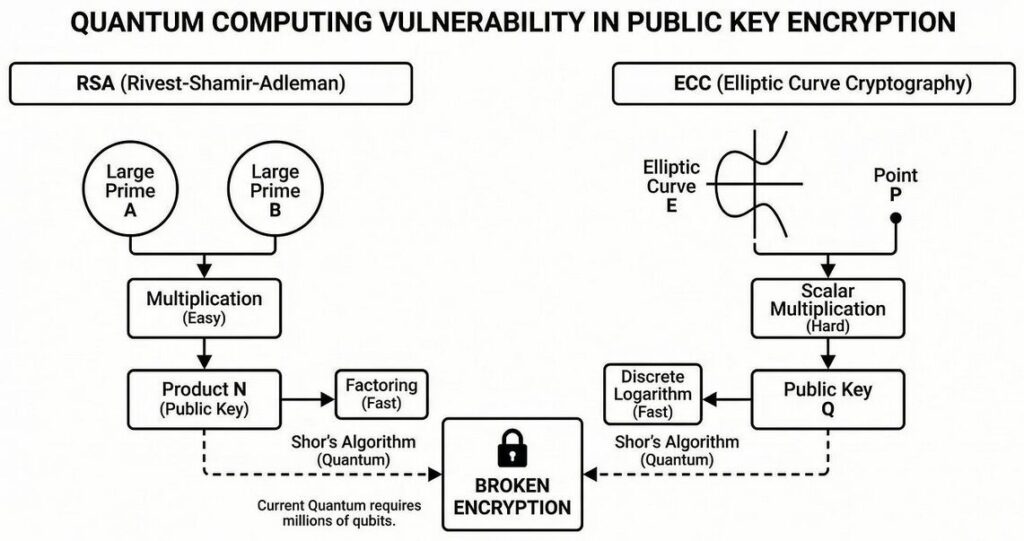
The catalyst for renewed concern was a research paper by Google, which suggested that the number of physical qubits required to break elliptic curve cryptography (ECC) may be significantly lower than previously estimated.
Since Bitcoin relies on ECC for securing wallets and transactions, this revelation triggered a wave of concern:
- Could quantum computers eventually derive private keys from public keys?
- Would dormant wallets become vulnerable first?
- Is Bitcoin fundamentally secure in a post-quantum world?
These questions moved quickly from academic circles into market pricing mechanisms, demonstrating how tightly coupled technological narratives and asset valuations have become.
However, it is critical to distinguish between theoretical feasibility and practical execution. Even under revised estimates, large-scale quantum attacks remain years—if not decades—away from real-world deployment.
3. Why Bernstein Believes the Risk Is Manageable
Bernstein’s core argument is straightforward: the Bitcoin ecosystem has time—and the tools—to adapt.
Their thesis rests on three pillars:
a. Technological Countermeasures Are Already Emerging
Advances in:
- Post-quantum cryptography (PQC)
- Zero-knowledge proofs (ZKPs)
- Hybrid encryption schemes
are rapidly progressing. These technologies are not theoretical—they are already being tested and, in some cases, deployed across blockchain ecosystems.
b. Upgrade Cycles Are Feasible
Bitcoin has historically undergone major upgrades:
- SegWit
- Taproot
Each required coordination across developers, miners, and users. Bernstein argues that a 3–5 year migration window is sufficient to implement post-quantum security layers.
c. Core Developers Have Strategic Flexibility
Bitcoin Core developers are known for deliberate, conservative decision-making. While often criticized for being slow, this approach is actually an advantage in high-stakes transitions involving trillions in value.
4. The Institutional Factor: Capital as a Catalyst
(Institutional Bitcoin Holdings Visualization)
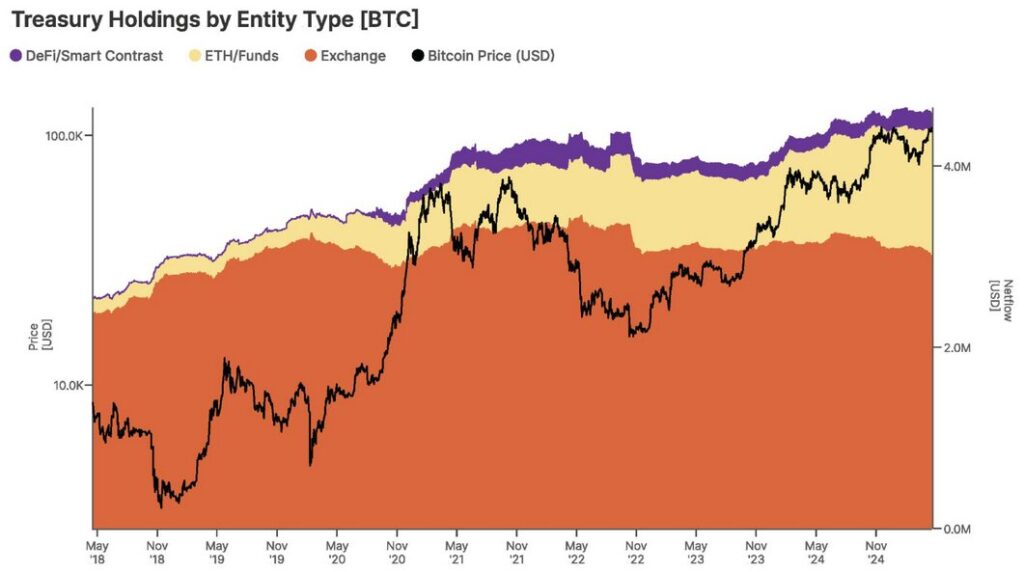
One of the most important developments in this cycle is the growing influence of institutional capital.
Entities such as:
- BlackRock
- ETF issuers
- Corporate treasury holders
now control billions of dollars in Bitcoin exposure.
Bernstein suggests that these players will:
- Push for faster consensus on protocol upgrades
- Fund development of post-quantum solutions
- Coordinate migration strategies across custodians and infrastructure providers
This represents a fundamental shift from Bitcoin’s early years, where upgrades were largely grassroots-driven.
5. BIP-360 and the Technical Road Ahead
A key signal of proactive defense is the emergence of BIP-360, which addresses vulnerabilities related to Taproot key paths.
While still under discussion, BIP-360 highlights several important points:
- The community is actively identifying and mitigating risks
- Specific attack vectors are being technically modeled and addressed
- There is already a framework for incremental upgrades, rather than a disruptive overhaul
This approach is consistent with Bitcoin’s philosophy: gradual, consensus-driven evolution rather than rapid, centralized change.
6. The Hidden Risk: Dormant Wallets and Lost Coins
One of the most underappreciated risks lies in inactive Bitcoin addresses, estimated to hold around 1.7 million BTC.
These wallets often:
- Have exposed public keys
- Cannot easily be upgraded
- Belong to lost or inaccessible accounts
In a quantum attack scenario, these would likely be the first targets, potentially introducing:
- Sudden supply shocks
- Market volatility
- Redistribution of long-lost coins
However, Bernstein notes that even this risk is containable, as it does not affect the majority of actively managed holdings.
7. Market Implications: Opportunity in Overreaction?
From an investment perspective, the key question is whether the market has overreacted.
If Bernstein’s thesis is correct:
- The quantum threat is real but distant
- Mitigation pathways are already underway
- The recent drawdown reflects front-loaded fear pricing
This creates a classic asymmetry:
- Downside risk has been partially priced in
- Upside remains if fears prove overstated
For investors seeking new opportunities, this environment may resemble previous cycles where technological fear created entry points.
8. Broader Trends: AI, Quantum, and Crypto Convergence
The intersection of:
- Artificial Intelligence
- Quantum Computing
- Blockchain
is becoming one of the most important frontiers in digital asset markets.
Rather than viewing quantum computing purely as a threat, forward-looking builders are exploring:
- Quantum-resistant blockchains
- AI-enhanced cryptographic systems
- New trust models beyond classical assumptions
This aligns with a broader shift toward next-generation infrastructure, where security is dynamic and continuously evolving.
Conclusion: A Crisis Already Absorbed—or Just Beginning?
Bitcoin’s recent 50% correction may ultimately be remembered not as a collapse, but as a market-wide stress test of technological resilience.
Bernstein’s analysis suggests that:
- The quantum threat is not an existential crisis
- The ecosystem has time, capital, and coordination to respond
- Institutional involvement will likely accelerate adaptation
For investors and builders alike, the key takeaway is clear:
The future of Bitcoin will not be determined by whether quantum computing emerges—but by how effectively the ecosystem evolves in response.