

Main Points :
- Bitcoin dropped sharply after the failure of U.S.–Iran nuclear negotiations, highlighting crypto’s sensitivity to geopolitical risk
- Strong profit-taking pressure above $70,000 is limiting upward momentum
- Ethereum and Solana remain relatively stable but face correlated volatility
- Global regulatory frameworks are rapidly evolving, reshaping market structure
- Institutional flows and liquidity conditions are becoming the dominant drivers of crypto price cycles
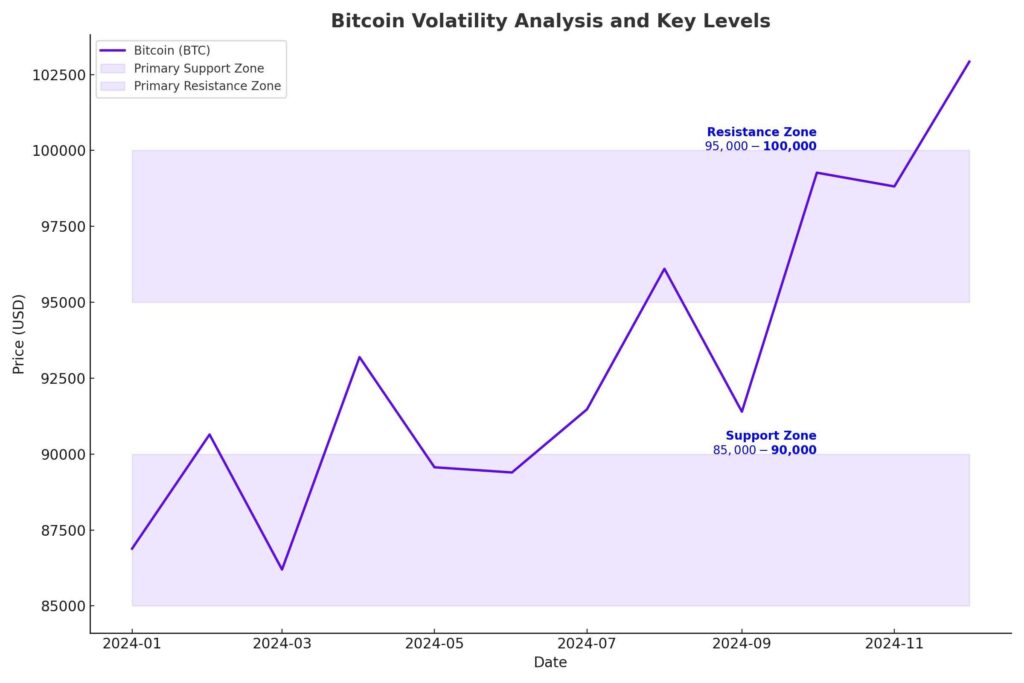
Bitcoin Price Volatility Around $70K (Sample Chart)
1. Market Overview: A Fragile Rally Meets Reality
As of April 13, 2026, the cryptocurrency market stood at a critical inflection point. Bitcoin (BTC) hovered around $70,780, Ethereum (ETH) traded near $2,180, and Solana (SOL) maintained levels around $81. The total crypto market capitalization reached approximately $2.49 trillion, with Bitcoin dominance at 59.3%, underscoring its continued leadership in market direction.
However, beneath these seemingly stable figures, structural fragility was building. The market had recently experienced a strong rally driven by institutional inflows, ETF-related optimism, and macroeconomic hedging narratives. Yet, as history repeatedly shows, crypto markets are highly sensitive to external shocks—especially geopolitical ones.
The latest downturn illustrates this clearly: a macro-driven correction rather than a purely technical pullback.
2. Geopolitical Shock: The U.S.–Iran Nuclear Deal Collapse
The immediate trigger for Bitcoin’s sharp decline was the breakdown of nuclear negotiations between the United States and Iran. Talks held in Pakistan failed to produce an agreement, reigniting geopolitical tensions in an already fragile global environment.
While Bitcoin is often promoted as a “safe haven” asset similar to gold, real-world market behavior tells a more nuanced story. In moments of acute uncertainty, liquidity—not ideology—dominates.
When geopolitical tensions rise:
- Institutional investors reduce risk exposure
- Liquid assets like Bitcoin are sold to cover broader portfolio risks
- Volatility spikes across all risk-on asset classes
This explains why Bitcoin dropped from approximately $73,000 levels despite its narrative as “digital gold.”
Interestingly, this behavior aligns with previous global crises, such as:
- The 2020 COVID-19 liquidity crunch
- The 2022 tightening cycle driven by central banks
- Regional conflicts impacting global risk sentiment
In all cases, Bitcoin initially declined before later recovering stronger—suggesting that short-term reactions often diverge from long-term narratives.
3. The $70,000 Barrier: Profit-Taking and Liquidity Constraints
A critical technical and psychological level has emerged around $70,000–$80,000.
Market data indicates that:
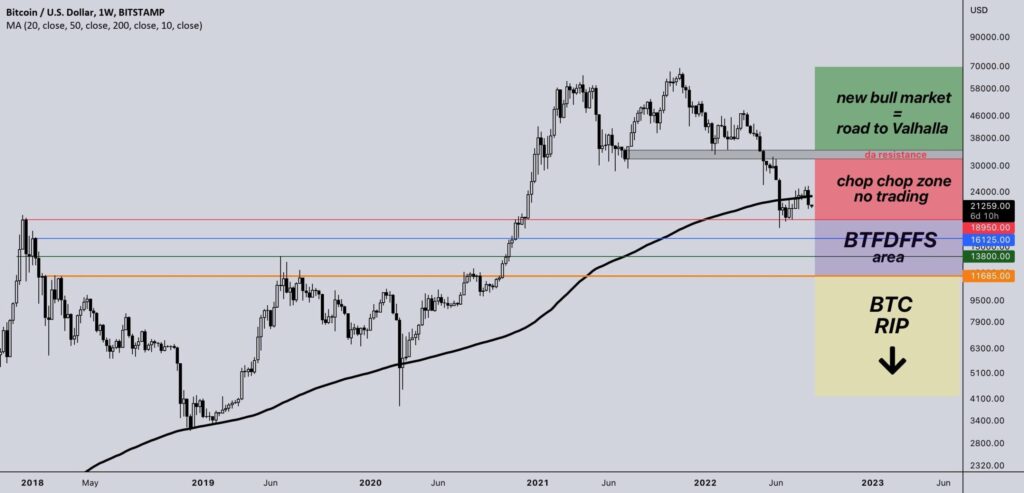
- Every approach to this range triggers significant sell pressure
- Liquidity becomes thinner at higher levels
- Profit-taking accelerates among early investors and institutional holders
Reports suggest that sell pressure exceeding $20 million per hour has been observed during peak resistance periods.
This phenomenon is not surprising when considering the market structure:
- Many investors accumulated BTC below $40,000–$50,000
- Crossing $70,000 represents a major profit realization milestone
- Algorithmic trading systems amplify resistance zones
In essence, the market is undergoing distribution, where early gains are being realized before a potential next leg upward.
This does not necessarily signal a bearish reversal—but rather a healthy consolidation phase.
Profit-Taking Zones and Liquidity Heatmap (Conceptual)
4. Altcoins Under Pressure: Ethereum and Solana Dynamics
While Bitcoin leads the market, altcoins such as Ethereum and Solana provide important signals about broader sentiment.
- Ethereum (~$2,180) remains supported by:
- Layer-2 ecosystem growth
- Institutional staking products
- Continued DeFi expansion
- Solana (~$81) benefits from:
- High-speed transaction capabilities
- Increased developer activity
- Growing adoption in consumer-facing applications
However, both assets exhibit correlated downside risk during Bitcoin-led corrections.
Recent trends show:
- Capital rotating back into Bitcoin dominance during uncertainty
- Reduced risk appetite for smaller-cap altcoins
- Liquidity concentration in major assets
This reinforces a key insight:
In volatile conditions, Bitcoin is not just the leader—it becomes the refuge within crypto itself.
5. Regulatory Transformation: A New Global Framework Emerging
Perhaps the most structurally significant development is not price action—but regulation.
Across multiple regions, governments are accelerating crypto policy frameworks:
Russia
- The Central Bank of Russia is reportedly moving toward banning crypto cash-out mechanisms, aiming to limit capital flight and enforce stricter financial controls.
Japan
- The Government of Japan is advancing efforts to classify cryptocurrencies as financial products, which would:
- Increase investor protections
- Introduce stricter compliance requirements
- Align crypto with traditional securities frameworks
Asia (Broader Trends)
- Enhanced AML/CFT enforcement
- Licensing requirements for VASPs
- Integration with traditional financial systems
These developments indicate a shift from:
“Unregulated innovation” → “Institutionalized financial infrastructure”
For market participants, this has dual implications:
- Short-term friction (compliance costs, reduced flexibility)
- Long-term legitimacy (institutional capital inflows, broader adoption)
6. The Institutional Era: Liquidity, Not Narratives
A defining theme of the current cycle is the dominance of institutional behavior.
Unlike previous retail-driven bull markets:
- Liquidity flows now dictate price direction
- ETF products and custodial solutions anchor capital
- Macro events directly impact crypto pricing
Bitcoin is increasingly behaving like:
- A macro-sensitive asset (similar to equities)
- A liquidity instrument (used in portfolio rebalancing)
- A strategic hedge (but only over longer time horizons)
This transformation aligns with broader financial integration:
- Banks entering digital asset custody
- Payment giants integrating stablecoins
- Governments exploring CBDCs
7. Strategic Implications for Investors
For readers seeking new crypto opportunities and income streams, several actionable insights emerge:
1. Expect Volatility Near Key Levels
The $70,000–$80,000 range will likely remain a battleground between:
- Profit-taking sellers
- Momentum-driven buyers
2. Watch Liquidity, Not Headlines Alone
Geopolitical events matter—but their impact is mediated through liquidity conditions.
3. Focus on Infrastructure Plays
Projects tied to:
- Compliance (KYC/AML tools)
- Cross-border payments
- On-chain settlement systems
are positioned for long-term growth.
4. Bitcoin as Both Risk and Hedge
Short-term: behaves like a risk asset
Long-term: retains hedge characteristics
Conclusion: A Market Growing Up
The recent Bitcoin pullback is not an isolated घटना—it is a reflection of a maturing financial ecosystem.
Geopolitical tensions, profit-taking dynamics, and regulatory evolution are converging to reshape the crypto market into something fundamentally different from its early days.
This is no longer a market driven purely by speculation or ideology.
It is becoming:
- Structured
- Regulated
- Institutionalized
And with that transformation comes a new reality:
The next phase of crypto growth will not be driven by hype—but by infrastructure, liquidity, and real-world integration.
For investors, builders, and operators alike, the opportunity lies not just in price movements—but in understanding and positioning within this evolving system.



