
Main Points :
- The U.S. Securities and Exchange Commission (SEC) clarified when crypto interfaces can avoid broker-dealer registration
- Wallets, DeFi frontends, and aggregators must operate as strictly neutral software
- Revenue models must shift toward fixed fees and transparency, limiting monetization strategies
- The guidance reshapes UX design, routing logic, and compliance architecture
- This could accelerate non-custodial innovation while restricting “soft brokerage” behaviors
- New opportunities emerge in infrastructure, analytics, and compliant interface layers
1. A Regulatory Turning Point for Crypto Interfaces
In April 2026, the U.S. Securities and Exchange Commission issued a landmark clarification: certain crypto interfaces—such as wallet applications, browser extensions, and DeFi frontends—may operate without registering as broker-dealers, provided they meet strict neutrality and transparency requirements.
This guidance focuses specifically on interfaces that help users prepare or route transactions, including those involving crypto assets that may be classified as securities. The ruling does not broadly deregulate the space; instead, it draws a sharp line between neutral infrastructure and active intermediation.
In essence, the SEC is saying:
You may build the interface—but you must not influence the trade.
This distinction is profound. It reframes how products are designed, how revenue is generated, and how compliance is embedded at the UI level.
2. The Core Rule: Neutral Software, Not Financial Intermediaries
Under the new framework, qualifying platforms must act purely as technical translators—converting user intent into blockchain-executable instructions.
They are explicitly prohibited from:
- Recommending trades
- Prioritizing specific venues
- Acting as intermediaries between users and markets
Instead, these platforms must:
- Allow full user control over transaction parameters
- Present objective, rule-based routing options
- Avoid any language suggesting optimization (e.g., “best price”)
This effectively forces a paradigm shift:
Interfaces must behave like open calculators, not advisors or brokers.
3. Compliance Checklist: What Platforms Must Do
To qualify for exemption, platforms must adhere to a detailed compliance framework:
3.1 No Solicitation or Advice
No nudging, no highlighting, no “recommended trades.”
Even subtle UX patterns (like default selections) may fall under scrutiny.
3.2 Fixed Fee Structures
Fees must be:
- Predefined
- Independent of transaction outcome
- Not tied to specific exchanges or assets
This eliminates common practices such as:
- Payment for order flow
- Spread-based hidden fees
3.3 Full Disclosure
Platforms must clearly disclose:
- Fees
- Risks
- Conflicts of interest
- Relationships with exchanges or liquidity providers
3.4 Objective Routing Logic
Execution paths must be:
- Based on verifiable rules
- Presented as multiple options
- Free from subjective ranking
The phrase “best price” is effectively banned unless it can be objectively proven and consistently applied.
4. Revenue Model Disruption: The End of Hidden Monetization
This guidance fundamentally challenges how crypto interfaces make money.
Old Model
- Spread capture
- Routing incentives
- Exchange kickbacks
- Embedded margins
New Model
- Transparent fixed fees
- Subscription models
- Premium analytics
- Infrastructure services
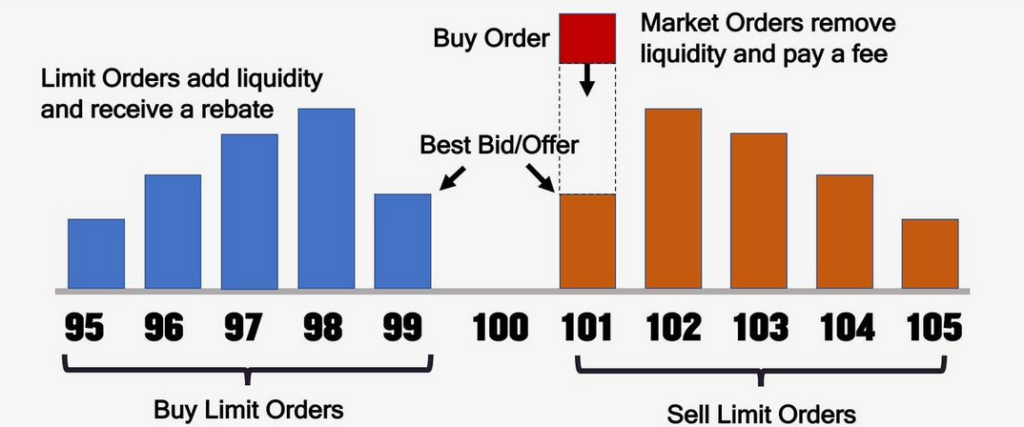
The shift resembles what happened in traditional finance when payment for order flow came under scrutiny.
In crypto, however, the transformation is happening at the interface layer, not just the broker level.
5. UX and Product Design: Compliance Becomes Architecture
Design teams must now think like compliance officers.
Key UX Implications:
- No default “best route” selection
- Multiple execution paths must be shown
- Clear labeling of risks and fees
- User-driven parameter selection
This introduces friction—but also trust.
Platforms that master this balance may gain a competitive edge, particularly among institutional users and regulated markets.
6. Alignment with Global Trends
The SEC’s move aligns with broader global regulatory patterns:
- The Markets in Crypto-Assets Regulation (MiCA) in Europe emphasizes transparency and investor protection
- Asian regulators (e.g., Japan, Singapore) increasingly focus on custody separation and disclosure
- The U.S. is converging toward a model where interfaces are allowed—but tightly constrained
This suggests a future where:
- Core protocols remain decentralized
- Interfaces become regulated gateways
7. Strategic Opportunities for Builders and Investors
Despite constraints, this shift opens new opportunities:
7.1 Infrastructure Layer Plays
- Transaction routing engines
- Compliance APIs
- Risk scoring systems
7.2 Non-Custodial Wallet Innovation
- Advanced self-custody UX
- Secure transaction builders
- Multi-chain abstraction layers
7.3 Data and Analytics
- Independent price discovery tools
- Route comparison engines
- On-chain intelligence dashboards
7.4 Enterprise & Institutional Interfaces
- Compliance-first UI frameworks
- Audit-ready transaction systems
For a builder (especially in a non-custodial wallet like your dzilla Wallet concept), this is highly relevant:
The guidance effectively validates neutral transaction interfaces—but demands rigorous design discipline.
8. Risks and Limitations
The guidance is not permanent—it is valid for up to five years unless revised or withdrawn.
Key risks include:
- Regulatory reinterpretation
- Enforcement variability
- Ambiguity in what constitutes “recommendation”
- Increased compliance costs
Additionally, innovation may be constrained in:
- UX experimentation
- AI-driven recommendations
- Smart routing optimizations
9. The Bigger Picture: A New Financial Interface Layer
This development signals a deeper transformation:
- Finance is moving toward protocol-level execution
- Interfaces are becoming regulated translation layers
- Trust is shifting from institutions to design constraints and transparency
In your “Two-Extremes Model” framing:
- This sits between Asset-Backed Representation (regulated systems)
- And Autonomous Trust Tender (pure decentralization)
The SEC is effectively defining the bridge layer.
Conclusion
The SEC’s new guidance does not suppress DeFi—it redefines its boundaries.
By enforcing neutrality, transparency, and user control, regulators are shaping a future where:
- Interfaces are safe but limited
- Protocols remain powerful but abstract
- Value shifts to infrastructure, compliance, and user trust
For builders and investors, the message is clear:
The next wave of crypto opportunity lies not in bending the rules—but in designing systems that thrive within them.



