Main Points :
- Robert Kiyosaki signaled a temporary pause in buying Bitcoin, gold, and silver while waiting for a potential new market bottom.
- Despite claims of stopping purchases at certain price levels, his historical pattern shows aggressive buying even during strong rallies.
- His macro thesis centers on U.S. debt expansion, fiat currency debasement, and systemic fragility.
- He continues to favor hard assets — Bitcoin, gold, and silver — as long-term hedges.
- The broader crypto market in 2026 shows increasing institutional participation, ETF inflows, and sovereign debt concerns reinforcing Bitcoin’s “digital gold” narrative.
- For investors seeking new income sources and practical blockchain applications, volatility may represent opportunity rather than risk.
1. A Strategic Pause — Not a Reversal
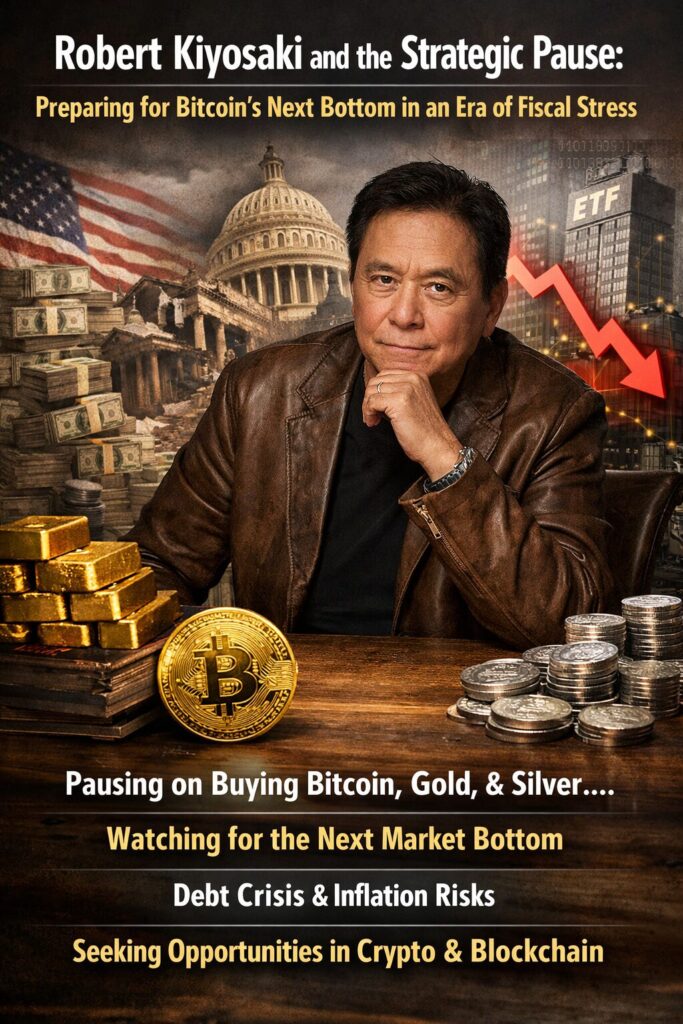
Robert Kiyosaki, the author of Rich Dad Poor Dad, recently announced on social media that he has stopped buying Bitcoin, gold, and silver at specific price levels and is now waiting for a new bottom before re-entering the market.
He stated that he stopped buying silver at $60, Bitcoin at $6,000, and gold at $300. He also disclosed that he sold some Bitcoin and gold — reluctantly — due to capital gains tax considerations. His latest message suggests patience: he is waiting for a “new bottom” before accumulating again.
At first glance, this appears contradictory. Kiyosaki has historically advocated continuous accumulation of hard assets, especially during monetary instability. However, a closer look suggests this is not a philosophical reversal — it is a tactical shift.
His move reflects profit discipline rather than abandonment. Selling into strength while waiting for correction is consistent with cyclical investing, especially in volatile assets like Bitcoin.
For long-term crypto-focused readers, this distinction matters. Strategic liquidity management is not the same as bearish conviction.
2. The Contradiction: Buying Into Strength
Kiyosaki’s recent caution contrasts sharply with earlier statements.
Earlier this year, when Bitcoin was trading above $107,000, he publicly stated that he was buying more. When prices exceeded $117,000, he declared his intention to purchase another coin “as soon as possible.” He also admitted buying Bitcoin around $110,000 during what Raoul Pal described as the “Banana Zone” — a euphoric acceleration phase in crypto markets.
This pattern suggests that Kiyosaki does not strictly adhere to fixed price ceilings. Instead, he buys during momentum phases while maintaining a macro thesis centered on fiat collapse.
His famous quote, “Pigs get fat, hogs get slaughtered,” reflects risk management awareness. Even committed bulls must manage entry points.
For investors evaluating Bitcoin’s trajectory, this reinforces an important lesson: narrative conviction does not eliminate tactical timing.
3. The Macro Foundation: $38 Trillion in Debt and Counting
Kiyosaki attributes his caution to U.S. fiscal instability. He referenced $38 trillion in national debt and claimed total obligations, including Social Security and Medicare, could reach $250 trillion.
While economists debate the interpretation of these figures, the underlying theme is clear: expanding sovereign debt erodes fiat currency confidence.
Recent data supports concern about fiscal strain:
- U.S. federal debt has continued climbing.
- Interest payments on government debt have become one of the largest federal budget items.
- Global central banks remain structurally dependent on monetary flexibility.
In such an environment, hard assets historically gain relevance.
Bitcoin’s narrative increasingly parallels gold — not as a speculative token, but as a decentralized monetary alternative.
4. Bitcoin’s Structural Evolution in 2026
To contextualize Kiyosaki’s position, we must examine broader market developments.
Institutional Integration
The launch and growth of U.S. spot Bitcoin ETFs have significantly changed the landscape. Billions of dollars in inflows have normalized Bitcoin exposure for traditional investors.
Major asset managers now treat Bitcoin as:
- A portfolio diversifier
- A hedge against monetary debasement
- A high-beta macro asset
This institutional framework reduces the probability of Bitcoin returning to extreme low levels such as $6,000 unless a systemic collapse occurs.
Sovereign and Corporate Adoption
Several corporations continue holding Bitcoin as treasury reserves. Additionally, emerging markets facing currency volatility increasingly explore digital assets as reserve alternatives.
On-Chain Metrics
Long-term holder supply remains elevated. Exchange balances have trended downward during accumulation phases, indicating reduced sell pressure.
5. Gold, Silver, and Bitcoin — Complementary, Not Competing
Kiyosaki’s allocation framework includes gold and silver alongside Bitcoin.
Gold trades near historical highs above $2,000 per ounce, while silver volatility continues attracting speculative interest. Both metals benefit from geopolitical tension and inflation expectations.
Bitcoin differs in three key ways:
- Portability — Easily transferred across borders.
- Scarcity Transparency — Fixed supply cap of 21 million coins.
- Programmability — Enables financial infrastructure beyond store-of-value.
For blockchain-focused readers, this third characteristic is critical.
Bitcoin is not merely digital gold — it underpins:
- Lightning Network micropayments
- Cross-border settlement rails
- Custody innovation
- Collateralized lending markets
6. Volatility as an Accumulation Mechanism
Kiyosaki’s strategy — sell partial holdings, wait for pullbacks — reflects volatility harvesting.
In crypto markets, volatility is structural, not accidental.
For disciplined investors, corrections provide:
- Lower entry points
- Improved risk-reward ratios
- Liquidity redistribution from weak to strong hands
Historically, Bitcoin drawdowns of 20–40% during bull cycles are common.
The question is not whether corrections occur, but whether investors are capitalized to exploit them.
7. Practical Implications for Crypto Entrepreneurs
For readers seeking new income streams and practical blockchain applications, market cycles create asymmetric opportunity.
During Bull Markets:
- Token issuance becomes easier.
- Liquidity increases.
- Retail participation expands.
During Corrections:
- Infrastructure projects consolidate.
- Builders accumulate.
- Stronger hands gain influence.
Strategic pauses, like Kiyosaki’s, may signal preparation rather than fear.
8. Chart Section (Insert Visuals Below)
[Bitcoin Price vs U.S. Debt Growth]
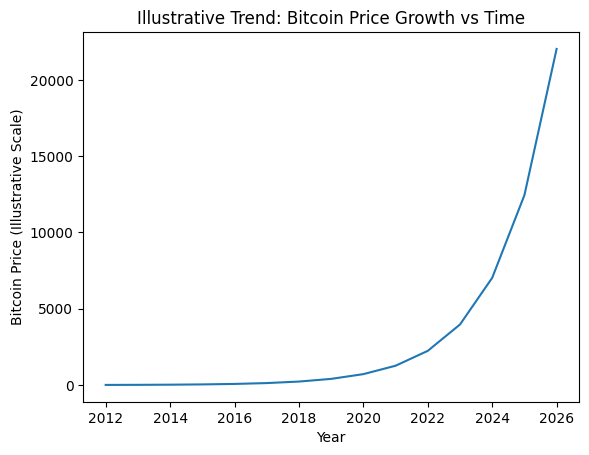
Description: A dual-axis chart showing Bitcoin price appreciation against U.S. federal debt expansion over time. This visual demonstrates correlation between monetary expansion and Bitcoin’s long-term trajectory.
[Bitcoin Market Cycles]
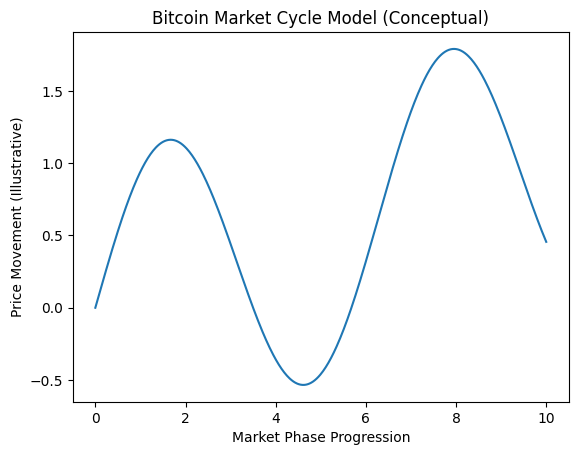
Description: A simplified cycle diagram illustrating accumulation, markup, distribution, and correction phases.
9. The Psychological Component
Markets are driven by liquidity and psychology.
When prominent investors signal caution, sentiment can shift temporarily. However, long-term trends depend on structural drivers — debt expansion, currency debasement, technological adoption.
Kiyosaki’s messaging continues emphasizing distrust in fiat systems and confidence in scarce assets.
That macro thesis remains unchanged.
Conclusion: Waiting Is Also a Strategy
Robert Kiyosaki’s recent announcement is not a retreat from Bitcoin — it is a timing adjustment within a broader hard-asset strategy.
His worldview remains anchored in:
- Fiscal instability
- Fiat skepticism
- Long-term asset accumulation
For sophisticated crypto investors, the key takeaway is not whether he buys at $6,000 or $110,000.
The key takeaway is this:
Capital discipline during volatility determines survival.
If macro debt expansion continues, Bitcoin’s long-term thesis strengthens. If liquidity tightens, corrections create opportunity.
In both scenarios, preparation matters more than prediction.
Waiting for the next bottom is not weakness.
It is strategy.