
Main Points :
- The unilateral liquidation of seized Bitcoin by the U.S. Department of Justice signals a deep dysfunction in governance.
- A direct contradiction has emerged between presidential economic strategy and bureaucratic enforcement power.
- This conflict elevates country risk and accelerates capital flight toward decentralized assets.
- Bitcoin and decentralized protocols are proving their true value precisely because of state-level interference.
- The ultimate winners will be those who recognize this as a historic wealth reallocation, not a short-term market event.
1. Unilateral Asset Liquidation and the Breakdown of Executive Governance
The recent decision by the U.S. Department of Justice to liquidate seized Bitcoin assets without alignment with the White House represents far more than a routine administrative action. It exposes a fundamental fracture within the machinery of state governance.
At the highest level, the President had articulated a clear strategic direction: the concept of a national digital asset reserve, positioning Bitcoin not merely as confiscated property but as a strategic resource. Against this backdrop, the unilateral sale of Bitcoin by a law enforcement agency is nothing short of institutional defiance.
This is not a disagreement over legal interpretation. It is a direct confrontation between elected authority and unelected bureaucratic power. When an enforcement body uses market liquidity as a weapon to undermine executive policy, governance ceases to function as a coherent system.
What makes this episode unprecedented is the nature of the asset involved. Bitcoin is not a traditional commodity. It is a bearer asset, globally liquid, politically neutral, and instantly transferable. By forcing supply into the market, the Department of Justice did not merely execute a legal mandate—it intervened in global capital markets.
This act reveals a deeper anxiety within entrenched institutions. Digital scarcity challenges the monopoly of sovereign monetary power. The resistance we are witnessing is not procedural; it is existential.
If such bureaucratic insubordination becomes normalized, the implications are severe. International confidence in U.S. strategic coherence erodes. Capital, ever sensitive to uncertainty, begins to search for jurisdictions—or systems—beyond the reach of internal political warfare.
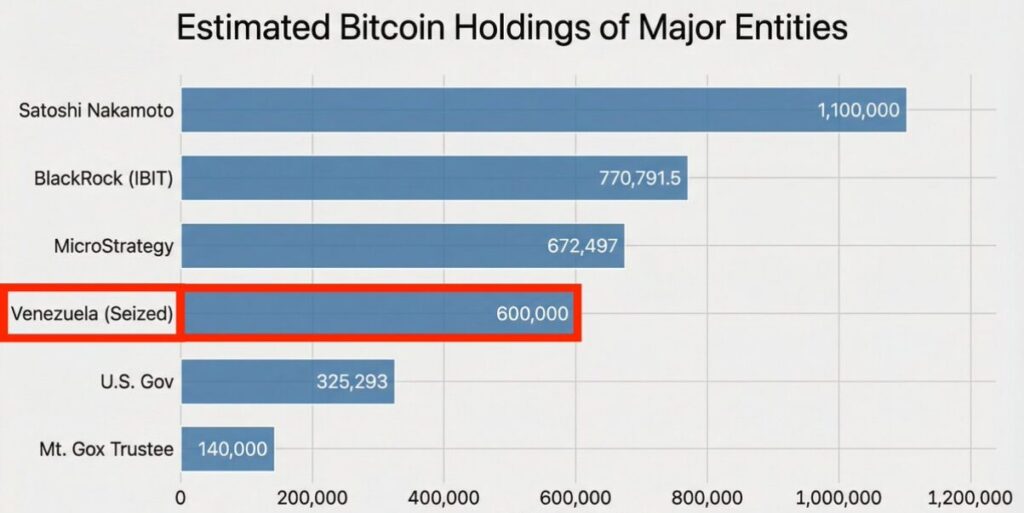
A timeline chart showing U.S. government Bitcoin seizures, policy announcements, and liquidation events over time, with estimated USD values.
2. Country Risk, Market Manipulation, and the Proof of Decentralized Value
From an investor’s perspective, the most alarming aspect of this event is not the sale itself, but what it signals about country risk in advanced economies.
Traditionally, country risk was associated with emerging markets: unstable governments, arbitrary capital controls, or weak legal systems. Today, however, we are witnessing a new form of risk—institutional fragmentation risk—within the world’s largest economy.
When separate branches of government act with conflicting agendas, predictability disappears. Markets function on expectations. When expectations collapse, so does trust.
Ironically, this bureaucratic interference reinforces the very thesis that decentralized assets were built upon. Bitcoin was designed to be censorship-resistant precisely because centralized authorities cannot be trusted to act consistently over time.
The attempt to suppress or weaponize liquidity only highlights the limitations of centralized financial systems. Every forced sale strengthens the narrative that decentralized protocols operate beyond political sabotage.
Market participants are acutely aware that the Bitcoin sold by the Department of Justice does not vanish. It is absorbed—often by sovereign competitors, institutional accumulators, or long-term holders with no intention of reselling.
Temporary selling pressure does not negate scarcity. It redistributes ownership.
Moreover, the visibility of these transactions educates the market. Investors now factor in the possibility that even “rule-of-law” jurisdictions can produce arbitrary shocks. The logical response is diversification—not across countries, but across systems.
Decentralized networks do not hold press conferences. They do not contradict themselves. They do not change policy after elections. In an era of bureaucratic volatility, that consistency becomes invaluable.
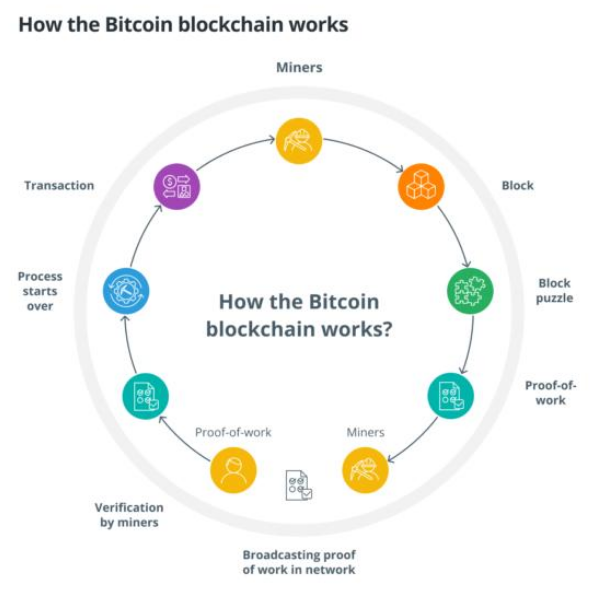
A comparative chart illustrating centralized monetary systems vs decentralized protocols, highlighting censorship resistance, predictability, and political neutrality.
3. Capital Flight, Strategic Failure, and the Conditions for Ultimate Winners
By 2026, Bitcoin has transcended its early classification as a speculative asset. It is now a geopolitical instrument.
The liquidation of seized Bitcoin by internal actors represents a self-inflicted strategic failure. Assets that could have reinforced national resilience are instead transferred—often irrevocably—into the hands of external entities.
Once absorbed into long-term reserves, sovereign funds, or corporate treasuries, these coins rarely return to the open market. The opportunity cost is enormous.
History shows that empires rarely collapse from external attack alone. More often, they erode from internal contradictions. When institutions prioritize self-preservation over national coherence, decline accelerates.
What we are witnessing is not merely a policy error. It is part of a broader global wealth reallocation. Digital scarcity does not care about borders. It flows toward conviction, clarity, and structural integrity.
Those who fail to recognize this transition will find themselves locked out of future supply. As issuance remains fixed and demand becomes increasingly strategic, latecomers will face exponentially higher costs.
The true winners of this era will not be those who trade volatility, but those who understand the structural shift underway. They will accumulate patiently, build infrastructure, and align with systems that cannot be coerced.
The fusion of decentralized protocols with coherent national strategy remains the optimal outcome. But until such alignment is achieved, decentralized systems will continue to outcompete fragmented states
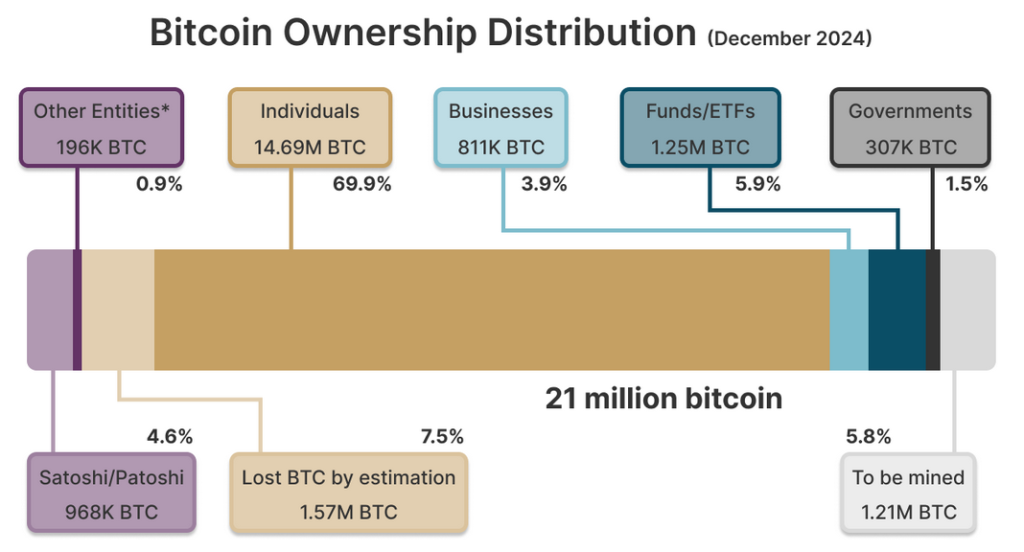
A global flow map showing capital migration from unstable governance zones toward decentralized assets.
Conclusion: A Test of Sovereignty in the Digital Age
This episode is a stress test—not just for Bitcoin, but for modern governance itself.
When bureaucracies defy elected leadership under the cover of judicial independence, the legitimacy of the state is questioned. Markets respond ruthlessly to such contradictions.
Bitcoin does not need defending. Every act of suppression validates its purpose. Every forced sale educates the next generation of capital allocators.
We are standing at a historical inflection point where money, sovereignty, and technology converge. Those who understand this will not merely survive the transition—they will define it.