
Main Points :
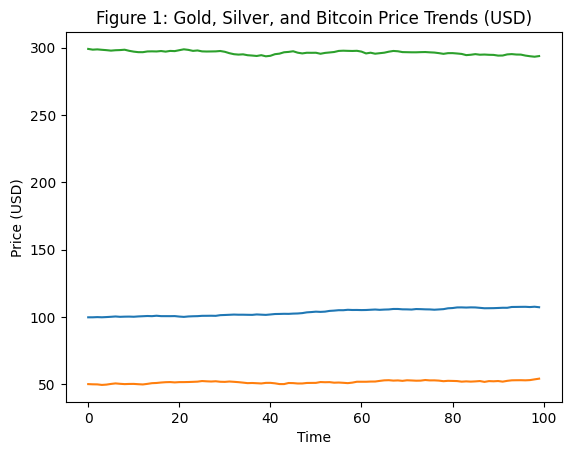
- Gold and silver have continued to rise over the past three months, while Bitcoin has remained locked in a narrow trading range.
- This divergence reflects a macro regime characterized by elevated geopolitical risk, policy uncertainty, and expectations of declining real interest rates.
- Precious metals benefit from being treated as true safe-haven assets, while Bitcoin is still largely categorized as a high-beta risk asset.
- Institutional capital flows structurally favor gold and silver during risk-off phases, whereas Bitcoin requires marginal demand growth to sustain upward momentum.
- On-chain indicators from CryptoQuant—notably apparent demand and Short-Term Holder SOPR—support the view that Bitcoin demand is currently insufficient.
- A regime shift is possible if Bitcoin’s apparent demand turns sustainably positive and short-term holders regain profitability.
1. The Current Market Phase: A High-Level View
The present market environment can best be described as a post-rally consolidation phase at elevated price levels. After strong advances earlier in the year, many assets have entered a range-bound state, digesting gains while awaiting new macro catalysts.
However, not all assets are behaving equally within this consolidation. Over the last three months, gold and silver prices have continued to trend upward, while Bitcoin has stalled, oscillating within a relatively narrow band when measured in U.S. dollar terms.
This divergence is not accidental. It reflects how global capital is being allocated under conditions of heightened uncertainty—and, crucially, how different assets are perceived in terms of risk, liquidity, and portfolio function.
2. Safe-Haven Demand and the Return of Precious Metals
Gold’s strength is rooted in its long-standing role as a monetary hedge. Rising geopolitical tensions, persistent fiscal deficits, and ambiguous central bank policy paths have revived demand for assets that are not someone else’s liability.
At the same time, expectations for declining real interest rates—driven by the belief that inflation will remain structurally higher than policy rates—have reduced the opportunity cost of holding non-yielding assets like gold. This has reinforced long-term allocation flows from central banks, sovereign wealth funds, and conservative institutional investors.
Silver, while historically more volatile, often amplifies gold’s moves. Its dual nature as both a monetary metal and an industrial input means that supply constraints and speculative positioning can cause price action that exceeds gold on a percentage basis during bullish phases.
In short, gold provides stability; silver provides leverage. Together, they attract capital during periods when investors prioritize capital preservation over growth.
3. Bitcoin’s Structural Positioning as a High-Beta Asset
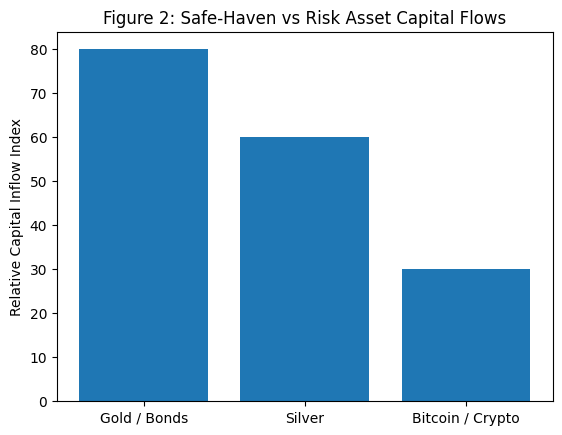
Despite frequent comparisons to “digital gold,” Bitcoin is still largely treated by global investors as a high-beta risk asset. In risk-off environments, capital typically flows first into government bonds and precious metals—not into assets perceived as volatile or speculative.
This distinction matters. Gold buyers tend to be long-term oriented, relatively insensitive to short-term price fluctuations, and less likely to engage in rapid profit-taking. Bitcoin holders, by contrast, include a significant share of short-term traders and leveraged participants whose behavior is far more sensitive to marginal changes in sentiment.
As a result, even when macro conditions appear broadly supportive—such as falling real yields or currency debasement concerns—Bitcoin often struggles to extend gains unless accompanied by a clear resurgence in demand.
4. Institutional Capital Flow Mechanics
Another key factor lies in the structure of institutional investment itself. Large pools of capital operate under strict mandates that define allowable assets, volatility limits, and liquidity requirements.
Gold fits neatly into these frameworks. It has centuries of price history, deep liquidity, and established custody and settlement systems. Bitcoin, while increasingly accessible through ETFs and regulated products, still occupies a more ambiguous position within institutional portfolios.
During periods of uncertainty, this asymmetry becomes pronounced. Capital that might otherwise rotate into equities or crypto instead seeks refuge in assets that compliance committees and risk officers are already comfortable approving.
5. What On-Chain Data Reveals About Bitcoin Demand
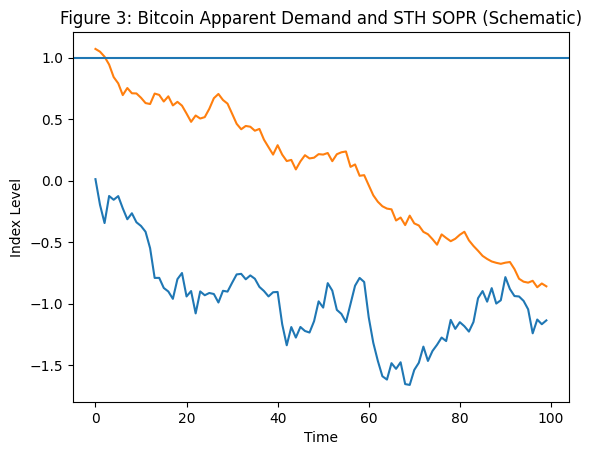
On-chain metrics provide an additional layer of insight into Bitcoin’s current stagnation. According to data from CryptoQuant, Bitcoin’s apparent demand has recently turned negative. This suggests that new buying interest is not keeping pace with the supply being absorbed at current price levels.
At the same time, the Short-Term Holder (STH) SOPR—an indicator measuring whether short-term holders are realizing profits or losses—has spent increasing amounts of time below the neutral level of 1. This implies that many recent buyers are either underwater or exiting positions near break-even.
Such conditions create persistent selling pressure. When prices rise toward the upper end of the range, marginal sellers emerge, preventing sustained upward momentum.
6. Comparative Dynamics: Gold vs. Bitcoin
The contrast between gold and Bitcoin becomes particularly clear when examining buyer composition. Gold markets are dominated by entities with long investment horizons and relatively low price sensitivity. Bitcoin markets, while maturing, still rely heavily on incremental demand from traders and speculative capital.
This difference explains why macro tailwinds alone—such as geopolitical stress or monetary easing—are often sufficient to lift gold prices, but insufficient to propel Bitcoin without confirmation from demand-side indicators.
In essence, gold can rise on fear alone. Bitcoin must rise on conviction.
7. Base Case and Conditional Scenarios
The current base-case scenario assumes that gold and silver will remain supported by safe-haven flows, while Bitcoin continues to trade sideways due to weak demand and short-term holder selling pressure.
However, this outlook is not fixed. Should Bitcoin’s apparent demand turn sustainably positive—and should the STH SOPR stabilize above 1—it would signal a meaningful shift in market structure. Under such conditions, Bitcoin could reassert itself as a macro hedge rather than merely a risk asset.
Until then, patience and selectivity remain essential.
Conclusion: Reading the Regime Correctly
The divergence between precious metals and Bitcoin is not a contradiction; it is a reflection of how markets classify risk under uncertainty. Gold and silver are benefiting from their entrenched status as safe havens, while Bitcoin remains in transition—caught between its aspiration to be digital gold and its reality as a high-beta asset.
For investors seeking new digital assets or revenue opportunities, this distinction matters. Understanding why Bitcoin is lagging is just as important as recognizing when it might reaccelerate. On-chain data, macro signals, and capital flow dynamics together provide the roadmap.