Main Points :
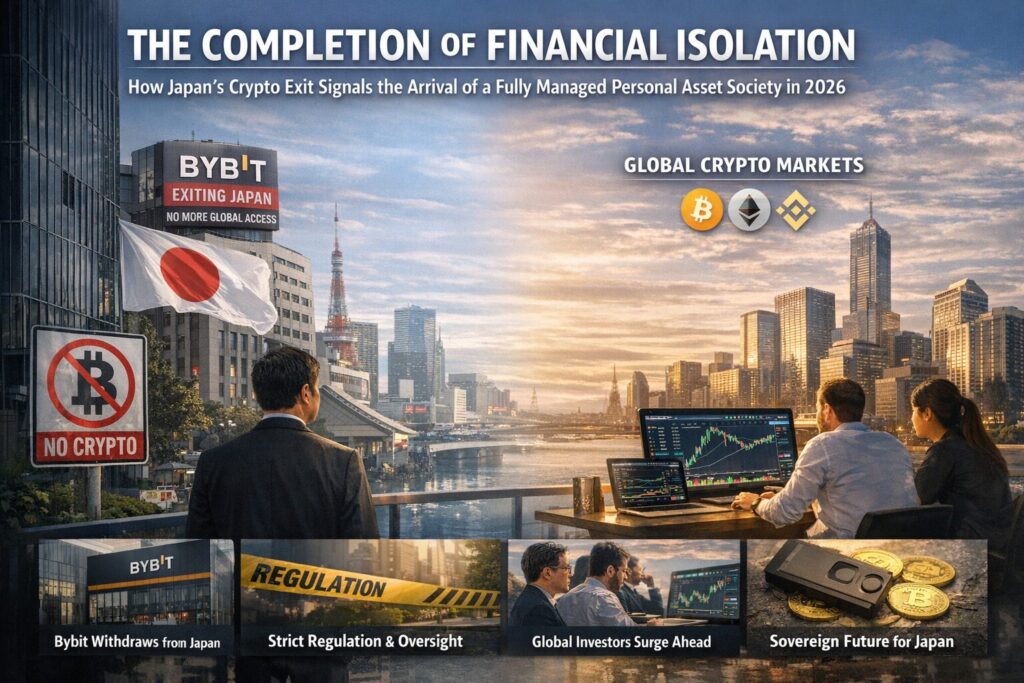
- Japan’s financial environment is entering a decisive phase of isolation as global crypto exchanges exit the market.
- The withdrawal of Bybit marks not just a corporate decision, but the collapse of the last practical gateway to global liquidity for Japanese investors.
- By 2026, Japan is expected to complete a system of comprehensive asset visibility and transaction oversight.
- Investors face a widening gap in opportunity, efficiency, and information compared with their global peers.
- The only viable long-term response lies in sovereign investing: self-custody, protocol-level assets, and independence from centralized platforms.
1. The Fall of the Last Fortress: Regulatory Walls Foreseen by David Sacks
For many years, Japanese investors relied on overseas cryptocurrency exchanges as their final escape hatch from an increasingly restrictive domestic financial system. That era is now ending.
The complete withdrawal of Bybit from the Japanese market, with a final deadline set for January 2026, represents far more than the loss of a single trading venue. It symbolizes the collapse of the last fortress of financial freedom that Japanese investors could still access.
Once, offshore exchanges offered Japanese users exposure to global liquidity, advanced derivatives, deep altcoin markets, and sophisticated risk management tools. These platforms functioned as unofficial bridges connecting Japan to the world’s evolving financial system. Today, those bridges are being dismantled at unprecedented speed.
Regulatory authorities justify this tightening under the banner of investor protection. Yet behind this rhetoric lies a more fundamental objective: full visibility, traceability, and controllability of personal financial activity. Every transaction, balance movement, and conversion is gradually being drawn into a centralized monitoring framework.
The Bybit withdrawal serves as a signal flare announcing that this regulatory web is now complete. Japan’s crypto market is no longer an open ocean but a sealed aquarium—safe, sterile, and profoundly constrained.
Prominent Silicon Valley investor David Sacks has long warned that excessive regulation does not eliminate risk; it merely displaces it while stifling innovation. Japan’s current trajectory exemplifies this principle with uncomfortable clarity.
Returning to domestic exchanges is not merely a change of platform. It is the process of clipping the wings of investors and reclassifying them as passive participants in a tightly managed financial ecosystem.
In practical terms, cross-border capital mobility—once a defining feature of crypto—will be replaced by friction, reporting, and surveillance. The decentralized promise of cryptocurrency is being re-engineered into a compliant extension of the traditional banking system.
2. The Return of Galápagosization: Asset Inequality and Investor Isolation
Japan has experienced this story before.
Just as its once-dominant mobile phone industry collapsed under the weight of unique domestic standards, Japan’s crypto market now risks falling into a second wave of “Galápagosization”—a system optimized for internal control but incompatible with global evolution.
The disappearance of platforms like Bybit removes access to hundreds of trading pairs, advanced leverage instruments, and real-time global price discovery. For professional and semi-professional investors, this is not a minor inconvenience; it is a structural handicap.
[Comparative chart of global vs Japan-only crypto market access]
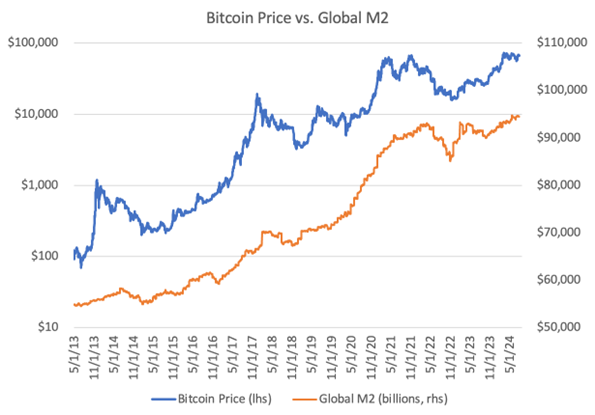
Within domestic-only exchanges, Japanese investors face:
- Narrower asset selection
- Reduced liquidity depth
- Slower product innovation
- Inferior hedging and risk tools
Meanwhile, global markets continue to evolve toward decentralized finance (DeFi), tokenized real-world assets, permissionless lending, and borderless settlement layers.
This divergence creates a compounding effect. Information asymmetry grows. Capital efficiency declines. Opportunity costs accumulate invisibly.
In the United States and parts of Europe, regulatory restructuring is increasingly framed as a catalyst for innovation. Japan, by contrast, prioritizes administrative completeness and systemic oversight above all else. The result is a widening chasm in financial competitiveness.
By 2026, the difference between investors who remain confined within Japan’s regulatory perimeter and those who maintain exposure to global networks will likely be measured not in percentages, but in multiples.
Financial isolation does not merely reduce opportunity—it quietly transfers economic advantage away from individuals and toward centralized authorities.
3. Sovereign Investing at the Closed Gate: Redefining Asset Control
Faced with a narrowing future, despair is not a strategy.
The real question is not whether financial management society will arrive—it is how individuals adapt within it.
The impending Bybit deadline exposes the fragility of platform-dependent wealth. When access can be revoked by corporate or governmental decree, true ownership is revealed to be conditional.
This reality forces a return to fundamentals: self-custody, protocol-native assets, and personal responsibility for security.
[Self-custody architecture vs centralized exchange model]
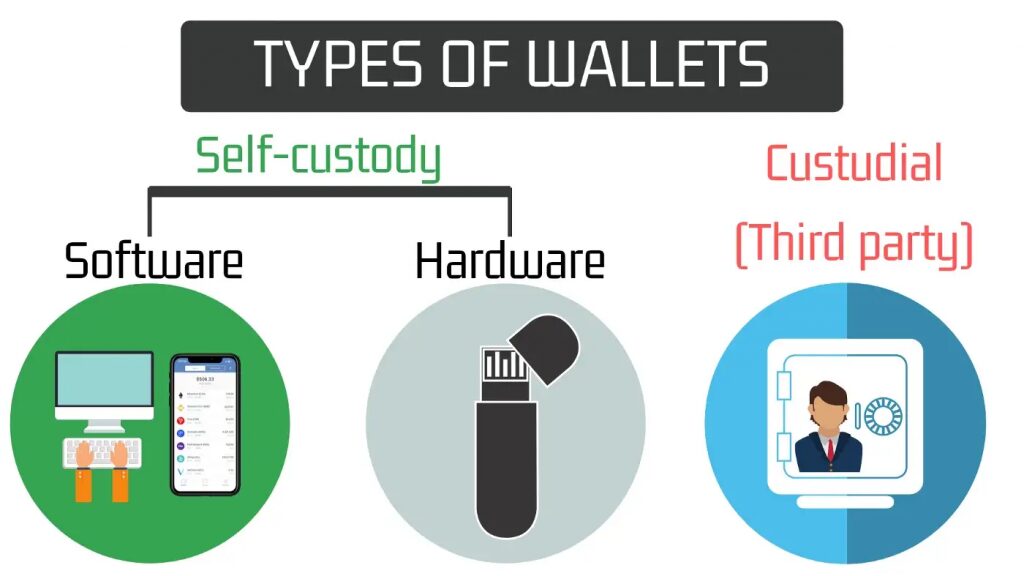
Sovereign investing means:
- Holding assets in wallets you control
- Using blockchains as settlement layers, not service providers
- Minimizing reliance on any single jurisdiction or intermediary
Domestic exchanges may remain useful on-ramps, but trusting them as permanent vaults is increasingly dangerous. In a volatile geopolitical and regulatory era, concentration risk is existential risk.
The original value of digital assets lies in their neutrality: no issuer, no gatekeeper, no kill switch. Reclaiming that principle is no longer ideological—it is pragmatic.
A fully managed society may be unavoidable. But within it, literacy in privacy, custody, and decentralization becomes the defining skill set of the next-generation investor.
Those who treat this moment as a wake-up call will develop resilience. Those who wait for stability will inherit dependency.
True victory, in the end, is not measured by returns alone, but by the refusal to surrender sovereignty over one’s wealth.
Conclusion: Freedom Beyond the Gate
Japan’s financial isolation is not arriving suddenly—it is being completed methodically.
By 2026, the transformation will be undeniable. Yet even as doors close, alternative paths emerge for those willing to learn, adapt, and act.
The loss of easy access is painful. But it also strips away illusion. What remains is a clear choice: managed comfort or sovereign responsibility.
Only those who choose the latter will carry financial freedom beyond the closed gate.