
Main Takeaways :
- Institutional participation has fundamentally lifted Bitcoin’s structural price floor, with long-term downside scenarios clustering far above previous-cycle lows.
- Extreme bearish scenarios still matter—not as predictions, but as stress tests that expose which crypto assets have real economic gravity.
- Liquidity contraction, not macro headlines, is the most immediate risk factor, capable of triggering violent price swings independent of fundamentals.
- The coming “crypto winter” is less about destruction and more about standard-setting: a redefinition of what survives, what fails, and why.
1. A $65,000 Floor in 2026: What Institutionalization Really Changes
When senior leadership at Fidelity Digital Assets publicly floated a scenario in which Bitcoin’s next cyclical bottom forms around $65,000, the market reaction was mixed—equal parts relief and disbelief.
Historically, crypto winters were synonymous with devastation. Bitcoin routinely retraced 80–90% from cycle highs, falling back to price zones that erased years of gains. In contrast, a $65,000 bottom—above prior all-time highs—signals a structural regime change rather than cyclical optimism.
This shift is not about sentiment. It is about balance sheets.
Institutional investors do not trade like retail participants. Their allocations are governed by investment committees, portfolio construction models, custody frameworks, and regulatory oversight. Once capital of that nature enters an asset class, it does not exit impulsively. Instead, it creates defensive demand layers—zones where selling pressure is systematically absorbed.
Bitcoin has crossed a threshold where it is no longer valued solely as a speculative instrument. It increasingly functions as:
- a hedge against fiat debasement,
- a digitally native store of value,
- and a portfolio diversifier with asymmetric upside.
A $65,000 floor implies that the market now assigns Bitcoin a minimum credibility premium. Even during contraction phases, the asset is expected to retain a valuation consistent with global macro relevance.
This does not mean volatility disappears. It means collapse is replaced by compression.
Why This Floor Matters
- It suggests Bitcoin’s downside is now constrained by institutional cost bases.
- It reframes “crypto winter” from existential crisis to cyclical digestion.
- It confirms that Bitcoin’s role in global finance is no longer theoretical.
In previous cycles, winter destroyed belief. In the next cycle, winter may simply test conviction.
2. The $10,000 Doomsday Scenario: Why Altcoins Face a Harder Judgment
Despite institutional optimism, markets do not move on consensus alone. A persistent minority still warns of a catastrophic Bitcoin collapse toward $10,000. While improbable under current conditions, such scenarios serve a crucial analytical purpose.
If Bitcoin were to fall that far, the consequences would extend far beyond price charts.
A move to $10,000 would represent not just a market crash, but a systemic failure of confidence—calling into question custody models, regulatory assumptions, and macro narratives that currently support the asset.
For altcoins, the outcome would be brutal.
Assets such as Ethereum, Cardano, and XRP derive much of their valuation gravity from Bitcoin’s dominance. In a $10,000 scenario:
- Liquidity would evaporate.
- Correlated drawdowns could exceed 90%.
- Many ecosystems would cease meaningful development.
This would not be a correction. It would be mass extinction.
However, such destruction is not inherently negative. Markets periodically require violent resets to eliminate excess leverage, unsustainable tokenomics, and narrative-driven speculation. What survives is leaner, stronger, and more relevant.
The Hidden Function of Extreme Bear Cases
- They expose which projects have real users, revenue, and demand.
- They force investors to separate infrastructure from ideology.
- They accelerate consolidation around viable protocols.
If a $10,000 Bitcoin scenario ever materialized, it would mark the end of crypto’s adolescence—and the beginning of its adult phase.
3. Liquidity Collapse and the Coming Volatility Storm
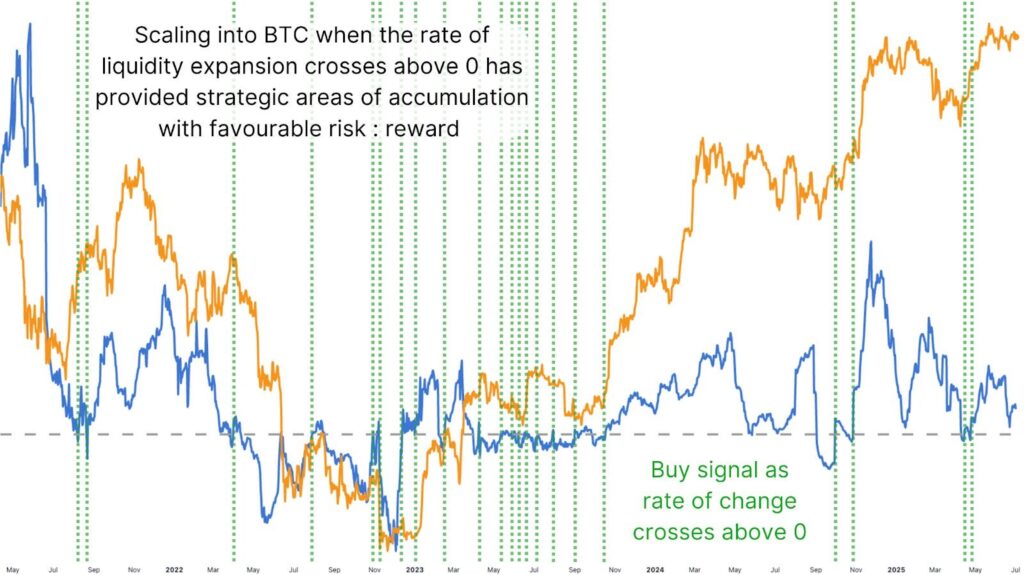
While long-term debates dominate headlines, the immediate risk facing markets is far more mechanical: liquidity contraction.
Recent data shows capital quietly leaving exchanges. Order books are thinning. Trading volumes are declining. In such environments, price discovery becomes fragile.
When liquidity disappears:
- Small orders move prices disproportionately.
- Large players can trigger cascading liquidations.
- Technical analysis loses predictive power.
[Simplified Order Book Depth Comparison — High vs Low Liquidity]
In low-liquidity conditions, Bitcoin can swing thousands of dollars within minutes—not because of news, but because there is no opposing flow. Stop-loss clusters become targets. Algorithms amplify momentum. Human traders react too slowly.
This is why upcoming weeks may feel chaotic:
- Sudden spikes without follow-through.
- Violent drops that immediately retrace.
- Price behavior disconnected from fundamentals.
For leveraged traders, this environment is unforgiving. For long-term investors, it is psychologically exhausting.
The rational response is not prediction—but positioning:
- Reduce leverage exposure.
- Maintain cash buffers.
- Treat volatility as a condition, not a signal.
Liquidity always returns—but never on a predictable schedule.
Conclusion: After the Freeze, a New Standard Emerges
Crypto is entering a defining phase.
The narrative is no longer about whether the market survives—but what survives.
Bitcoin’s elevated structural floor reflects its absorption into institutional finance. Extreme bearish scenarios remind us that nothing is guaranteed. Liquidity shocks warn us that markets can punish complacency without warning.
Yet taken together, these forces point toward a single outcome: standardization through stress.
The next crypto cycle will not reward breadth. It will reward depth.
Not noise—but necessity.
Not promises—but proof.
Winter is coming—but it is no longer an ending.
It is a filter.