
The most useful cryptocurrency infrastructure stories are not necessarily about token prices. They are about whether software survives adverse conditions, whether customers use it without caring about the token, and whether economic rules remain credible when incentives change. Three separate developments this month put those questions into focus: a cloud network repairing its operational controls, an onchain lending protocol reaching another regulated market, and a blockchain community approving a slower issuance path.
This edition examines Flux (FLUX), Morpho (MORPHO), and NEAR Protocol (NEAR). They occupy different positions on the familiarity spectrum, but each is less central to mainstream crypto coverage than Bitcoin or Ethereum. The analysis is based on primary material available on November 18, 2026. Company-reported statistics are identified as such; a proposal is not described as completed deployment.
Three Projects at a Glance

Flux (FLUX) — decentralized cloud reliability. FluxOS 8.23, announced on November 14, addresses node movement verification, storage behavior and app lifecycle controls. The harder question is whether its cloud users retain trust after a separate November security incident affected FluxEdge and FluxCore.

Morpho (MORPHO) — lending inside existing financial apps. On November 17, Morpho said Coinbase Borrow became available to users in New York, running on its lending infrastructure. That is a concrete distribution milestone; token-holder economics and collateral risk require a separate assessment.
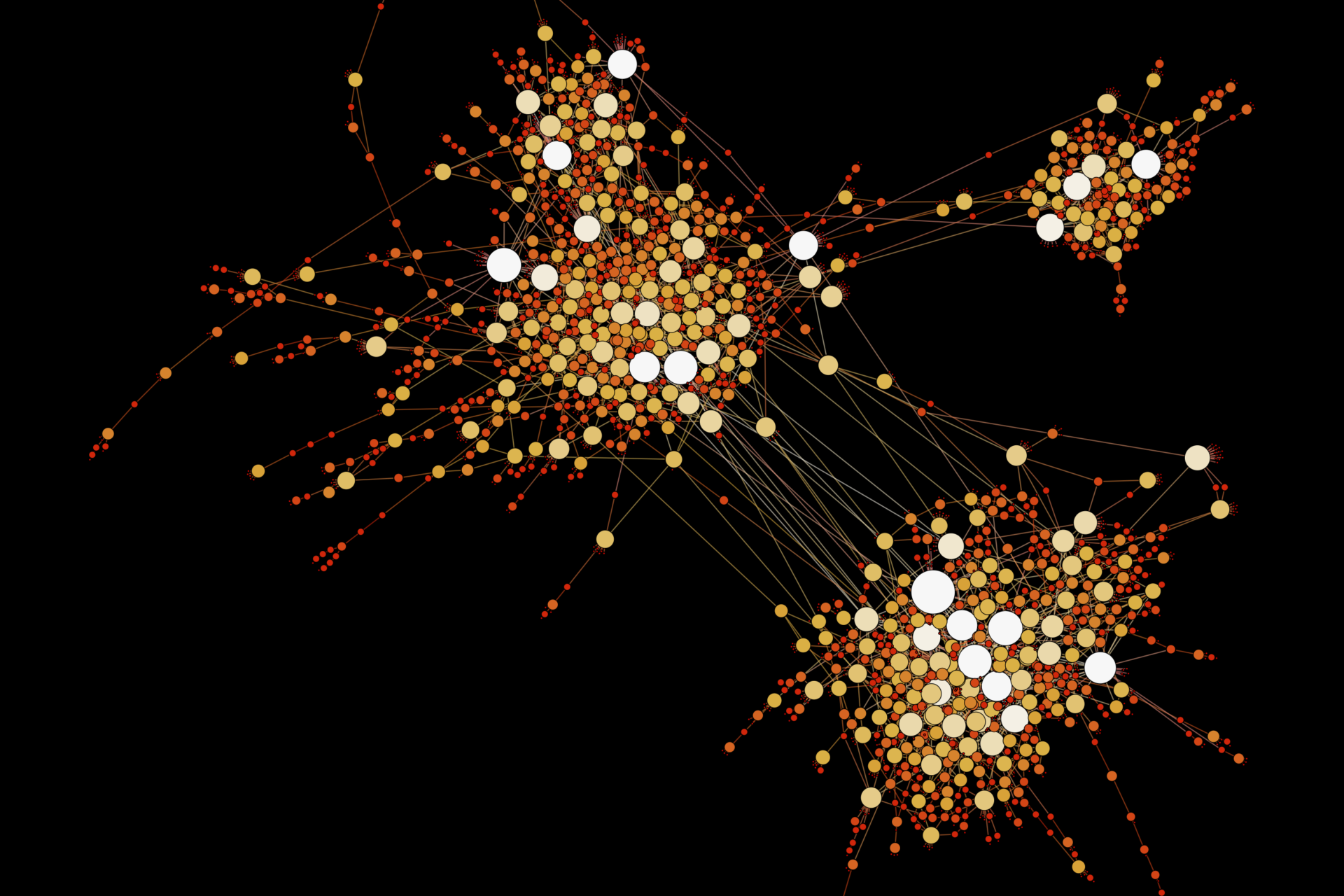
NEAR Protocol (NEAR) — an economic-security redesign. House of Stake ratified HSP-029 on November 16, seeking to lower maximum annual token issuance from 2.5% to 1.6% over two years. Validator adoption of the required protocol upgrade is still a separate step.
Why These Projects
These are three different adoption tests, not three comparable bets on token appreciation. Flux must show that independent hosting operators can deliver reliability and incident response. Morpho must translate integration into repeat borrowing while containing credit and smart-contract risks. NEAR must demonstrate that lower dilution can coexist with an economically healthy validator set. Each has a native tradable token, but the mechanism connecting application demand to that token differs substantially.
Recent announcements make the comparison especially instructive: one is a software release with a security caveat, one is a live geographic rollout, and one is a ratified governance decision awaiting implementation. Treating them as equivalent product launches would overstate the evidence.
Flux (FLUX): Cloud Resilience After a Security Boundary Test
What it does
Flux runs a distributed cloud platform supported by independently operated servers called FluxNodes. Developers can deploy applications and obtain computing, storage and network capacity without relying on one conventional hosting provider. FLUX has documented functions in node collateral, operator rewards and cloud payments. The project describes tiered collateral requirements in its token utility explanation, but token demand from speculative node participation is not interchangeable with fees from paying application customers.
Recent development
The November 14 FluxOS 8.23 release note describes app storage moved to direct I/O, node IP-address changes confirmed against blockchain records and more deterministic app reassignment. Its published testing includes a cross-platform node survey; these are useful engineering claims, not independently audited service-level guarantees. An 8.23.1 follow-up added encrypted-configuration validation for private applications.
There is also an uncomfortable but material counterpoint. In official incident documentation, Flux says a November 4 security incident led to the shutdown of the FluxEdge console and FluxCore agent service. It states that FluxCloud, FluxOS, FluxNodes and its blockchain were unaffected. That separation must be attributed to the operator rather than independently assumed, and affected customers still need to evaluate credential hygiene, refunds and migration options.
Potential
A decentralized cloud can be attractive when deployment portability, geographical redundancy and operational transparency matter. Flux’s November 1 census reported 2,298 registered applications and 6,912 nodes as of October 31, with games representing more than half of applications. Those figures are project-reported registry counts, not evidence that every instance is a distinct paying business or that revenue is growing proportionately.
Risks and what to monitor
The shutdown of one service family illustrates an ecosystem boundary that the token cannot magically secure. Watch for a documented incident postmortem, clear separation of affected systems, retention of commercial workloads, operator concentration and the share of usage funded by external customer payments. Also distinguish block-reward subsidies from recurring cash revenue: the network can remain busy while its incentive economics weaken.
Morpho (MORPHO): Credit Distribution Beyond Crypto-Native Interfaces
What it does
Morpho provides onchain markets and managed vault structures that financial applications can integrate for borrowing and lending. The protocol connects collateral providers, lenders, borrowers and market curators; those participants assume different risks. Importantly, Morpho’s own product explanation says MORPHO is a governance token and is not necessary for a customer to borrow or lend through a Morpho-powered app. It would therefore be inaccurate to claim that every additional dollar lent automatically creates MORPHO buying demand.
Recent development
On November 17, Morpho announced that Coinbase Borrow, built on Morpho and Base, was available to eligible New York users. The article reports more than $3.4 billion in cumulative loan originations and over $1.6 billion outstanding, backed by more than $2.8 billion in collateral; these are company-disclosed figures and should not be treated as independently reconciled numbers. Its disclaimer also limits the availability of additional loan features in New York, so the geographic launch should not be generalized to every asset and product.
A different development remains conditional: on November 11 the Morpho Association proposed listing a Midnight adapter in the protocol registry only after security reviews and code fixes. That is a governance and integration pipeline, not proof that the adapter has been deployed or approved on every chain.
Potential
The key commercial insight is distribution. People already using a familiar financial app may be more willing to obtain a secured loan than to navigate a new DeFi interface. Fixed-term credit and integration into mainstream platforms can broaden use cases if disclosure, liquidation and collateral protections are understandable. That potential concerns customer utility and protocol activity; governance-token value capture is a separate, uncertain question.
Risks and what to monitor
Liquidations can accelerate during volatile collateral markets, curators can select poorly structured exposures, and smart contracts remain a non-bank form of custody risk. Watch New York loan performance, changes in outstanding principal, liquidation outcomes, collateral diversity, security review completion for the adapter, and concrete governance decisions involving MORPHO. A larger lending book is useful operating evidence but not a guaranteed return for token holders.
NEAR Protocol (NEAR): Issuance Reform Still Needs Validator Consent
What it does
NEAR is a sharded layer-one blockchain used for transaction execution, staking and application deployment. Its native token pays for network activity and helps secure the validator economy. The network also pursues cross-chain and AI-related services, but this edition focuses on a narrower, verifiable change: the incentives that pay participants to maintain security over time.
Recent development
On November 16, NEAR announced the ratification of HSP-029. The proposal changes the maximum annual issuance target from 2.5% to 1.6% over a 24-month per-epoch ramp, with a proposed grace period before reduction begins. The House of Stake vote and Security Council review are complete, but the announcement explicitly says the economics become binding only after validators independently adopt a protocol upgrade. Reporting the 1.6% figure as today’s realized issuance would be wrong.
The underlying October 7 proposal offers assumptions and reproducibility details. It retains the stated 90/10 distribution between staking participants and protocol treasury. Any estimated changes to supply or staking yields depend on model conditions, not a guaranteed token-market outcome.
Potential
More predictable issuance can help developers, custodians and validators plan, while a transparent implementation schedule may improve trust in governance. Lower dilution is meaningful to supply accounting. Yet actual adoption remains dependent on applications, transaction demand, availability and operational security, not solely on a monetary-policy adjustment.
Risks and what to monitor
A smaller reward stream can pressure marginal validators or alter delegation patterns if fees and network use do not make up the difference. Watch the precise upgrade adoption date, realized issuance after activation, validator count and concentration, staking participation, transaction-fee revenue and transparent quarterly reports. A governance ratification without rollout evidence is an incomplete milestone, not a failure or success in itself.
What to Watch Next
For Flux, the near-term checkpoints are the scope and remediation of the November incident, adoption of the current FluxOS release and repeatable evidence of paying workloads. For Morpho, follow borrower retention and realized collateral outcomes after New York availability, alongside independently inspectable audit reports for pending adapters. For NEAR, wait for an explicit validator-supported upgrade schedule rather than extrapolating from a governance vote.
Across all three, liquidity deserves a separate lens. Token markets may be thin relative to headlines, and changes in circulating supply, exchange depth or concentrated holders can overwhelm otherwise constructive product news. This article does not supply live bid-ask spreads or prices because comparable, time-stamped exchange data were not established for all three tokens. Readers assessing liquidity should inspect current venue-level order books rather than infer it from technical releases.
Final Assessment
Flux presents the most immediate operational trust test: meaningful engineering work alongside a disclosed security-driven service shutdown. Morpho has the clearest customer-distribution event, but protocol usage is not a direct proxy for MORPHO token value. NEAR has an unusually specific monetary-policy decision, yet its next decisive evidence is validator implementation and subsequent network health. Each has real infrastructure and a falsifiable next milestone; none has proved that token returns must follow adoption.
That is the discipline an undercovered-project series should preserve. Look for independent usage, resilient operations, transparent economics and observable corrective action, not a chain of promotional announcements. These networks are worth tracking as engineering and market structures, but this assessment is informational analysis, not an investment recommendation.