
Main Points :
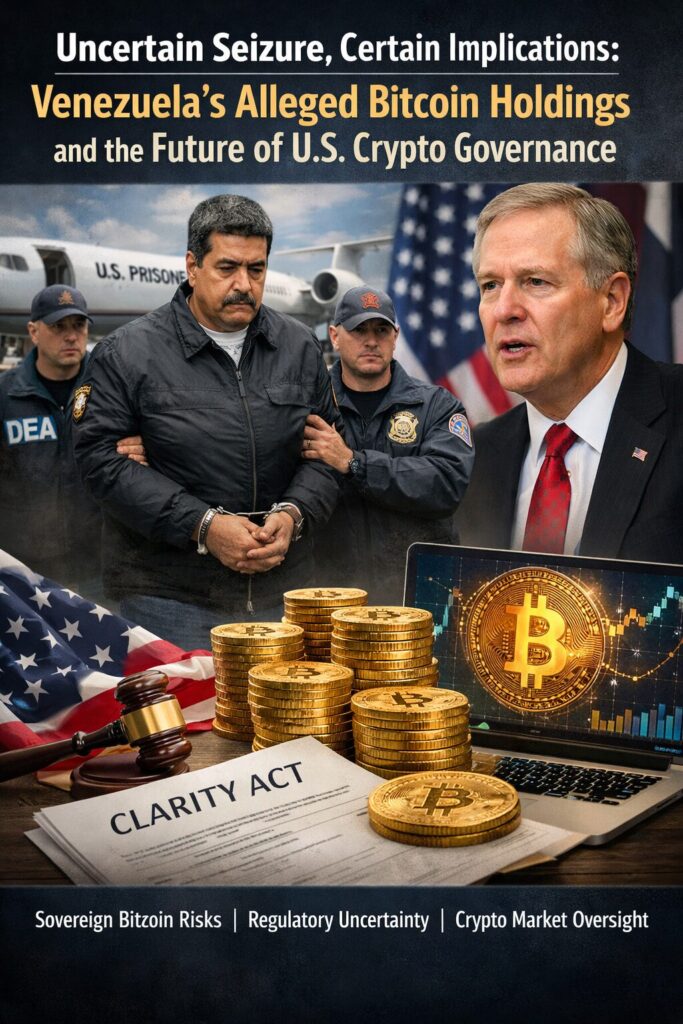
- Reports claim that Venezuela may control up to $60 billion worth of Bitcoin, but independent blockchain analysts have not verified these holdings.
- **U.S. Securities and Exchange Commission Chairman Paul Atkins has stated that it is unclear whether the U.S. would seize any such Bitcoin if circumstances allowed.
- The issue emerged after the arrest and transfer of former Venezuelan president Nicolás Maduro to the United States.
- The situation intersects with broader U.S. regulatory debates, including amendments to the CLARITY Act, which may reshape crypto market oversight.
- For investors and builders, the episode highlights sovereign Bitcoin risk, state-level adoption narratives, and regulatory uncertainty as core factors shaping crypto’s next phase.
Introduction: A Geopolitical Bitcoin Question
The global cryptocurrency market has matured to a point where it no longer exists solely at the fringes of finance. Bitcoin, once dismissed as an experimental digital asset, is now deeply entangled with geopolitics, sanctions policy, and national security considerations. This reality was underscored when recent reports claimed that Venezuela might hold as much as $60 billion in Bitcoin, raising a provocative question: If such Bitcoin exists, could the United States seize it?
In an interview with Fox Business, SEC Chairman Paul Atkins declined to provide a definitive answer. His comments came at a sensitive moment—following the arrest of Nicolás Maduro and amid ongoing legislative efforts in Washington to clarify the structure of digital asset regulation. While the factual basis of Venezuela’s alleged Bitcoin reserves remains unproven, the implications of the debate extend far beyond this single case.
This article analyzes the claims, the regulatory context, and the broader lessons for investors, policymakers, and blockchain practitioners seeking the next sustainable source of value in the crypto economy.
Venezuela and Cryptocurrency: History Matters
To understand why the claim of Venezuelan Bitcoin holdings gained traction, it is necessary to revisit the country’s complicated relationship with cryptocurrency.
Venezuela has endured years of hyperinflation, capital controls, and international sanctions. In this environment, cryptocurrencies became both a survival tool for citizens and a potential workaround for the state. In 2018, the Maduro administration launched the Petro, a state-backed digital asset nominally pegged to oil reserves. Although the Petro ultimately failed to gain international legitimacy or widespread adoption, it demonstrated the government’s willingness to experiment with blockchain-based instruments.
In parallel, Venezuela became a hotspot for Bitcoin mining, largely due to subsidized electricity and the need for alternative income streams. While mining activity does not equate to sovereign Bitcoin reserves, it contributed to a perception that the state may have accumulated digital assets—either directly or indirectly—over time.
However, perception is not proof.
The $60 Billion Bitcoin Claim: Fact or Fiction?
The figure cited—approximately 600,000 BTC, valued at roughly $60 billion—would place Venezuela among the largest Bitcoin holders in the world, rivaling even some estimates of U.S. government-controlled Bitcoin obtained through criminal seizures.
At the time of reporting, blockchain analytics firms and intelligence platforms have not confirmed the existence of wallets linked to the Venezuelan state holding Bitcoin on this scale. Unlike gold or foreign currency reserves, Bitcoin holdings are theoretically transparent on public ledgers—provided the controlling addresses are known.
SEC Chairman Atkins acknowledged this uncertainty directly, emphasizing that analysts have been unable to substantiate the claim. His remarks suggest that the issue remains speculative, yet politically sensitive enough that it cannot be dismissed outright.
Could the U.S. Seize Sovereign Bitcoin?
When asked whether the United States would seize Venezuelan Bitcoin if given the opportunity, Atkins responded that he did not know and that such decisions would fall outside his authority. This distinction is crucial.
The SEC regulates securities markets; it does not conduct asset seizures. Any confiscation of foreign-held Bitcoin would likely involve the Department of Justice, the Treasury, and potentially the military, depending on the circumstances. The legal basis would hinge on factors such as sanctions law, criminal forfeiture statutes, and international agreements.
Bitcoin complicates these frameworks. Unlike bank deposits or physical assets, Bitcoin can be self-custodied and transferred without intermediaries. Seizing it would require access to private keys—something that cannot be compelled through traditional asset freezes alone.
【“Estimated Government Bitcoin Holdings (USD)”】 (Bar chart comparing estimated Bitcoin holdings of the U.S., China, and alleged Venezuelan reserves, expressed in USD.)
Regulatory Timing: The CLARITY Act in the Background
Atkins’ comments coincided with renewed attention on the Digital Asset Market Structure Clarity Act (CLARITY Act), which is scheduled for amendment discussions in the U.S. Senate Banking Committee.
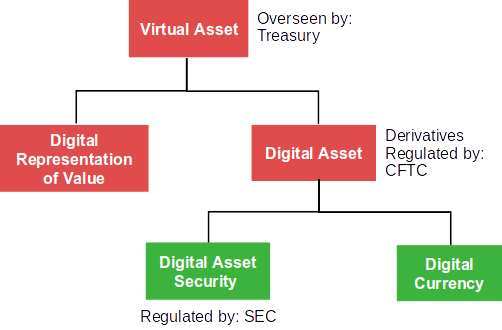
The bill, which passed the House earlier in the year, seeks to delineate regulatory authority between agencies, particularly shifting more oversight responsibility toward the Commodity Futures Trading Commission for certain digital assets. Banks and crypto firms alike have expressed concern about provisions related to stablecoin rewards, while some lawmakers are pushing for stricter ethical safeguards and clearer definitions for decentralized finance.
Political realities complicate the timeline. Election campaigns, the possibility of another government shutdown, and partisan disagreements could delay final passage. For the crypto industry, this prolongs regulatory ambiguity—a risk factor that weighs heavily on long-term investment decisions.
Sovereign Bitcoin: Asset, Liability, or Myth?
The Venezuela episode highlights a broader theme: the growing narrative around sovereign Bitcoin holdings. El Salvador’s openly declared Bitcoin reserves contrast sharply with Venezuela’s alleged, opaque holdings. This divergence illustrates two distinct models of state interaction with crypto—transparent adoption versus speculative accumulation.
For investors, the lesson is not simply about whether Venezuela holds Bitcoin, but about how states perceive digital assets. Bitcoin can function simultaneously as a hedge against sanctions, a political symbol, and a volatile balance-sheet item. Each role carries different risks.
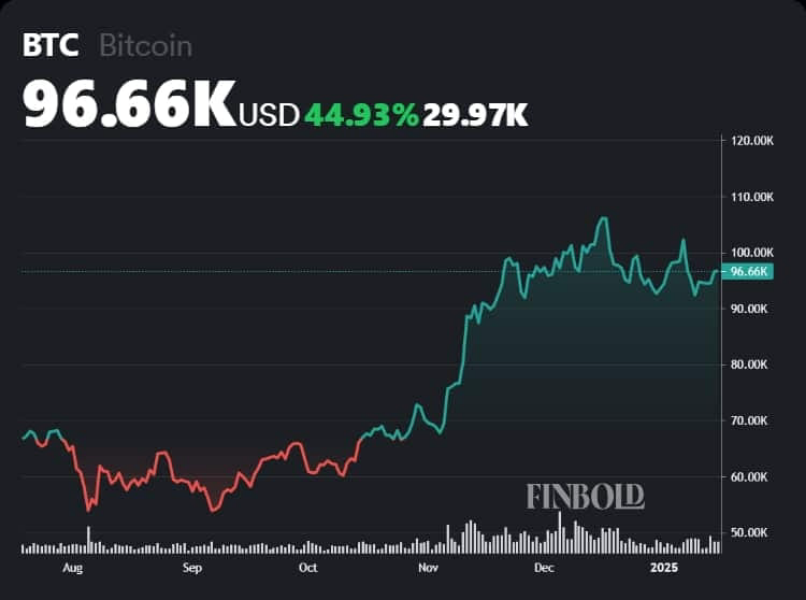
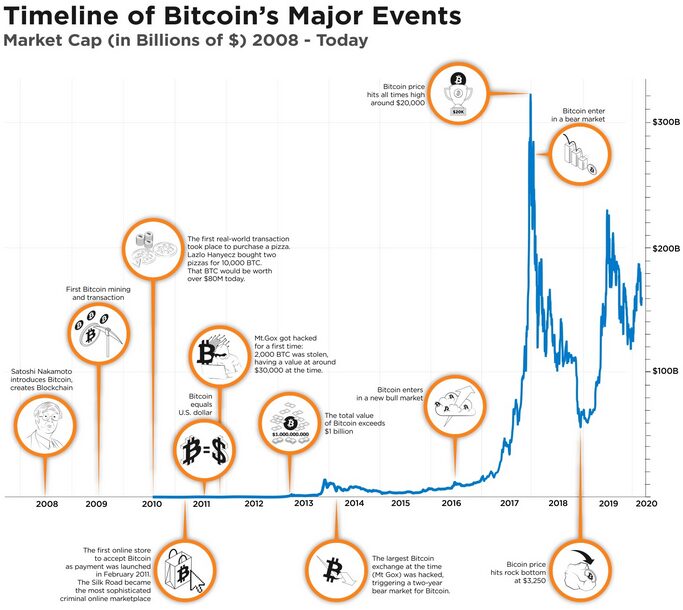
【“Bitcoin Price vs. Major Geopolitical Events (USD)”】 (Line chart showing Bitcoin price movements around key geopolitical events, including sanctions announcements and regulatory milestones.)
Implications for Crypto Investors and Builders
For readers seeking new crypto assets and revenue opportunities, this story reinforces several practical insights:
- Verification Matters: Headlines about massive holdings should be treated cautiously until confirmed on-chain.
- Regulatory Risk Is Structural: Even unverified claims can influence legislation, enforcement priorities, and market sentiment.
- Infrastructure Opportunities Remain: Demand for compliance tools, blockchain analytics, and secure custody solutions will grow as states engage more directly with crypto.
Builders focusing on practical blockchain use cases—payments, settlement, and tokenized assets—should assume that regulatory scrutiny will intensify, not fade.
【“Crypto Regulatory Authority Split in the U.S.”】 (Diagram showing the proposed division of oversight between the SEC and CFTC under the CLARITY Act.)
Conclusion: Uncertainty as the New Constant
Whether or not Venezuela controls $60 billion in Bitcoin may ultimately prove less important than the conversation it has sparked. SEC Chairman Paul Atkins’ candid admission of uncertainty reflects a broader truth: digital assets are challenging legal, political, and financial systems faster than those systems can adapt.
For the crypto ecosystem, this uncertainty is not purely negative. It creates volatility, but also opportunity—for innovation, for infrastructure development, and for those who understand both the technology and the regulatory landscape. As Bitcoin continues its transition from outsider asset to geopolitical instrument, investors and practitioners must navigate a world where transparency is partial, rules are evolving, and certainty is rare.
