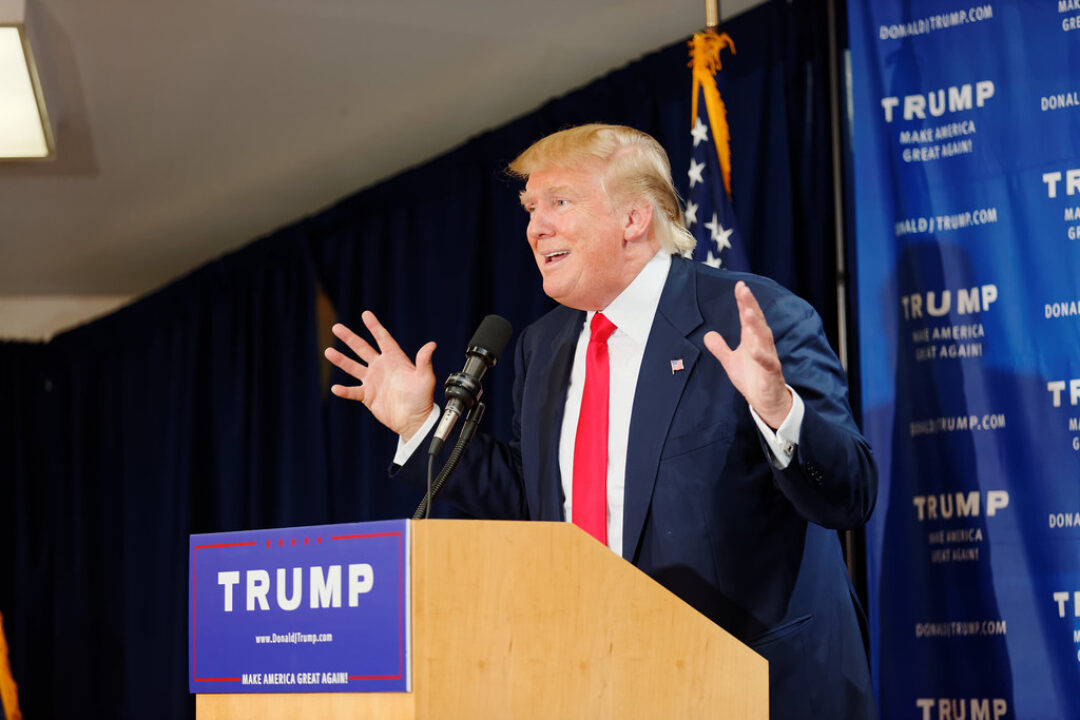
The Trump family has reportedly earned over $2.3 billion from cryptocurrency ventures since the 2024 U.S. election, largely through World Liberty Financial (WLF), while investors in Trump-linked tokens have collectively lost a similar amount, as of April 2026.
Trump-Linked Tokens: What They Are
The centerpiece of the Trump family’s crypto involvement is World Liberty Financial (WLF), a decentralized finance platform co-founded by Eric Trump and Donald Trump Jr. in 2024.
WLF issues governance tokens that grant holders voting rights within the ecosystem.
However, the family’s ownership structure entitles them to 75% of all token sale proceeds, while maintaining a 60% controlling stake in the platform. This means that for every dollar invested, only a fraction supports the broader project or benefits token holders.
Beyond WLF, Trump-linked ventures have included branded equities and exchange-traded funds tied to the family’s political and business persona. These instruments often rely on the Trump name as a driver of demand, rather than underlying utility or innovation.
2026 Performance and Profits
By mid-2026, Trump-linked tokens have shown extreme volatility.
While the family’s profits surged past $2.3 billion, investor losses mirrored that figure, with more than one million individuals affected.
The market trajectory has been uneven. A single transaction in 2025 reportedly generated $500 million in profit for the family, underscoring how token structures disproportionately benefit insiders. Meanwhile, retail investors saw sharp declines in value after initial hype-driven launches.
In 2026, WLF tokens continue to trade, but liquidity has thinned, and confidence has eroded.
Analysts note that politically branded tokens often lack sustainable utility, making them vulnerable to speculative bubbles and rapid collapses once initial enthusiasm fades.
Investors and Traders are Watching
For investors, Trump-linked tokens highlight the risks of insider-heavy governance structures.
With 75% of revenue flowing directly to the Trump family, token holders are left with limited upside. This imbalance creates a scenario where insiders profit regardless of market performance, while retail investors shoulder the risk.
For traders, these tokens represent short-term speculative opportunities rather than long-term investments.
Volatility can create profit windows, but the lack of transparency and disproportionate insider benefits make them high-risk instruments.
The broader implication is that politically branded tokens may function more as fundraising mechanisms for insiders than as genuine decentralized finance projects.
This dynamic erodes trust in the crypto market and underscores the need for regulatory oversight, especially as frameworks like the European Union’s Markets in Crypto-Assets (MiCA) regulation take hold.
Takeaways from the Trump Crypto Boom
The Trump family’s crypto ventures illustrate both the profit potential for insiders and the pitfalls for retail investors. While the family has amassed billions with minimal personal risk, ordinary investors have borne equivalent losses.
For the market, this episode serves as a cautionary tale.
Politically branded tokens may attract attention and capital, but without sustainable utility or fair structures, they risk becoming vehicles for wealth transfer rather than innovation.
As crypto matures in 2026, investors must weigh hype against fundamentals, and regulators will likely scrutinize projects that disproportionately enrich insiders at the expense of the broader market.