

Main Takeaways :
- Crypto markets entered 2026 with renewed momentum, but new all-time highs are not guaranteed.
- According to Bitwise Asset Management CIO Matt Hougan, three critical “checkpoints” must be cleared.
- Regulatory clarity in the United States, especially via the proposed CLARITY Act, is pivotal for long-term capital inflows.
- Macro conditions—equities, interest rates, and liquidity—remain decisive even for crypto-native assets.
- Meme coins are re-emerging as a barometer of risk appetite, but their rallies remain fragile and sentiment-driven.
1. A Strong Start, But Not a Free Pass
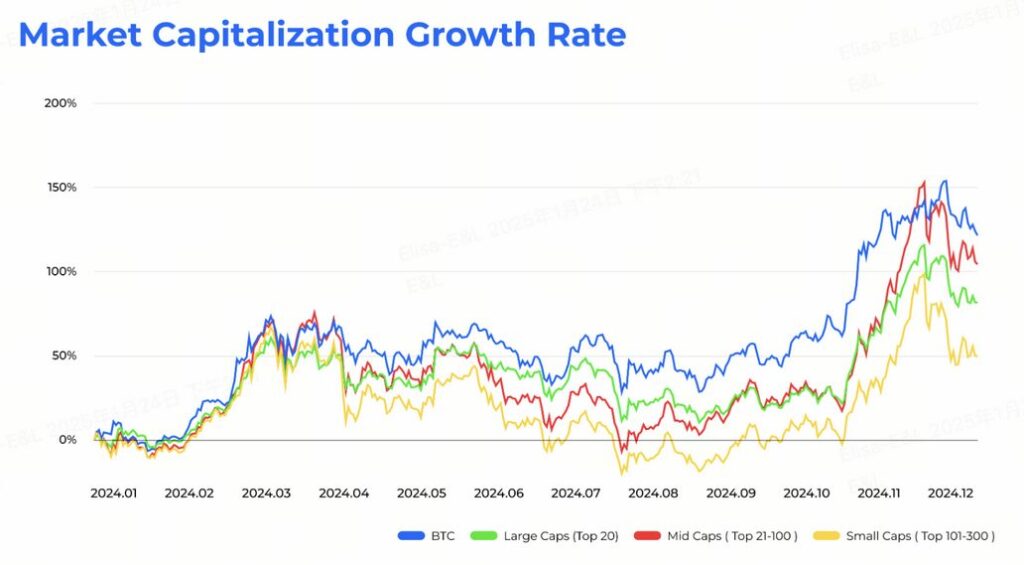
Crypto markets opened 2026 on a constructive footing. Despite short-term pullbacks, total market capitalization has risen approximately $170 billion year-to-date, reaching around $3.3 trillion—its highest level in roughly seven weeks. This rebound has reinforced optimism among investors who view digital assets as both speculative instruments and long-term infrastructure plays.
However, optimism alone does not create sustainable bull markets. Hougan cautions that while momentum has improved, the path to new all-time highs is conditional. History shows that crypto rallies often stall not because of internal weaknesses alone, but due to unresolved structural, regulatory, or macroeconomic constraints.
In this sense, 2026 resembles prior inflection years: strong narratives, expanding participation, but still vulnerable to external shocks.
2. Checkpoint One: Exorcising the Ghost of the October Liquidation
The first hurdle is psychological and structural. On October 10 of the previous year, crypto markets experienced a sharp liquidation event that erased roughly $19 billion in futures positions within a single day. The speed and scale of the unwind raised concerns that major market makers and hedge funds might permanently retreat from the space.
According to Hougan, this event cast a “fog of potential selling” over markets throughout late 2025. Even as prices attempted to rally, investors remained wary that another cascade could emerge at any moment.
The early-2026 recovery suggests that this overhang is gradually dissipating. Market participants are beginning to treat the October event as an isolated stress test rather than a structural flaw. Importantly, liquidity has since returned, and derivatives markets have rebuilt depth without showing the same degree of leverage excess.
If confidence continues to normalize, this checkpoint can be considered largely cleared.
3. Checkpoint Two: Regulatory Clarity Through the CLARITY Act
The second checkpoint is regulatory—and arguably the most consequential.
In the United States, lawmakers are advancing the so-called CLARITY Act, a legislative effort to define jurisdictional boundaries, compliance standards, and operational rules for digital assets. Amendments are expected to be discussed in mid-January, with coordination between the Senate Banking Committee and the Agriculture Committee.
Hougan emphasizes that passage of the CLARITY Act would do more than reduce uncertainty. It would codify foundational principles into law, enabling institutions to allocate capital without fear of retroactive enforcement or shifting interpretations.
This point is critical. Many global asset managers, pension funds, and insurers already have internal mandates to gain crypto exposure—but only under clear legal frameworks. Regulatory ambiguity does not eliminate demand; it delays it.
From a practical perspective, clearer rules would also accelerate:
- Spot and derivatives ETF approvals
- Bank-grade custody and settlement services
- Tokenization of real-world assets on public blockchains
In short, regulation is not a ceiling for crypto growth—it is increasingly the gateway.
4. Checkpoint Three: Equity Markets Must Hold the Line
The third checkpoint lies outside crypto itself.
Although digital assets are not perfectly correlated with equities, they remain sensitive to broad risk-off events. A sharp collapse in stock markets would likely reduce appetite for all risk assets, including cryptocurrencies.
Hougan notes that even fundamentally strong crypto narratives can be overwhelmed in the short term by equity-driven deleveraging. This is particularly relevant given elevated valuations in U.S. equities and ongoing debates around soft landings versus delayed recessions.
For crypto to sustainably break new highs, equities do not need to soar—but they must avoid systemic breakdowns.
Global Crypto Market Capitalization Trend (2024–2026)
5. Monetary Policy: The Silent Accelerator
While Hougan did not directly focus on central bank policy, other market strategists argue it remains a decisive variable.
Analysts at Fidelity, including macro strategist Jurrien Timmer, suggest that a mix of accommodative fiscal policy and a dovish Federal Reserve could keep U.S. economic conditions warmer than expected into 2026.
Meanwhile, futures markets tracked by the Chicago Mercantile Exchange indicate an approximately 89% probability that policy rates remain unchanged at the next Federal Open Market Committee meeting.
A stable—or gently easing—rate environment tends to support crypto by:
- Lowering the opportunity cost of holding non-yielding assets
- Encouraging speculative and venture capital deployment
- Increasing global liquidity flows
However, there is a counterbalance: persistent inflation or policy missteps could cap upside by reintroducing volatility.
6. Meme Coins: Risk Appetite’s Early Warning System
Beyond macro and regulation, one of the most intriguing developments of early 2026 has been the resurgence of meme coins.
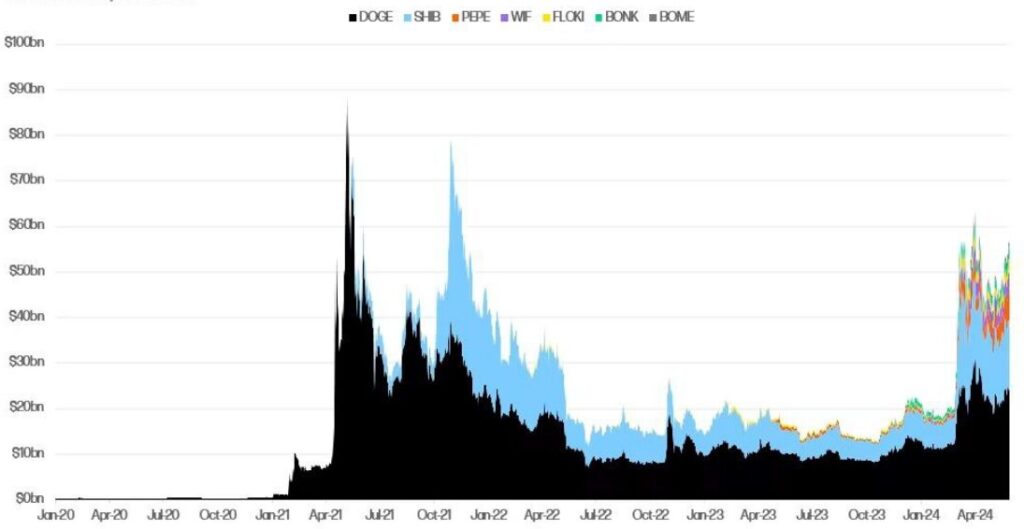
After declining roughly 65% during 2025 and bottoming near $35 billion in market capitalization, the meme coin sector rebounded sharply. According to CoinMarketCap, total meme coin market cap briefly exceeded $47 billion, with trading volume jumping nearly 300% at its peak.
Market participants widely view meme coins as a sentiment gauge rather than a fundamentals play. Their rallies tend to precede broader risk-on behavior—but also reverse quickly when liquidity dries up.
Meme Coin Market Capitalization and Trading Volume
7. Bitcoin Holds, Altcoins Rotate
Data from CoinGecko shows Bitcoin trading in a relatively narrow range between approximately $90,700 and $92,800 in recent sessions.
Historically, when Bitcoin consolidates while altcoins—including meme coins—advance, it signals rotation rather than outright speculation. This pattern can support broader rallies, but it can also mark late-cycle excess if fundamentals fail to follow.
Analysts caution that without confirmation from major layer-1 and infrastructure tokens, meme-driven rallies risk remaining short-lived.
8. Geopolitics and the Fragility of Confidence
Finally, geopolitical risk remains a wild card. Tensions involving emerging markets, energy producers, or unexpected sanctions can rapidly reverse risk appetite—even when crypto-specific metrics appear strong.
Several analysts stress that crypto’s increasing integration with global finance cuts both ways: it amplifies upside during favorable conditions, but also transmits shocks more efficiently.
Conclusion: A Conditional Bull Market
The outlook for crypto in 2026 is neither euphoric nor pessimistic—it is conditional.
If markets can fully move past prior liquidation shocks, secure regulatory clarity through legislation like the CLARITY Act, and avoid systemic equity market disruptions, the foundation for new all-time highs is firmly in place.
At the same time, speculative excess—particularly in meme coins—serves as both a signal and a warning. For investors seeking sustainable returns and real-world blockchain applications, the coming cycle may reward discipline more than blind optimism.
Crypto’s next record-breaking phase will not arrive by accident. It will be built by policy, liquidity, and trust converging at the right moment.
