
Main Points :
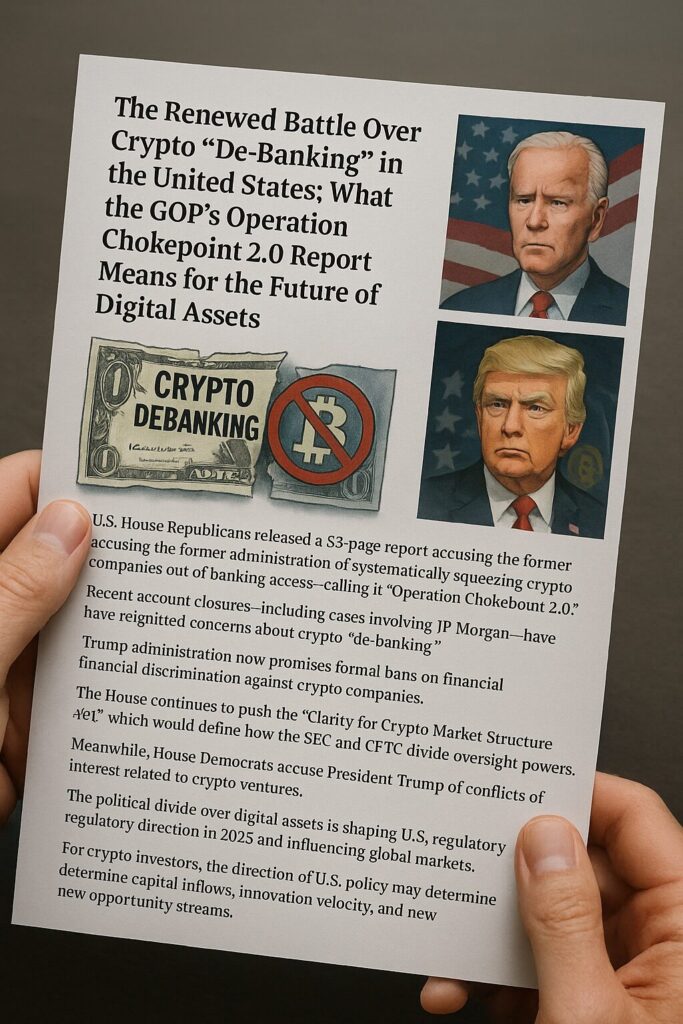
- U.S. House Republicans released a 53-page report accusing the former Biden administration of systematically squeezing crypto companies out of banking access—calling it “Operation Chokepoint 2.0.”
- The report argues that regulators used discretionary enforcement, vague rules, and reputational risk pressure to discourage banks from serving crypto clients.
- Recent account closures—including cases involving JP Morgan—have reignited concerns about crypto “de-banking.”
- The Trump administration now promises formal bans on financial discrimination against crypto companies.
- The House continues to push the “Clarity for Crypto Market Structure Act,” which would define how the SEC and CFTC divide oversight powers.
- Meanwhile, House Democrats accuse President Trump of conflicts of interest related to crypto ventures.
- The political divide over digital assets is shaping U.S. regulatory direction in 2025 and influencing global markets.
- For crypto investors, the direction of U.S. policy may determine capital inflows, innovation velocity, and new opportunity streams.
Introduction: Why the De-Banking Debate Matters Now
In December 2025, U.S. House Republicans on the Financial Services Committee released a comprehensive 53-page document titled “Operation Chokepoint 2.0: The Biden Administration’s De-Banking of Crypto.”
The report revives a controversy that has haunted the crypto industry for more than a decade: whether U.S. regulators have been quietly restricting crypto companies’ access to traditional banking.
This issue goes far beyond political fights. When exchanges, wallet operators, OTC desks, and payment apps lose access to fiat on-ramps, the entire digital-asset ecosystem loses liquidity, trust, and operational stability. For investors seeking new assets and revenue opportunities, the regulatory climate directly affects project survival and innovation.
Below, we unpack the report’s claims, add recent developments from other sources, and explore how this regulatory conflict shapes the future of practical blockchain use.
“Timeline of the De-Banking Narrative in the U.S.”
Section 1: The GOP’s Chokepoint 2.0 Report Explained
The newly released House Republican report argues that the Biden administration used regulatory ambiguity and enforcement pressure to discourage banks from serving crypto clients. The term “Chokepoint 2.0” references the Obama-era Operation Chokepoint, where regulators pressured banks to sever ties with politically disfavored industries such as firearms dealers and payday lenders.
Crypto venture capitalist Nic Carter first coined “Chokepoint 2.0” in 2023, describing a pattern where banks appeared reluctant to serve digital-asset businesses after quiet nudges from federal agencies.
According to the new report:
- Regulators granted themselves excessive discretionary power.
- Banks received informal warnings that crypto clients carried “reputational risk.”
- Crypto wasn’t given clear compliance expectations, leaving banks to err on the side of refusal.
This environment, Republicans argue, made participation in digital-asset markets “nearly impossible” for many companies.
Section 2: Real-World Cases Fueling New Concern
The report gained traction because real incidents continue to surface.
The Strike / JP Morgan Case
On November 24, 2025, Strike CEO Jack Mallers publicly stated that JP Morgan closed his personal bank account without explanation.
While the bank did not confirm details, the incident echoed other similar closures affecting crypto-affiliated individuals and businesses.
This is not an isolated example: reports suggest that even long-standing industry players such as ShapeShift have also faced abrupt account terminations in the past.
These events reinforce industry fears that, despite improvements, crypto remains unwelcome in parts of the banking system.
Section 3: Past Actions by Regulators Under Scrutiny
The GOP report dedicates much of its content to examining statements and actions from previous regulators—especially under SEC Chairman Gary Gensler.
Key allegations include:
- Gensler claimed most crypto assets were unregistered securities, regardless of operational reality.
- He insisted on “enforcement first, rulemaking never”, creating a chilling effect.
- Banks, uncertain about liability, backed away from crypto clients.
The report contrasts this with the 2025 regulatory environment:
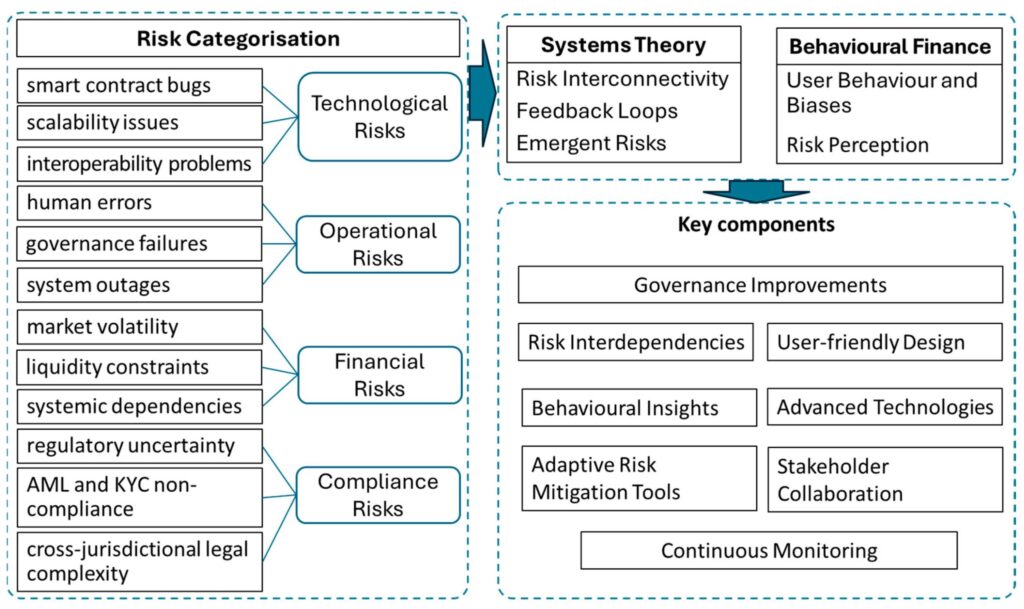
- The Federal Reserve, OCC, and FDIC have already pledged to avoid using “reputational risk” as grounds for affecting banking decisions.
- The SEC is now led by Paul Atkins, appointed by President Trump, who adopts a more rule-based, industry-consultative approach.
This political transition marks a significant turning point for the industry.
Section 4: New Political Actions Under the Trump Administration
President Trump has already signed an executive order banning federal agencies from engaging in “de-banking” of crypto companies.
This order requires:
- Agencies to provide clear, objective criteria for bank supervision.
- No discrimination based on lawful business activity.
- Increased transparency in regulatory communications.
For the crypto market, this represents one of the most significant federal shifts in regulatory posture in years. Institutional players—previously cautious—are beginning to re-evaluate U.S. opportunities.
Section 5: The Push for the “Clarity for Crypto” Legislative Framework
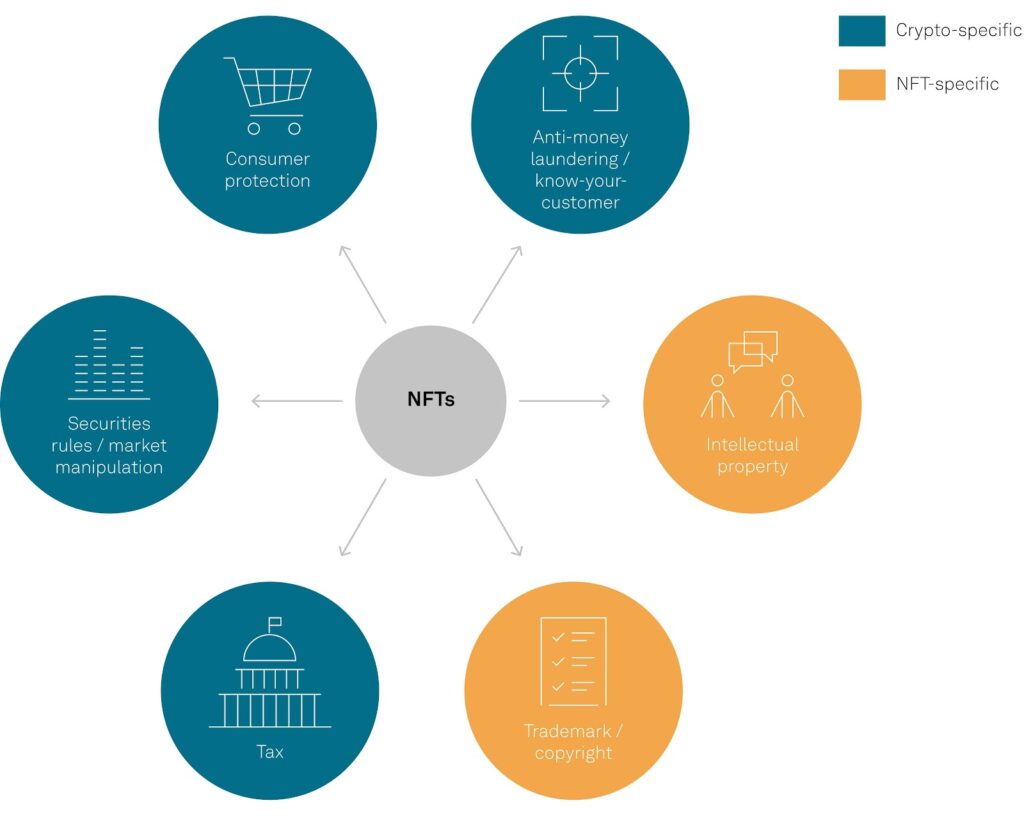
The House continues to promote the Crypto Market Structure bill, commonly called the Clarity Act.
This act defines which agency—SEC or CFTC—has authority over various token types.
It specifically aims to:
- Reduce compliance ambiguity
- Provide clear paths for token issuance
- Protect exchanges from inconsistent enforcement
- Encourage market-making and liquidity provision within regulated certainty
If passed by the Senate, this could become the most consequential crypto legislation in U.S. history.
Section 6: Democrats Release Counter-Report Highlighting Ethical Risks
Notably, the political conflict is not one-sided.
House Judiciary Committee Democrats recently released a report accusing President Trump of turning the White House into “the world’s most corrupt crypto startup.”
The report cites a Bloomberg estimate that Trump’s family gained over $600 million from crypto-related ventures.
Democrats argue that such financial entanglements present conflict-of-interest concerns that could influence regulatory decisions, including the Clarity Act.
Whether these claims gain traction remains to be seen, but they demonstrate how deeply political the digital-asset ecosystem has become.
Section 7: Recent Global Developments Impacting the Debate
To add broader context, recent news shows a global shift toward structured crypto regulation:
Europe
- MiCA is now fully phased in.
- EU banks are preparing for integrated crypto custody and stablecoin frameworks.
Asia
- Japan has approved multiple stablecoins and continues advancing Web3 strategies.
- Singapore remains a key global crypto hub with transparent licensing pathways.
Middle East
- Dubai and Abu Dhabi are competing to create the world’s most attractive regulatory zones for digital assets.
Latin America
- Bitcoin adoption continues in El Salvador.
- Tokenized assets and real-world-asset (RWA) flows are growing regionally.
Against this global movement, the U.S. regulatory battle will help determine whether America remains a leader or continues ceding ground.
Section 8: What This Means for Investors and Builders
For users seeking new crypto assets, revenue opportunities, and practical blockchain applications, the implications are clear:
- If U.S. banking access becomes easier, more liquidity will enter the market.
- Institutional adoption will accelerate, especially in stablecoins and tokenized assets.
- OTC desks, exchanges, and payment apps may benefit from regulatory certainty.
- New tokenization sectors—real estate, U.S. Treasuries, revenue-share tokens—could expand rapidly.
- Startups will face fewer banking shutdown risks, supporting innovation.
The risk is that political power could shift again, creating future reversals. But the current trend is toward greater openness.
Conclusion: The Future of Crypto Banking in the United States
The U.S. is at a crossroads. The Republican report on “Operation Chokepoint 2.0” captures an industry long frustrated by inconsistent enforcement, unclear rules, and sudden banking disruptions.
Whether or not one agrees with the political framing, the underlying problem is real: crypto businesses need reliable access to banking to survive.
With new legislative efforts, executive orders, and a global shift toward structured regulatory frameworks, 2025 may be the first year in a decade when U.S. crypto regulation transitions from ambiguity to clarity.
For investors seeking the next opportunities, this shift could unlock new liquidity, new assets, and new use cases—marking the beginning of a more mature digital-asset economy.
