
Main Points :
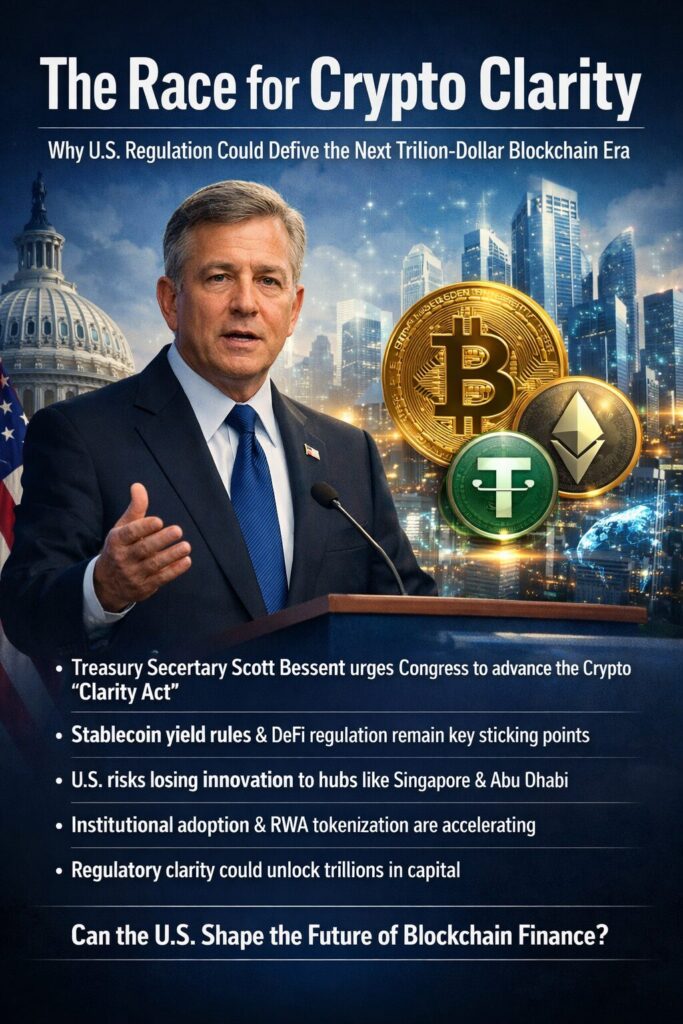
- U.S. Treasury Secretary Scott Bessent urges Congress to advance the crypto “Clarity Act”
- Stablecoin yield rules and DeFi regulation remain key sticking points
- The U.S. risks losing crypto innovation to hubs like Singapore and Abu Dhabi
- Institutional adoption and real-world asset (RWA) tokenization are accelerating
- Regulatory clarity could unlock trillions in capital and reshape global financial infrastructure
Introduction: A Defining Moment for Crypto Regulation
The global cryptocurrency industry stands at a pivotal crossroads. As digital assets evolve from speculative instruments into foundational financial infrastructure, governments are being forced to respond—not just with caution, but with urgency. In the United States, that urgency has been amplified by Scott Bessent, who recently called on Congress to finalize and advance the long-debated crypto market structure legislation known as the “Clarity Act.”
This legislative push reflects more than policy housekeeping. It represents a strategic decision about whether the United States will lead—or lag—in the next generation of financial innovation. With digital asset market capitalization fluctuating between $2 trillion and $3 trillion globally, and roughly one in six Americans now holding crypto, the stakes are enormous.
The Clarity Act: What Is at Stake
At its core, the Clarity Act aims to establish a comprehensive regulatory framework for cryptocurrencies in the United States. While the House of Representatives passed the bill in July last year, progress has stalled in the Senate due to unresolved debates.
Key areas of contention include:
- Whether stablecoins should be allowed to offer yield
- How decentralized finance (DeFi) platforms should be regulated
- Ethical considerations surrounding government involvement in crypto markets
These are not minor technicalities—they strike at the heart of how decentralized systems interact with traditional financial oversight.
Bessent emphasized that the U.S. Congress has already spent nearly five years attempting to define the future of finance. In his view, further delay risks not just inefficiency, but strategic failure.
Stablecoins and the Yield Debate
One of the most contentious issues is whether stablecoins—digital assets pegged to fiat currencies like the U.S. dollar—should be allowed to generate yield for holders.
Recent analysis from the White House Council of Economic Advisers suggests that fears of massive bank deposit outflows may be overstated. Contrary to banking industry concerns, restricting yield-bearing stablecoins may not meaningfully protect traditional lending systems.
This finding reframes the debate. Instead of viewing stablecoins as a threat to banks, policymakers may need to consider them as complementary infrastructure—particularly in cross-border payments and digital settlement systems.
DeFi: Innovation vs. Regulation
Decentralized finance represents both the most innovative and the most controversial segment of the crypto ecosystem. By removing intermediaries, DeFi platforms enable peer-to-peer lending, trading, and asset management.
However, this same decentralization raises critical regulatory questions:
- Who is responsible when something goes wrong?
- How can compliance be enforced without centralized control?
- What constitutes a “financial intermediary” in a decentralized system?
The Clarity Act attempts to address these issues, but consensus remains elusive. Too much regulation could stifle innovation; too little could expose investors and the broader financial system to systemic risks.
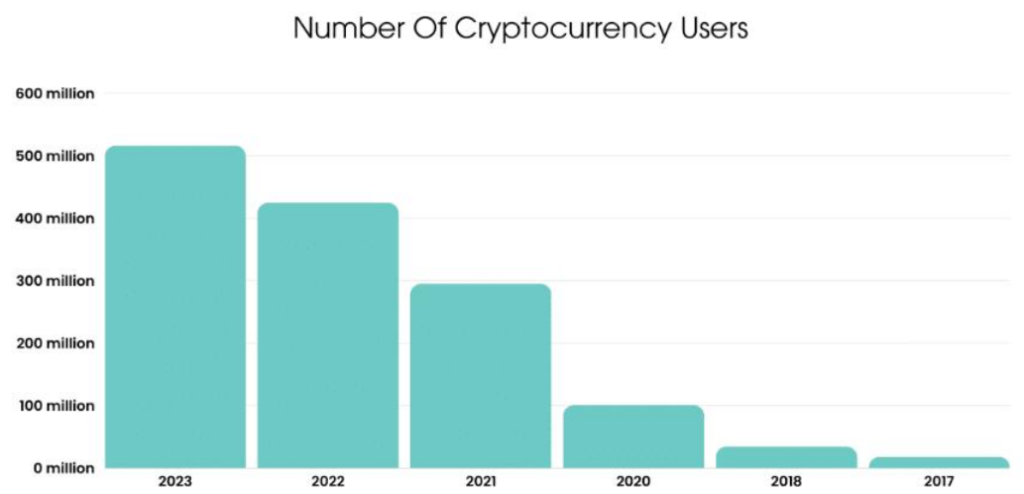
Global Crypto Market Growth (2019–2026)
Institutional Adoption and RWA Tokenization
While regulatory debates continue, the market itself is moving forward rapidly. Major financial institutions are increasingly integrating blockchain technology into their operations.
Real-world asset (RWA) tokenization—where physical assets like real estate, bonds, or commodities are represented on blockchain networks—is gaining traction. This trend has several implications:
- Increased liquidity for traditionally illiquid assets
- Faster and cheaper settlement processes
- Greater transparency and programmability
For example, tokenized U.S. Treasury bonds and private credit markets are already emerging as significant sectors within crypto.
This evolution underscores Bessent’s argument: crypto is no longer a niche technology—it is becoming core financial infrastructure.
The Global Competition: U.S. vs. Regulatory Clarity Abroad
One of the most pressing concerns raised by Bessent is the migration of crypto innovation away from the United States.
Jurisdictions like Singapore and Abu Dhabi have established clearer regulatory frameworks, attracting startups, developers, and capital.
This trend is not hypothetical—it is already happening. Crypto firms seeking certainty are choosing to build in environments where rules are defined, even if they are strict.
The risk for the U.S. is clear: without regulatory clarity, it may lose its position as the global leader in financial innovation.
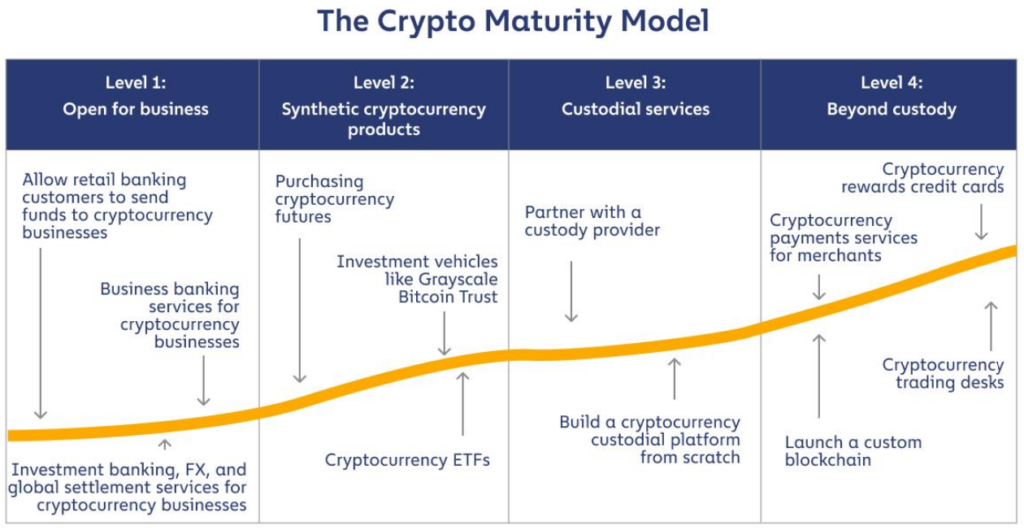
Crypto Infrastructure Maturity Model
Strategic Implications for Investors and Builders
For investors and entrepreneurs, the outcome of the Clarity Act carries significant implications.
1. Capital Flows
Regulatory certainty tends to attract institutional capital. A clear framework could unlock large-scale investment from pension funds, asset managers, and sovereign wealth funds.
2. New Revenue Models
Yield-bearing stablecoins, DeFi protocols, and tokenized assets represent entirely new income streams. These models could redefine how value is generated in financial markets.
3. Infrastructure Opportunities
From custody solutions to compliance tools, the need for crypto infrastructure will grow alongside regulation. This creates opportunities for builders focused on practical blockchain applications.
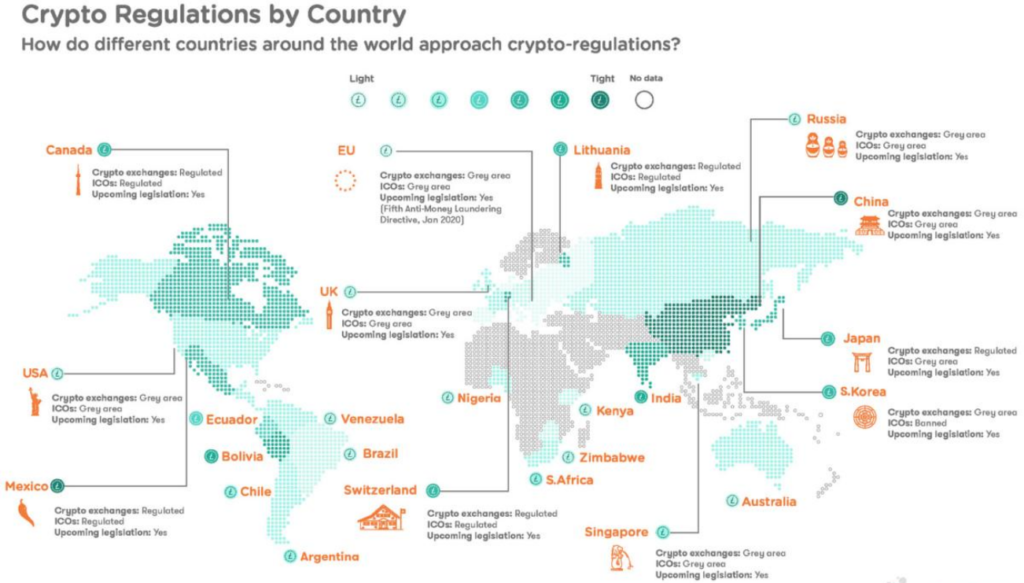
Global Regulatory Convergence in Crypto
Conclusion: A Turning Point for the Financial System
The call by Scott Bessent to advance the Clarity Act is more than a political statement—it is a recognition of a broader transformation underway in global finance.
Cryptocurrencies, stablecoins, and blockchain technologies are no longer peripheral innovations. They are becoming integral components of the financial system, influencing everything from payments to capital markets.
The question is no longer whether crypto will be regulated, but how—and where that regulation will shape the future.
If the United States succeeds in establishing a clear and comprehensive framework, it could anchor the next era of financial innovation within its borders, reinforcing the dominance of the U.S. dollar in a digital age.
If it fails, the center of gravity may shift elsewhere.
For investors, developers, and institutions alike, this is not just a policy debate—it is a signal. The next trillion-dollar opportunity in crypto will likely emerge where regulation, innovation, and capital converge.
