

Main Points :
- Florida has reintroduced legislation to establish a state-managed Bitcoin reserve, marking a renewed attempt after last year’s stalled proposal.
- The bill restricts eligible assets to cryptocurrencies with an average market capitalization above $500 billion over the past 24 months, effectively limiting eligibility to Bitcoin alone.
- Rather than allowing direct Bitcoin investment from existing public funds, the proposal creates a separate, independent reserve structure with dedicated governance, reporting rules, and an advisory committee.
- This move reflects a broader global trend: governments increasingly treating Bitcoin not as a speculative asset, but as a strategic reserve and risk-hedging instrument.
- If enacted, Florida could become a reference model for other U.S. states and emerging economies exploring sovereign or quasi-sovereign digital asset reserves.
1. The Return of Florida’s Bitcoin Reserve Proposal
In early January 2026, lawmakers in the state of Florida once again placed Bitcoin at the center of a policy debate that extends far beyond local politics. A newly submitted bill—Senate Bill 1038—seeks to authorize the creation of a Florida Strategic Cryptocurrency Reserve, overseen by the state’s Chief Financial Officer.
This is not Florida’s first attempt. A similar proposal surfaced in the previous legislative session but stalled at the committee level. The reintroduction, however, comes amid a markedly different macro and political environment. Bitcoin’s market capitalization, regulatory clarity in parts of the United States, and the growing global conversation around “digital gold” have shifted the tone from experimental to strategic.
At its core, the bill acknowledges a reality that many governments have quietly begun to accept: Bitcoin is no longer merely a private-sector innovation. It is increasingly a macro-relevant asset class with implications for monetary sovereignty, fiscal resilience, and geopolitical positioning.
2. A Separate Reserve, Not a Speculative Bet
One of the most important—and often misunderstood—elements of the Florida proposal is its structure.
Rather than permitting state treasuries to allocate existing public funds directly into Bitcoin, the bill mandates the creation of an independent reserve vehicle. This reserve would have:
- Its own management and custody framework
- Distinct accounting and disclosure requirements
- A formal advisory committee composed of financial and technical experts
This design choice is deliberate. It isolates Bitcoin exposure from traditional budgetary flows while still allowing the state to benefit from long-term value appreciation and diversification effects. In other words, Florida is not “betting the budget” on Bitcoin—it is experimenting with a parallel strategic reserve model.
For policymakers, this separation also reduces political risk. Gains or losses in the reserve can be reported transparently without directly impacting pension obligations, operating budgets, or taxpayer-funded programs.
3. The $500 Billion Market Cap Threshold: Why It Matters
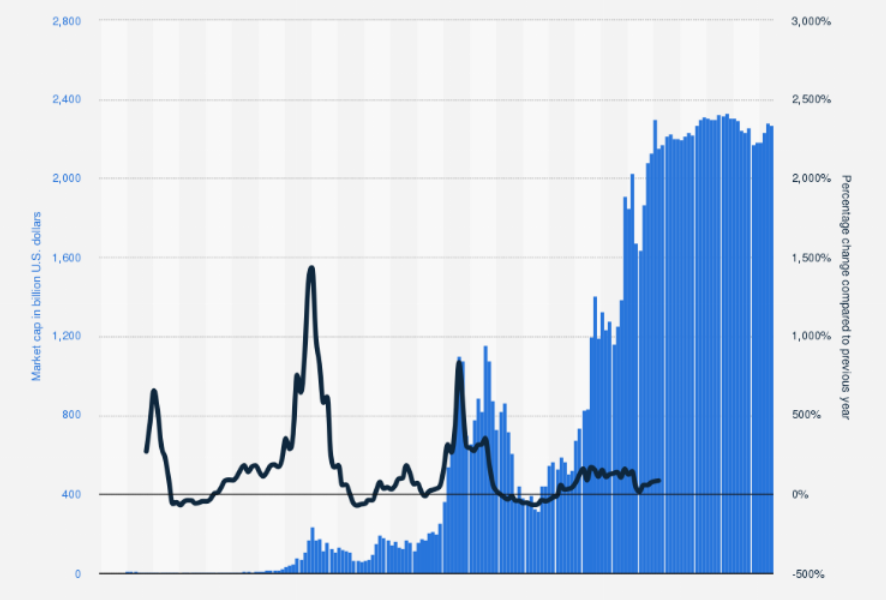
Perhaps the most striking feature of Senate Bill 1038 is its eligibility rule. The state CFO may only purchase cryptocurrencies whose average market capitalization over the past 24 months exceeds $500 billion.
At present, this criterion includes only Bitcoin.
This threshold serves multiple purposes:
- Risk Control – Market capitalization acts as a proxy for liquidity, resilience, and market depth.
- Political Signaling – The bill avoids accusations of “picking winners” among altcoins.
- Regulatory Prudence – By focusing solely on Bitcoin, lawmakers sidestep unresolved questions around securities classification and issuer accountability.
For crypto-native readers, this may seem conservative. But from a sovereign risk perspective, it is precisely this conservatism that makes the proposal viable.
4. Comparison with Broader Digital Asset Allocation Proposals
The renewed Bitcoin reserve bill exists alongside a separate, more expansive proposal introduced in October by a Republican lawmaker. That bill would allow state and local entities to allocate up to 10% of certain funds into digital assets or exchange-traded products, including pensions and trust funds.
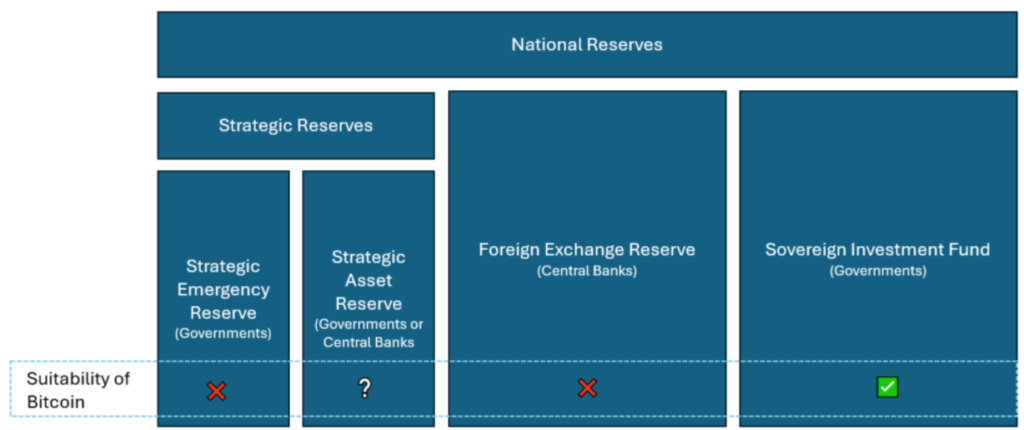
By contrast, Senate Bill 1038 is far narrower in scope—but arguably more realistic. Where the broader bill faces resistance from pension trustees and fiduciary watchdogs, the reserve-based approach offers a sandbox for institutional Bitcoin exposure without triggering systemic concerns.
For investors and builders, this distinction is critical. It suggests that incremental, well-scoped adoption is more likely to succeed than sweeping mandates.
5. Global Context: Bitcoin as a Strategic Asset
Florida’s move does not exist in isolation. Over the past two years, several global trends have converged:
- Central banks in emerging markets quietly accumulating Bitcoin as part of foreign reserve diversification
- Sovereign wealth funds gaining indirect exposure via ETFs and structured products
- Municipal and regional governments exploring Bitcoin mining or custody partnerships
These developments reflect a growing consensus: Bitcoin functions less like a tech stock and more like a neutral monetary asset. Its fixed supply, censorship resistance, and global liquidity make it attractive in an era of fiscal deficits and geopolitical fragmentation.
Florida’s proposal aligns with this thesis. By framing Bitcoin as a strategic reserve rather than a speculative investment, the state positions itself on the cautious edge of a broader paradigm shift.

6. Implications for Crypto Markets and Builders
For market participants, the significance of this bill goes beyond Florida itself.
Market Impact
If enacted, even modest state-level purchases could:
- Reinforce Bitcoin’s narrative as an institutional-grade asset
- Encourage other states to draft similar legislation
- Strengthen long-term demand signals for BTC
Infrastructure and Compliance Opportunities
For companies building custody, audit, reporting, and risk-management tools, government adoption represents a new class of client—one that demands higher standards but offers long-term stability.
This is particularly relevant for firms operating in regulated environments, where compliance-first architectures are already in place.
7. Visual Data Insertions (Image Files)
[Insert Figure 1 here]
Bitcoin Market Capitalization vs. $500B Threshold (24-Month Average)
[Insert Figure 2 here]
Comparison of State-Level Crypto Approaches (Reserve Model vs. Direct Allocation)
[Insert Figure 3 here]
Global Government and Institutional Bitcoin Adoption Timeline
8. Conclusion: A Small Step with Long-Term Consequences
Florida’s renewed Bitcoin reserve bill may not grab headlines like a national policy shift, but its implications are profound. It represents a measured, governance-first approach to integrating Bitcoin into public finance—one that other jurisdictions can realistically emulate.
For investors, it reinforces Bitcoin’s role as a long-term strategic asset.
For builders, it highlights the growing demand for institutional-grade crypto infrastructure.
For policymakers, it offers a template for engaging with decentralized value without abandoning fiscal responsibility.
In the long run, history may view such state-level experiments as the quiet beginnings of a new monetary architecture—one where trust is distributed, reserves are digital, and value flows beyond borders.
