
Main Points :
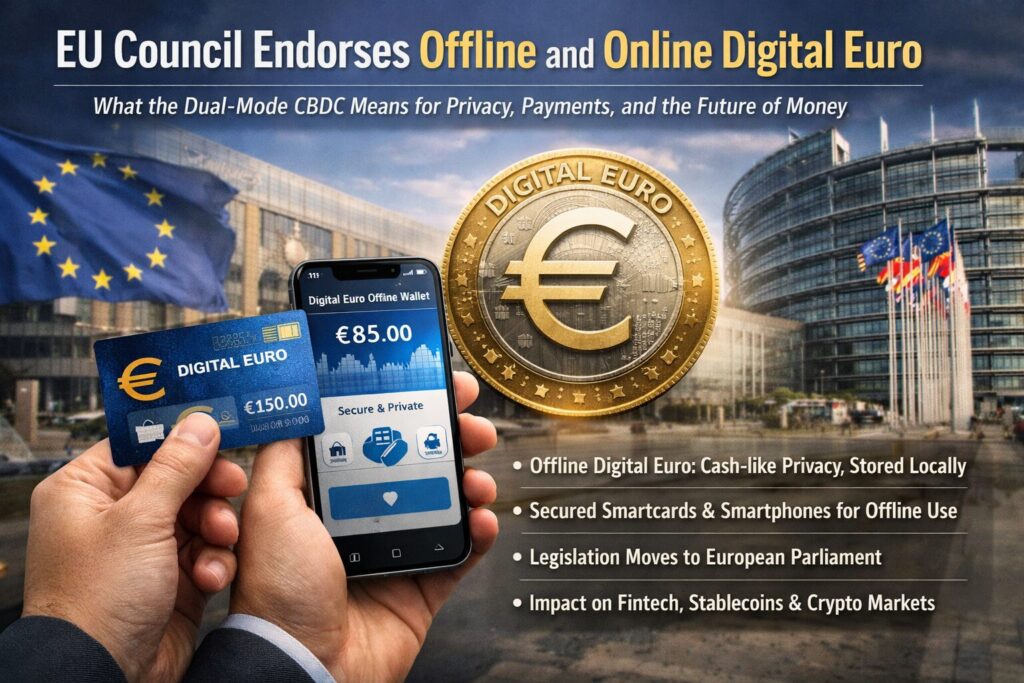
- The Council of the European Union has formally endorsed the design direction of the digital euro, aligning with the European Central Bank to launch offline and online versions simultaneously.
- The offline digital euro is designed to approximate cash-like privacy, keeping transaction data strictly between transacting parties.
- Full cash-level anonymity is technically unattainable, especially due to proximity-enforcement limits and relay-attack risks.
- Secure elements in authenticated devices (smartphones, smart cards) will store offline balances and private keys.
- Legislative approval now shifts to the European Parliament, shaping final rules on privacy, limits, and distribution.
- The digital euro has major implications for fintech, stablecoins, payment providers, and cross-border crypto adoption, especially for hybrid on-chain/off-chain payment models.
1. Background: Why the Digital Euro Matters Now
The global monetary system is undergoing a structural transition. As cash usage declines and private digital payment platforms dominate everyday transactions, central banks face mounting pressure to ensure that public money remains usable in digital form. This is the context in which the digital euro has emerged.
The digital euro is not merely a technological upgrade. It represents a strategic response to several converging trends:
- The rapid growth of private stablecoins denominated in U.S. dollars
- Increasing dependence on non-European payment infrastructures
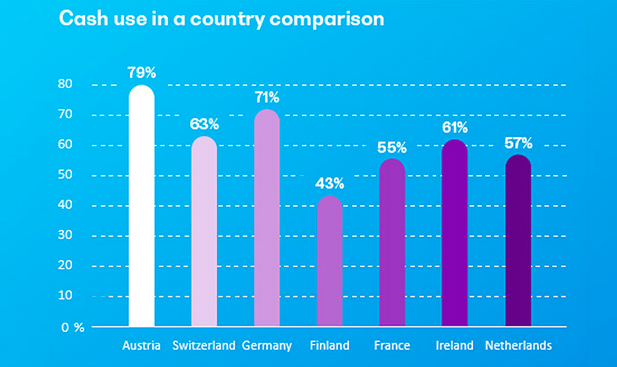
- Declining cash usage, especially among younger consumers
- Rising concerns over data privacy and payment surveillance
By endorsing both offline and online versions, the EU Council signals that the digital euro is intended to function not only as an account-based digital payment instrument, but also as a cash-like bearer instrument—at least in part.
2. EU Council Position: Alignment With the ECB
In its latest policy document, the EU Council formally expressed its position on the digital euro’s design framework. Crucially, the Council aligned itself with the ECB’s proposal to launch offline and online versions at the same time, rather than phasing them in separately.
ECB President Christine Lagarde emphasized that the ultimate decision lies with EU lawmakers, stating that the European Parliament will determine whether the Commission’s proposal is satisfactory, how it should be legislated, or whether amendments are required.
This alignment matters for two reasons:
- It reduces political uncertainty around the project’s scope.
- It confirms that offline privacy is not an optional feature, but a core design principle.
3. Offline Digital Euro: A Cash-Like Design Philosophy
3.1 What “Offline” Really Means
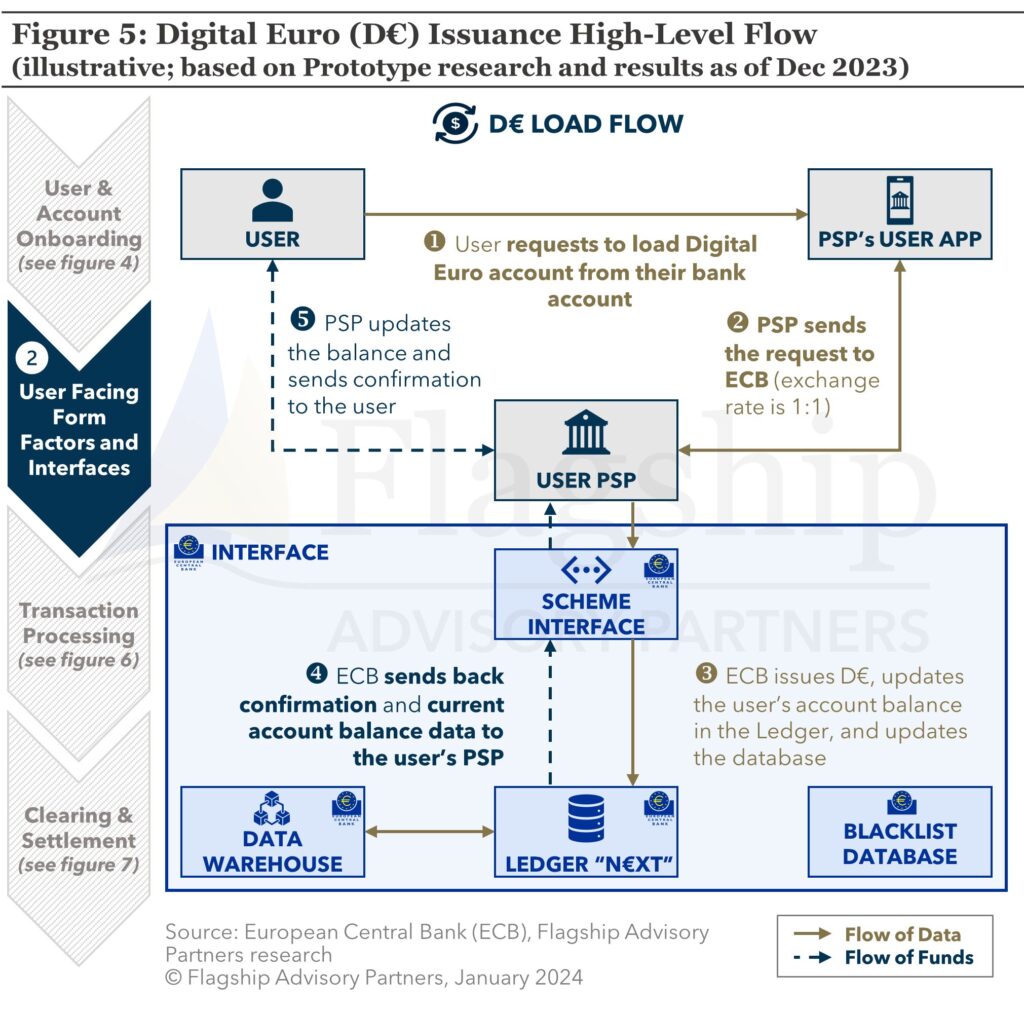
The offline digital euro is designed to function without real-time connectivity to the central bank or intermediaries. In practice, this means:
- Transactions can occur device-to-device (e.g., phone to phone, card to phone)
- No transaction data is transmitted to third parties during payment
- Balances and transaction validation are handled locally
This mirrors the functional properties of physical cash, where value changes hands without leaving a transactional data trail.
4. Privacy Architecture and Its Limits
4.1 Data Containment Between Parties
According to the Council’s document, the offline digital euro is designed so that transaction data never leaves the transacting devices. Observers—including intermediaries and the central bank—cannot link multiple transactions to a single user.
This is achieved through:
- Secure elements embedded in devices
- Locally stored private keys
- Digitally signed euro tokens issued by the central bank
4.2 The Proximity Requirement Problem
Offline payments rely on a physical proximity requirement, often implemented via NFC. However, this introduces a technical vulnerability known as a relay attack, where attackers bridge NFC signals over the internet using intermediary devices.
The European Data Protection Board has acknowledged that available countermeasures are extremely limited and that physical proximity cannot be enforced with the same certainty as cash.
As a result:
- Absolute anonymity cannot be guaranteed
- Highly technical users may exploit non-proximate usage
- Offline privacy is strong, but not absolute
5. Secure Elements: Where Value and Keys Live
Offline digital euros—and the cryptographic keys controlling them—will be stored in the secure element of authenticated devices, such as:
- Smartphones
- Hardware wallets
- Smart cards
Secure elements are tamper-resistant hardware modules already used for:
- Mobile payments (e.g., Apple Pay, Google Pay)
- SIM cards
- Government ID systems
This design choice prioritizes consumer-grade usability while maintaining a high security baseline.
6. How Private Is “Private”? Comparing Cash, CBDCs, and Crypto
While the offline digital euro aims to be privacy-preserving, it is important to position it realistically within the broader privacy spectrum:
| Instrument | Privacy Level | Notes |
|---|---|---|
| Physical cash | Very high | No digital trace |
| Offline digital euro | High | Limited by device and proximity constraints |
| Online digital euro | Moderate | Intermediated, AML-compliant |
| Bitcoin | Pseudonymous | On-chain analysis possible |
| Bank transfers | Low | Fully identifiable |
For users seeking practical everyday privacy, the offline digital euro may strike a balance between usability and anonymity—without the volatility and regulatory uncertainty of crypto assets.
7. Implications for Crypto, Stablecoins, and Fintech
7.1 Competitive Pressure on Euro Stablecoins
Euro-denominated stablecoins currently suffer from:
- Limited liquidity
- Fragmented regulation
- Dependence on banking partners
A widely adopted digital euro—especially one with offline capabilities—could significantly reduce demand for private euro stablecoins, while increasing demand for interoperability layers.
7.2 Opportunities for Blockchain Infrastructure
Despite being off-chain by design, the digital euro opens new opportunities:
- On-/off-ramp services
- Compliance-friendly DeFi gateways
- Hybrid payment rails linking CBDCs and blockchains
- Tokenized assets settled in digital euros
For builders focused on real-world blockchain utility, this is a pivotal moment.
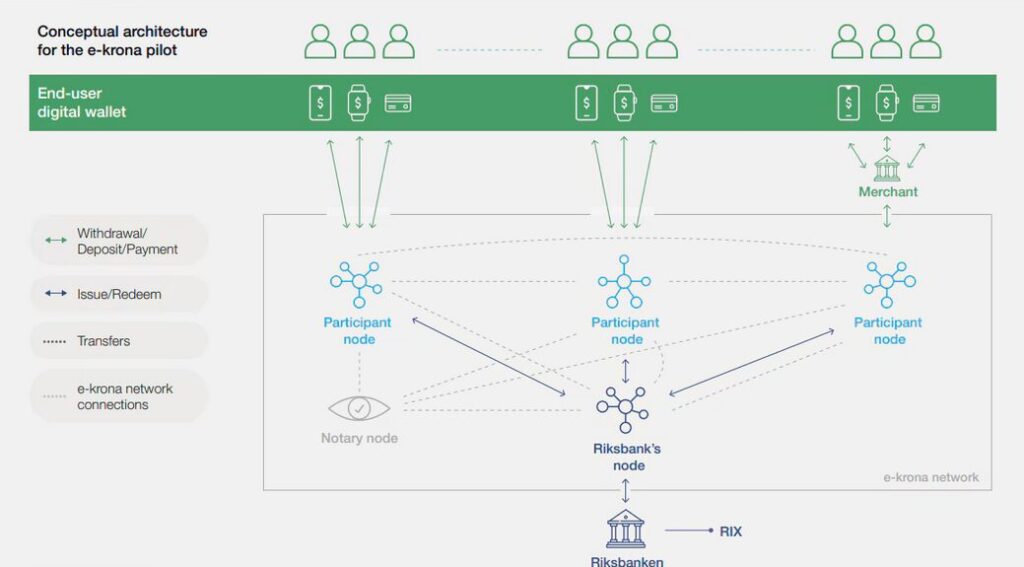
8. Global Context: CBDCs Are Converging on Hybrid Models
Globally, central banks are converging on similar design principles:
- Online accounts for compliance and scalability
- Offline bearer instruments for resilience and inclusion
- Hardware-based security rather than pure software wallets
The EU’s decision reinforces this hybrid model as a global standard, influencing future CBDC designs in Asia, the Middle East, and emerging markets.
9. What Happens Next: Legislative and Technical Milestones
The next steps include:
- Review and debate in the European Parliament
- Finalization of privacy thresholds and offline limits
- Technical pilots with consumer devices
- Integration with existing payment infrastructure
The timeline remains politically sensitive, but the direction is now firmly set.
10. Conclusion: A Redefinition of Digital Public Money
The EU Council’s endorsement of both offline and online digital euro versions marks a turning point in the evolution of money. While it does not replicate cash perfectly, the offline digital euro represents the strongest institutional commitment to digital privacy ever attempted by a major currency issuer.
For readers interested in:
- New digital assets
- Alternative revenue models
- Practical blockchain and payment use cases
…the digital euro is not a competitor to crypto—it is a new foundational layer that will reshape how crypto, fintech, and traditional finance interact.
