Key Takeaways :
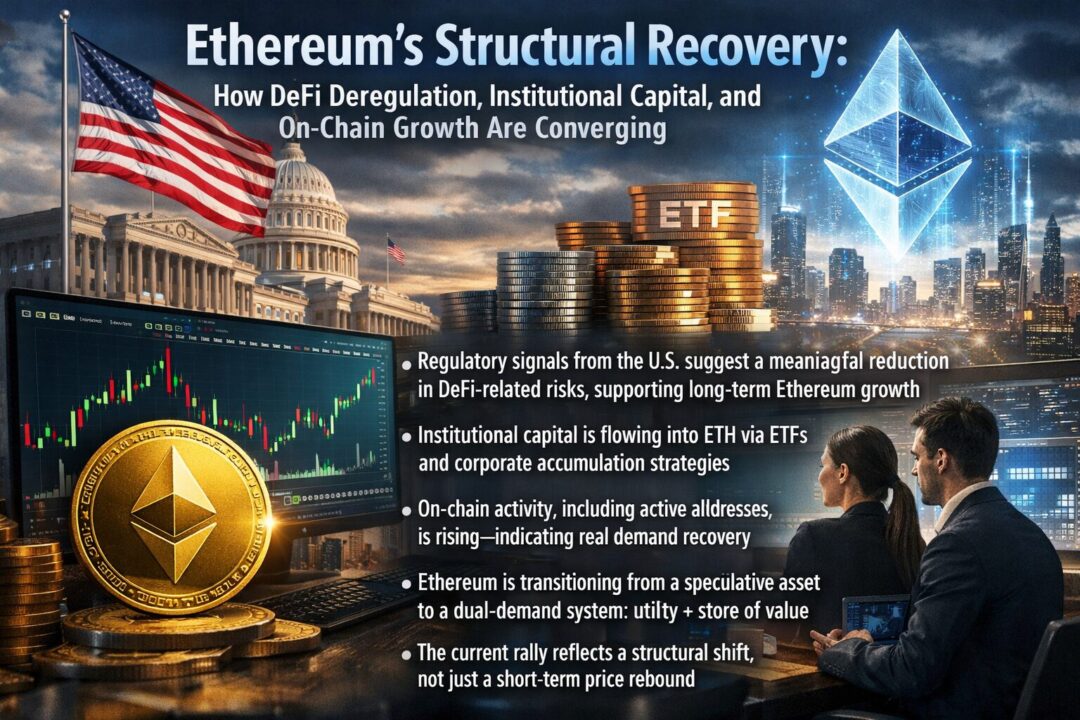
- Regulatory signals from the U.S. suggest a meaningful reduction in DeFi-related risks, supporting long-term Ethereum growth
- Institutional capital is flowing into ETH via ETFs and corporate accumulation strategies
- On-chain activity, including active addresses, is rising—indicating real demand recovery
- Ethereum is transitioning from a speculative asset to a dual-demand system: utility + store of value
- The current rally reflects a structural shift, not just a short-term price rebound
1. Introduction: Beyond a Simple Price Rebound
In mid-April 2026, Ethereum entered what appears to be a structurally bullish phase—one that goes far beyond a typical short-term price rally. While ETH surged approximately 8–9% within 24 hours and outperformed Bitcoin, the more important story lies beneath the surface.
This is not merely a case of leveraged traders pushing prices higher. Instead, Ethereum’s recent momentum reflects a rare convergence of three powerful forces:
- Regulatory clarity
- Institutional capital inflows
- On-chain activity growth
These three pillars—policy, capital, and network usage—are aligning simultaneously, suggesting a deeper transformation in how Ethereum is valued and utilized.
2. Regulatory Shift: DeFi Gains Institutional Legitimacy
One of the most significant catalysts came from a statement issued by the U.S. Securities and Exchange Commission (SEC) staff on April 13, 2026. The statement clarified that certain DeFi interfaces—such as frontends and wallet UIs—may operate without broker-dealer registration if they meet specific conditions.
These conditions include:
- No custody of user funds
- No provision of investment advice
- No involvement in order execution
- Neutral fee structures
- No discretionary control over transactions
This development is critical. It does not simply relax regulations—it redefines how DeFi is perceived.
For the first time, regulators are implicitly acknowledging that DeFi can function as a neutral technological layer, rather than as a financial intermediary requiring strict oversight.
Why This Matters for Ethereum
Ethereum is the backbone of the DeFi ecosystem. Any reduction in regulatory uncertainty directly lowers the risk premium associated with ETH.
Historically, regulatory ambiguity has suppressed valuations by introducing downside risk. Now, that risk is being repriced.
This shift mirrors earlier moments in Bitcoin’s history, when institutional acceptance began to transform it from a fringe asset into a recognized financial instrument.
3. Capital Flows: ETF Inflows and Institutional Accumulation
At the same time, capital is flowing into Ethereum at an accelerating pace.
ETF Momentum
Spot Ethereum ETFs have recorded three consecutive days of net inflows, with weekly inflows reaching the highest levels year-to-date. This signals more than speculative interest—it suggests portfolio-level allocation decisions by institutional investors.
Unlike retail trading, ETF inflows tend to be:
- Sticky (long-term oriented)
- Systematic (allocation-driven)
- Large-scale
This creates a stock-based demand structure, similar to what has been observed with Bitcoin.
Corporate Accumulation
Even more striking is the emergence of corporate ETH accumulation.
A U.S.-based company, Bitmine, reportedly holds approximately 4.875 million ETH, representing over 4% of total supply, and has added around 70,000 ETH in just one week.
At an assumed ETH price of $3,500, this equates to:
- Total holdings: ~$17.06 billion
- Weekly accumulation: ~$245 million
This mirrors the “MicroStrategy strategy” seen in Bitcoin markets, where corporations treat crypto assets as strategic treasury reserves.
Implication
Ethereum is evolving into a balance sheet asset, not just a network token.
4. On-Chain Revival: Demand Is Returning
Beyond capital and regulation, the most fundamental signal comes from on-chain data.
Ethereum Active Addresses Tren
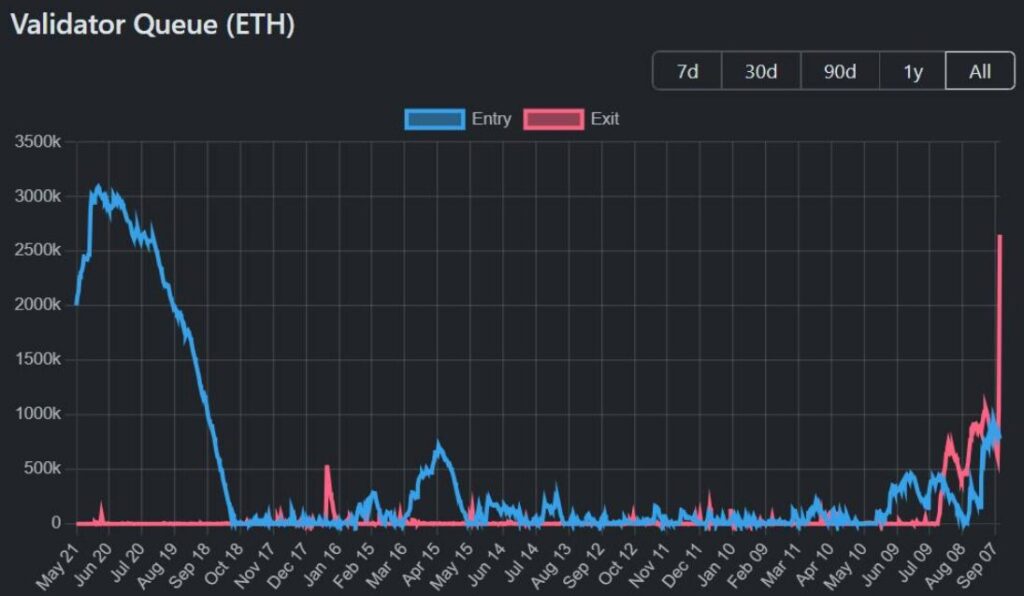
The number of active Ethereum addresses—wallets sending or receiving ETH or tokens—has shown a clear upward trend in 2026, with recent sharp spikes.
Interpretation
- Rising active addresses = increasing network usage
- Reflects growth in DeFi, NFTs, and Layer 2 ecosystems
- Often leads price movements (early signal of recovery)
Historically, Ethereum tends to see activity recovery before price recovery, making this a leading indicator.
5. Coinbase Premium Gap: Institutional Demand Signal
Coinbase Premium Gap Trend
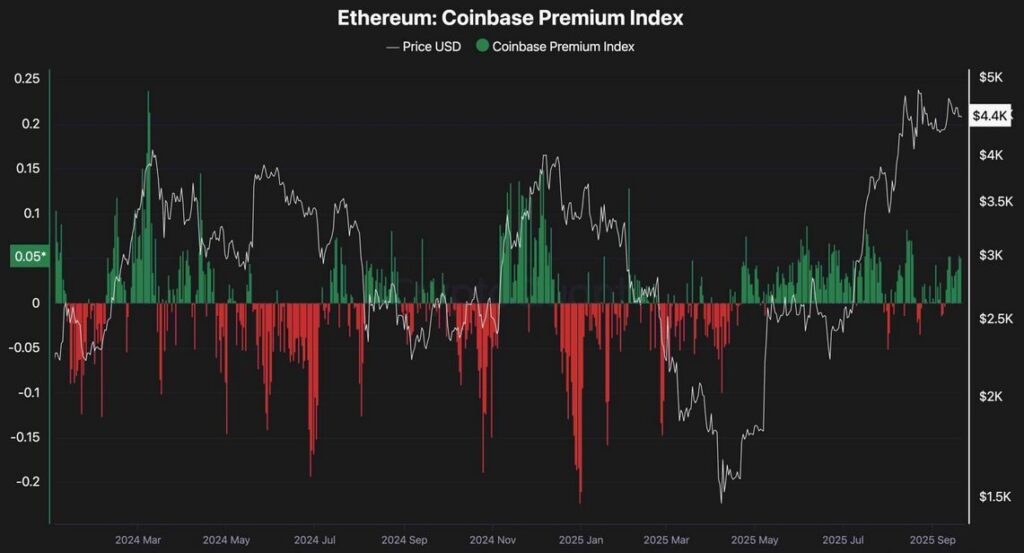
The Coinbase Premium Gap measures the price difference between Coinbase (U.S.-focused) and offshore exchanges.
- Negative = weaker U.S. demand
- Positive = stronger U.S. institutional buying
Recently, this metric has improved from negative territory toward positive levels.
Implication
- U.S. institutions are returning to the market
- Aligns with ETF inflows
- Suggests higher-quality capital entering ETH
6. Dual Demand Model: Utility + Asset
Ethereum is now entering a new phase defined by dual demand:
1. Utility Demand
Driven by:
- DeFi usage
- NFT ecosystems
- Layer 2 scaling adoption
- Smart contract execution
2. Asset Demand
Driven by:
- ETFs
- Institutional portfolios
- Corporate treasury strategies
This dual structure is crucial.
Bitcoin primarily functions as a store of value, while Ethereum is becoming both:
- A financial infrastructure layer
- A capital asset
This hybrid nature may ultimately give Ethereum a different valuation trajectory.
7. Structural vs. Cyclical Bull Market
It is essential to distinguish between two types of rallies:
Cyclical Rally (Short-Term)
- Driven by leverage
- Quickly reversible
- Weak fundamentals
Structural Rally (Current ETH Case)
- Driven by fundamental shifts
- Supported by capital inflows
- Reinforced by regulatory clarity
Ethereum’s current trajectory clearly aligns with the latter.
8. Risks and Short-Term Considerations
Despite the strong structural outlook, risks remain:
- Short-term overbought conditions
- Macro uncertainty (interest rates, liquidity)
- Regulatory changes in other jurisdictions
- Layer 2 competition affecting fee dynamics
However, these are largely tactical risks, not structural threats.
9. What Has Actually Changed?
The most important question is not:
“Why did ETH go up?”
But rather:
“What has fundamentally changed?”
Answer:
- DeFi is gaining regulatory recognition
- Institutional capital is entering consistently
- On-chain usage is recovering
- Corporations are accumulating ETH
This combination has not occurred at this scale before.
10. Conclusion: Ethereum at a Turning Point
Ethereum is transitioning into a new market phase—one defined by:
- Lower regulatory risk
- Stronger institutional participation
- Growing real-world usage
The convergence of these factors suggests that Ethereum is no longer just a speculative asset, but a core component of the emerging digital financial system.
While short-term volatility remains inevitable, the structural foundation appears stronger than ever.
For investors, builders, and institutions alike, the focus should shift from:
“Is Ethereum rising?”
to
“What role will Ethereum play in the next financial architecture?”