
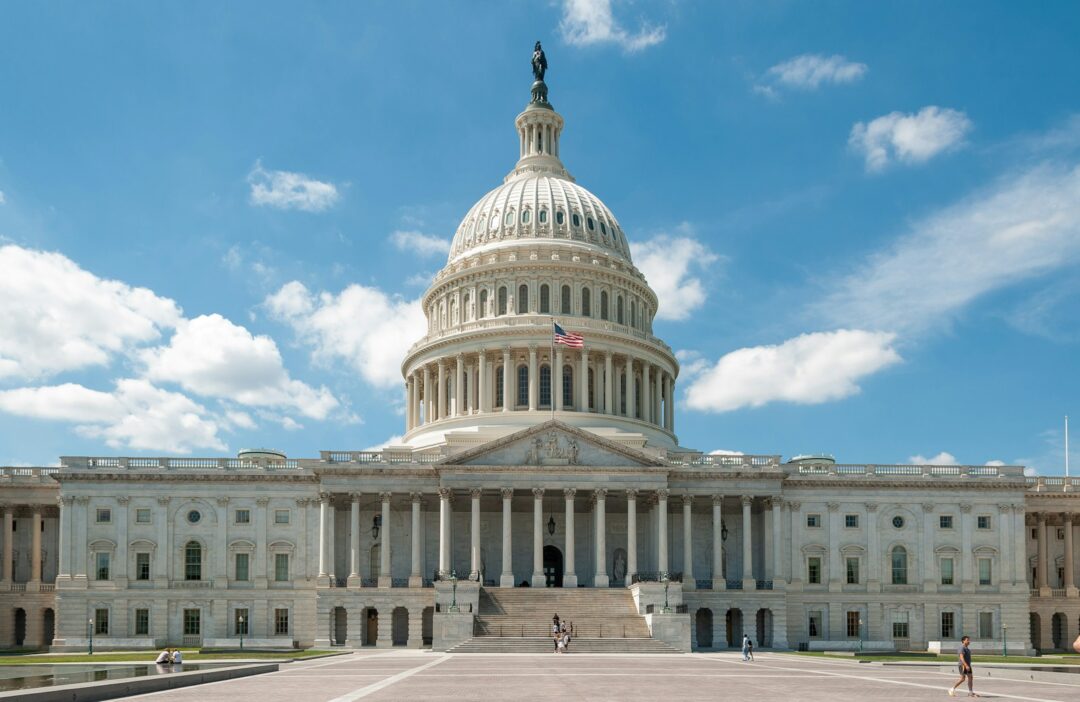
Over 100 Organizations Push Stablecoin Act into Law
Over 100 crypto companies and organizations, including Coinbase, Ripple, Circle, and Kraken, formally urged the U.S. Senate Banking Committee to push the Digital Asset Market Clarity Act. The significant gap in addressing the stablecoin yield-bearing products burdened the Clarity Act to move forward from the Senate level.
Despite this gap, many crypto companies support the continuous momentum of pushing the Clarity Act which will serve as main differentiator on the power and jurisdiction between Securities and Exchange Commission (SEC) and the Commodity Futures Trading Commission (CFTC). Likewise, it will introduce rules on stablecoins and crypto intermediaries.
Foundations of the Clarity Act
The Clarity Act has six simple foundations. First, to safeguard incentives of those who pay using stablecoins. Second, to delineate clearly the oversight roles of the SEC and the CFTC. Third, to avoid targeted treatment among developers who build decentralized software. Fourth, to align a new federal framework with the blockchain technology capabilities. Fifth, to simplify disclosure rules that are easy to follow. Lastly, to set clear standards for consistent crypto regulation across all 50 states.
Crypto Companies Worried Over Delays
Crypto companies believe that the delays on pushing this act will push more investors to rely on countries with well-defined regulatory framework, such as Abu Dhabi and Singapore. The companies also emphasize that market incentives are critical in upscaling market competitiveness. Traditional banks believe otherwise as they see that it could draw deposits away from the traditional financial system. Some setbacks for it to push through have been surfacing, such as the argument on the pitfall for the traditional banks if there are no restrictions on the yield-bearing stablecoins.
Anıl Öncü, CEO of Bitpace, has pointed out that the lines between Decentralized Finance and Traditional Finance are not blurring, but rather dissolving. The hanging decision produces either no regulation at all, or regulation so compromised that it satisfies nobody and protects nothing.



