
Main Points :
- Connecticut has ordered Kalshi, Robinhood Crypto, and Crypto.com to immediately stop offering unlicensed sports-betting-linked products.
- Regulators argue these products blur the line between derivatives, prediction markets, and gambling, especially when tokenized.
- This marks a growing trend in the U.S. toward regulating crypto-integrated prediction and betting platforms.
- The ruling highlights increased scrutiny on fintech innovation, especially where financial instruments resemble gambling or gaming activities.
- Kalshi, despite compliance challenges, remains an industry leader, raising $1 billion in Series E funding at a valuation of $11 billion.
- The case signals a rising wave of regulatory actions affecting exchanges, token issuers, and Web3 prediction markets across the U.S.
Introduction
In early December 2025, the Connecticut Department of Consumer Protection (DCP) issued a high-profile enforcement order against three well-known financial and crypto platforms—Kalshi, Robinhood Crypto, and Crypto.com—directing each company to immediately halt sports-betting-related services within the state.
This decision reflects broader U.S. regulatory momentum aimed at controlling products that combine cryptocurrencies, tokenization, derivatives, and prediction markets. As more fintech platforms adopt blockchain-based systems to tokenize real-world markets—including sports outcomes—regulators are increasingly concerned about consumer protection, licensing, and the boundaries between financial innovation and gambling activity.
This article summarizes recent developments, places them in context with similar federal and state actions, and examines what this means for the future of crypto-enabled prediction markets, investment platforms, and tokenized derivatives. It also integrates broader trends in the U.S. digital asset sector, based on additional research from Bloomberg, WSJ, The Block, and Cointelegraph.
I. Background: Why Connecticut Issued the Stop Order
1. Unlicensed sports betting is strictly prohibited
Connecticut’s gaming framework allows only state-licensed operators to offer sports betting.
DCP Commissioner Bryan T. Cafferelli stated that none of the three platforms possessed the license required to legally offer such services.
Moreover, regulators alleged that:
- The platforms offered wagers to users under 21,
- And marketing materials suggested that the companies were already compliant with state requirements.
These two findings triggered immediate enforcement action.
2. Tokenized derivatives created ambiguity
What made this case more complex was that some products were crypto-linked, such as:
- Tokenized sports-event derivatives
- Blockchain-settled prediction contracts
These innovations blur the line between:
- Gambling,
- Derivatives trading, and
- Prediction markets.
Kalshi has long argued that its event-contract markets are federally regulated derivatives, not gambling, but critics—including a class-action group—claim that sports-based contracts function as illegal wagers.
3. Mandatory customer withdrawal capability
The three companies were ordered to:
- Stop offering the unlicensed products
- Maintain customers’ ability to withdraw funds immediately
Failure to comply could result in:
- Civil penalties
- Criminal penalties
This places added pressure on fintech firms to ensure liquidity, segregation of user funds, and compliance with state-level operational mandates.
II. Reaction of the Companies
1. Robinhood Crypto
Robinhood quickly confirmed it would halt all sports-linked tokenized derivative offerings in the state, stating it would cooperate fully with regulators.
This follows their broader effort in 2024–2025 to expand beyond traditional crypto spot trading into:
- Tokenized derivatives
- Thematic digital asset indexes
- Event-based market products
The Connecticut order forces Robinhood to revisit its compliance models and internal risk controls.
2. Crypto.com
Crypto.com said it is “reviewing the scope” of services offered in the state.
Their affected products likely include tokenized markets linked to sports outcomes and derivative-style yield instruments.
Crypto.com, which already pulled back from several U.S. jurisdictions in 2024 due to regulatory complexity, now faces another adjustment in its American business strategy.
3. Kalshi
Kalshi is the most directly impacted due to its core business being event-contract prediction markets.
Even so, Kalshi remains strong in the prediction-market ecosystem, backed by:
- $1 billion Series E funding
- $11 billion valuation
- Partnership as CNN’s official forecasting partner
Kalshi has also disclosed ambitions to:
- Expand its platform to include blockchain-integrated rails
- Offer wallet-native trading
- Expand global market access
These ambitions may collide head-on with state regulators unless federal rules clearly define how event contracts differ from gambling.
III. Broader U.S. Trends in Crypto and Gambling Regulation
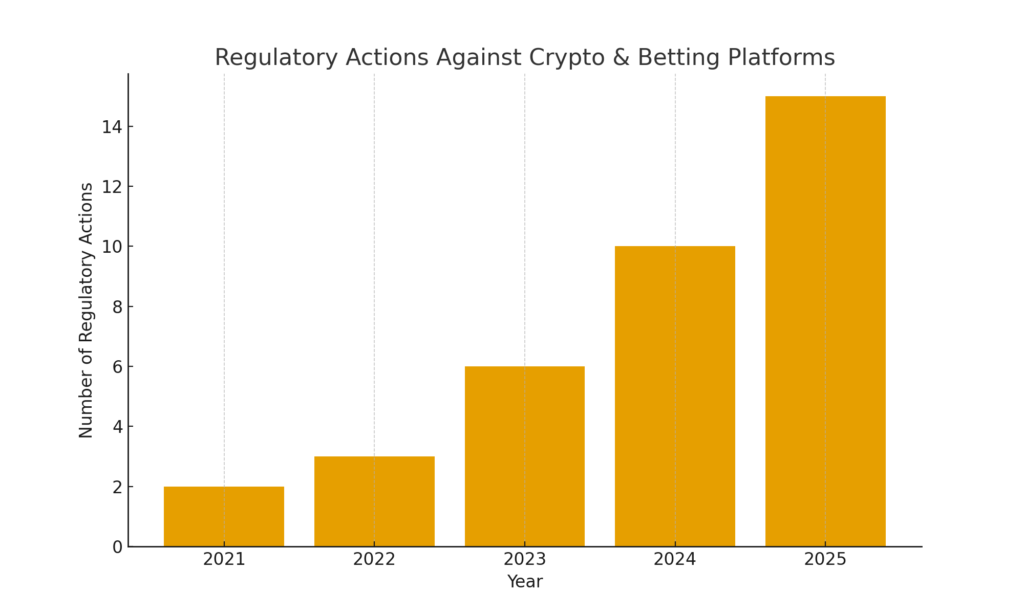
Connecticut’s action is not isolated. Across the U.S., regulators are tightening restrictions in three major areas:
1. Tokenized gambling and gaming products
States are increasingly monitoring:
- Tokenized sportsbook derivatives
- NFT-based gaming that resembles gambling
- Leveraged fantasy-sports markets
New Jersey, New York, and California have all considered similar actions in 2024–2025.
2. Prediction markets
The CFTC has been battling prediction platforms for years, especially when markets involve:
- Elections
- Sports outcomes
- Real-world events tied to public policy
A lawsuit against the CFTC’s approval of Kalshi’s political contracts has further complicated the environment.
3. Crypto exchanges integrating non-traditional financial markets
Major exchanges have added:
- Event contracts
- Prediction tokens
- Real-world-asset (RWA) markets
- Tokenized CEX-settled sports odds
This rapid innovation often outpaces regulators’ definitions and licensing frameworks.
IV. Market Growth and Why Regulators Are Concerned
The global sports betting market has grown dramatically since 2021.
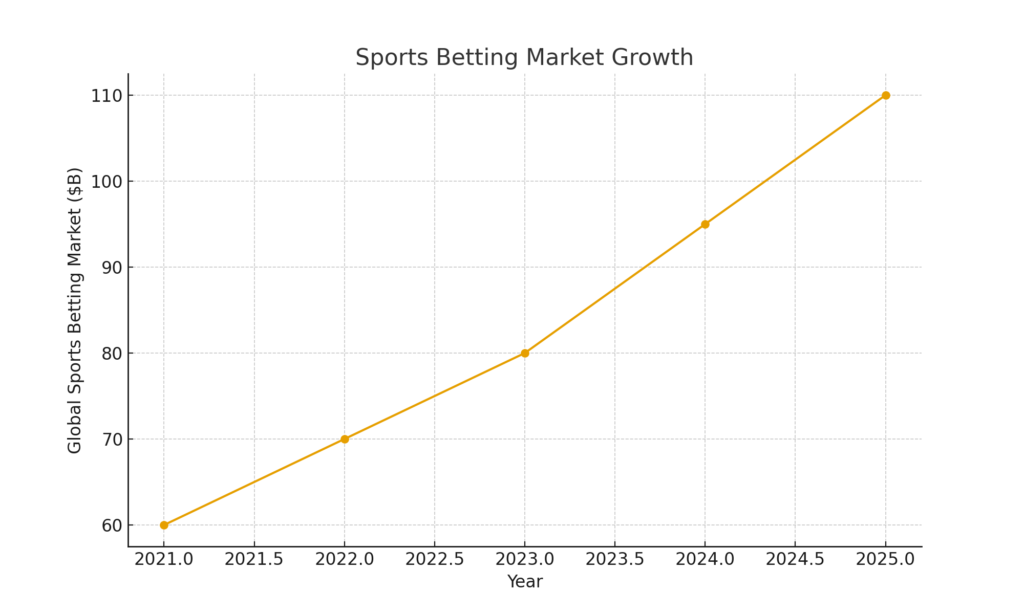
This growth coincides with a surge in:
- Tokenized markets
- Blockchain prediction apps
- Decentralized betting protocols
From the regulators’ perspective, the concern is threefold:
1. Consumer protection
Unlicensed platforms may allow:
- Underage wagering
- Misleading risk disclosures
- Insufficient reserve requirements
2. Regulatory arbitrage
Companies may attempt to structure products as derivatives or prediction contracts to bypass gaming rules.
3. The merging of finance and gambling
Blockchain’s ability to tokenize anything—including real-world events—creates grey zones between:
- Investing
- Speculating
- Gambling
States are now trying to draw bright lines.
V. Kalshi’s Role in the Future of Prediction Markets
Despite regulatory friction, Kalshi is at the center of the prediction-market revolution.
1. Institutional partnerships
Being chosen as CNN’s official forecasting partner significantly strengthens Kalshi’s credibility as a data-driven, research-oriented platform.
2. Massive funding and expansion plans
The $1 billion Series E round, valuing the company at $11 billion, indicates strong investor confidence.
Kalshi intends to:
- Expand prediction markets to global users
- Integrate blockchain wallets
- Possibly tokenize event contracts
All of these create both opportunity and new compliance risks.
3. The question regulators must answer
Are event contracts:
- A legitimate financial instrument?
- Or a disguised form of sports gambling?
Until U.S. regulators reach a unified position, platforms will face fragmented state restrictions similar to Connecticut’s ruling.
VI. Implications for Crypto Investors and Builders
For readers seeking new crypto assets, new revenue sources, or practical blockchain applications, this case provides important lessons:
1. Tokenized derivatives and prediction markets will face more regulation
States and federal bodies want:
- Licensing
- Consumer protections
- Clear lines between gambling and finance
2. Exchanges may reduce or restructure high-yield or event-driven token products
Especially products referencing:
- Sports outcomes
- Elections
- Laws or policy changes
3. Builders should prepare for “dual compliance” frameworks
Fintech companies will increasingly need:
- Gaming compliance officers
- Derivatives compliance officers
- Blockchain compliance officers
simultaneously.
4. Crypto investors should expect short-term volatility
Regulatory risk affects:
- Tokenized RWA markets
- Prediction-market tokens
- Exchange revenue models
5. Long-term opportunity remains strong
Prediction markets and tokenized event derivatives offer:
- New financial primitives
- New trading categories
- High user engagement
But compliance must evolve with innovation.
Conclusion
Connecticut’s enforcement action against Kalshi, Robinhood Crypto, and Crypto.com represents a pivotal moment in the evolution of digital prediction markets and crypto-linked financial products.
As sports betting, financial derivatives, and blockchain technology continue to merge, regulators are forced to redefine the boundaries between gambling, speculation, and legitimate investment. The result is a rapidly changing environment where fintech companies must demonstrate robust compliance, transparent disclosures, and responsible product design.
For innovators, this is both a challenge and an opportunity.
For investors, this is a reminder to watch regulatory developments as closely as market charts.
For the digital asset ecosystem as a whole, Connecticut’s decision marks the beginning of a new regulatory era—one that will shape the future of tokenized markets for years to come.
