

Main Points :
- Bitcoin surpassed $100,000 for the first time in December 2024, but the expected post-halving supercycle failed to materialize in 2025.
- Capital that was expected to flow into Bitcoin instead concentrated in generative AI and U.S. tech equities.
- Corporate Bitcoin treasury strategies (DAT firms) and ETFs failed to become sustained marginal buyers.
- U.S. monetary easing did not translate into real liquidity due to Treasury bill issuance and TGA absorption.
- The widely anticipated “halving cycle” may now be structurally broken.
- The key question for 2026 is not just price appreciation, but whether Bitcoin can print a new all-time high.
- Under a best-case scenario, Bitcoin could reach $250,000 by mid-2026—but end the year significantly lower.
1. From Euphoria to Disillusionment: Bitcoin’s 2024–2025 Whiplash
Bitcoin’s rally into late 2024 was historic. In December, BTC broke through the psychologically critical $100,000 level for the first time, triggering widespread belief that the post-halving bull cycle had officially begun.
At the start of 2025, consensus expectations were overwhelmingly bullish. Many analysts—including bitbank market analyst Hasegawa Tomoya—projected Bitcoin reaching $200,000 by year-end.
Reality diverged sharply.
By February 2025, Bitcoin entered a downtrend, briefly falling below $80,000 in April. Although the price recovered later in the year and reached a new all-time high of $126,000 in October, the rally proved fragile. Escalating U.S.–China tensions and global risk-off sentiment pushed BTC back toward the $90,000 range.
The bullish narrative had broken—and the reasons reveal deeper structural changes in Bitcoin’s market dynamics.
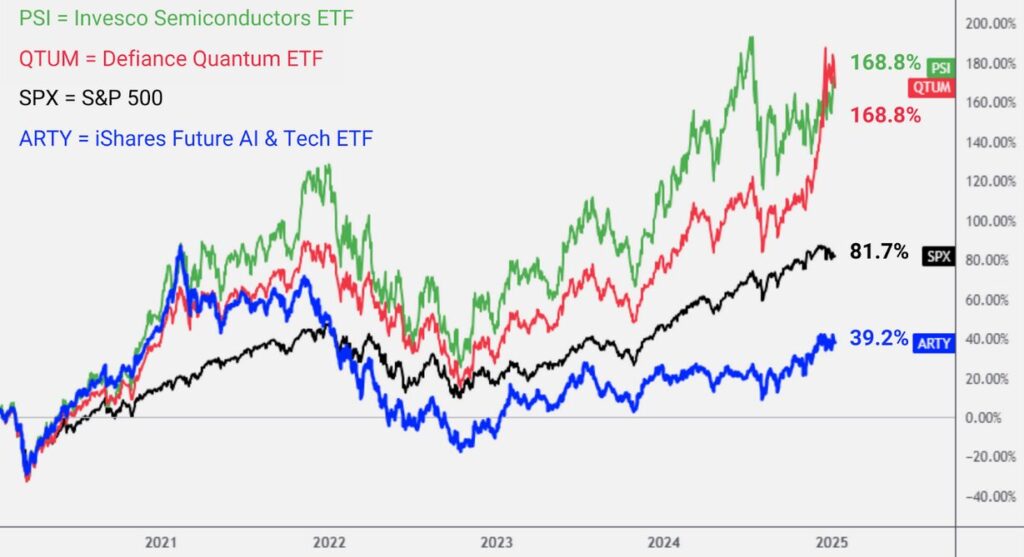
2. Capital Went Elsewhere: AI Became the True Risk Asset of 2025
One of the largest miscalculations was where global risk capital would flow.
Instead of rotating into Bitcoin, speculative capital concentrated in generative AI and semiconductor equities. Companies such as NVIDIA absorbed massive inflows as investors chased exponential growth narratives tied to artificial intelligence.
Bitcoin, once seen as the premier risk-on macro asset, lost the spotlight.
When the AI trade finally began to unwind in late 2025, the sell-off did not rotate into Bitcoin. Instead, investors de-risked across the board, dragging BTC down alongside equities.
2025 began and ended with AI—not Bitcoin—at the center of capital allocation.
[Capital Flow Comparison – AI Equities vs Bitcoin (2024–2025)]
3. The Limits of Corporate Treasury Bitcoin (DAT Strategy)
Another anticipated driver failed to deliver sustained momentum: Digital Asset Treasury (DAT) companies.
While several firms added Bitcoin to their balance sheets, institutional investors viewed DAT exposure as double-risk—combining operational business risk with Bitcoin’s volatility. As a result, DAT-driven demand proved episodic rather than structural.
Spot Bitcoin ETFs also failed to generate continuous inflows after their initial surge. Without a persistent marginal buyer, Bitcoin lacked the demand pressure seen in previous cycles.
2025, in short, lacked a “hero buyer.”
4. Why Rate Cuts Didn’t Save Bitcoin
Monetary policy was another major disappointment.
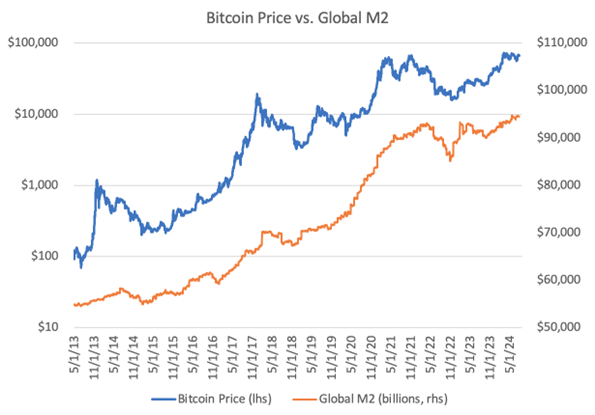
Many expected U.S. Federal Reserve rate cuts to unleash liquidity into risk assets. While the Fed did begin easing in September 2025, total cuts amounted to roughly 2%, far less than markets had priced in.
More importantly, liquidity never truly reached markets.
The U.S. Treasury increased short-term bill issuance, pulling cash into the Treasury General Account (TGA). This absorbed liquidity that would otherwise circulate through financial institutions.
As a result, interest rates fell—but risk appetite did not rise.
[Fed Rate Cuts vs TGA Balance vs Bitcoin Price]
5. The “Halving Curse”: When Everyone Believes the Cycle
The greatest analytical failure, according to Hasegawa, was reliance on the halving cycle.
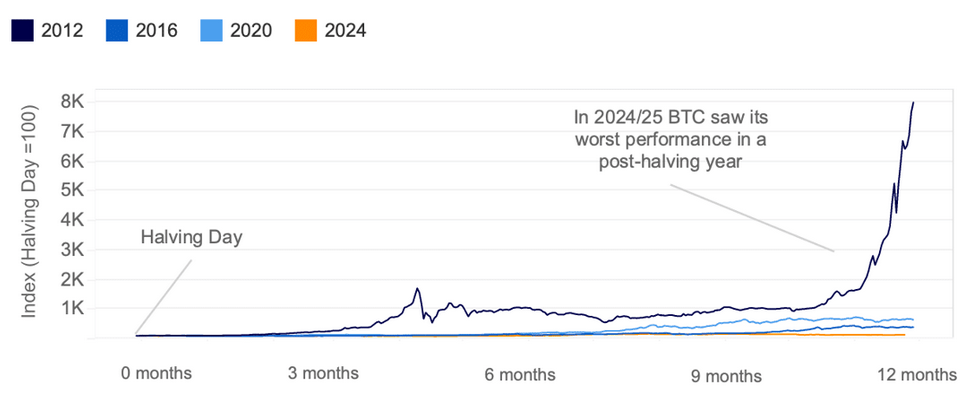
Historically, Bitcoin reached new all-time highs roughly 400–600 days after each halving, with diminishing returns each cycle. Based on this model, a threefold rise from the $65,000 breakout in October 2024 pointed toward $200,000 by late 2025.
Instead, the model collapsed.
Why?
Because the halving narrative became too widely accepted.
Long-term holders began selling earlier. Volatility increased. Retail participation weakened. The expectation of a known peak reduced speculative urgency.
Hasegawa describes this phenomenon as the “Halving Curse”—a self-defeating prophecy where belief itself destroys the pattern.
[Bitcoin Halving Cycles – Historical vs 2024–2025]
6. 2026: The Year That Decides Everything
For 2026, the critical question is not whether Bitcoin rises—but whether it breaks its previous all-time high.
A successful ATH breakout would signal:
- The effective death of the traditional halving cycle
- A reset of investor psychology
- Potential capital inflows from gold and traditional stores of value
- Retail re-entry driven by narrative renewal
However, two major risks loom:
- U.S. Midterm Elections
A shift in congressional control could weaken crypto-friendly regulatory momentum. - End of the Rate-Cut Cycle
If U.S. consumption and employment rebound, easing could halt—or reverse—by late 2026.
7. Best-Case Scenario: $250,000 by Summer 2026
Under the most optimistic assumptions—TGA drawdown, QT suspension, moderate liquidity improvement—Bitcoin could surge sharply after breaking its ATH.
Hasegawa’s best-case projection places Bitcoin at $250,000 around July 2026.
However, this move would likely be short-lived.
As political and monetary risks re-emerge, Bitcoin could retrace significantly, ending 2026 in the $120,000–$150,000 range.
In other words: 2026 may be explosive—but not sustainably euphoric.
Conclusion: Bitcoin Beyond the Halving Myth
Bitcoin is entering a new phase.
The era when price could be modeled primarily through halving math is ending. Macro liquidity, political structure, and cross-asset competition now dominate price formation.
Whether Bitcoin reaches $250,000 matters less than how it gets there.
If Bitcoin can break its all-time high in 2026, it may finally escape the gravitational pull of its own past cycles—and redefine itself not as a speculative anomaly, but as a mature global asset.
