
Main Points :
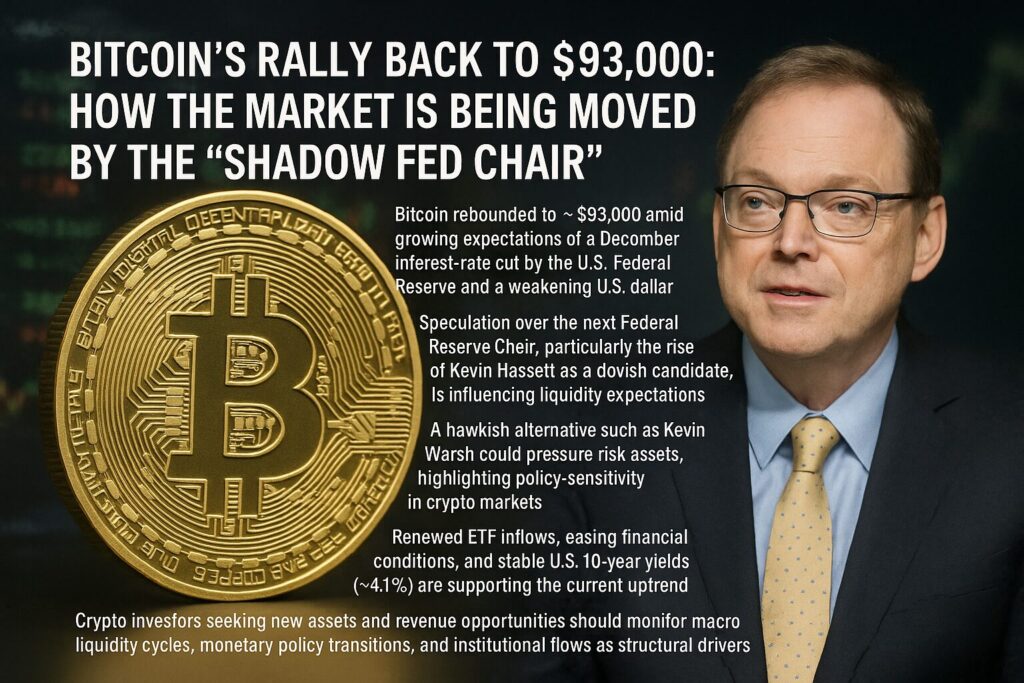
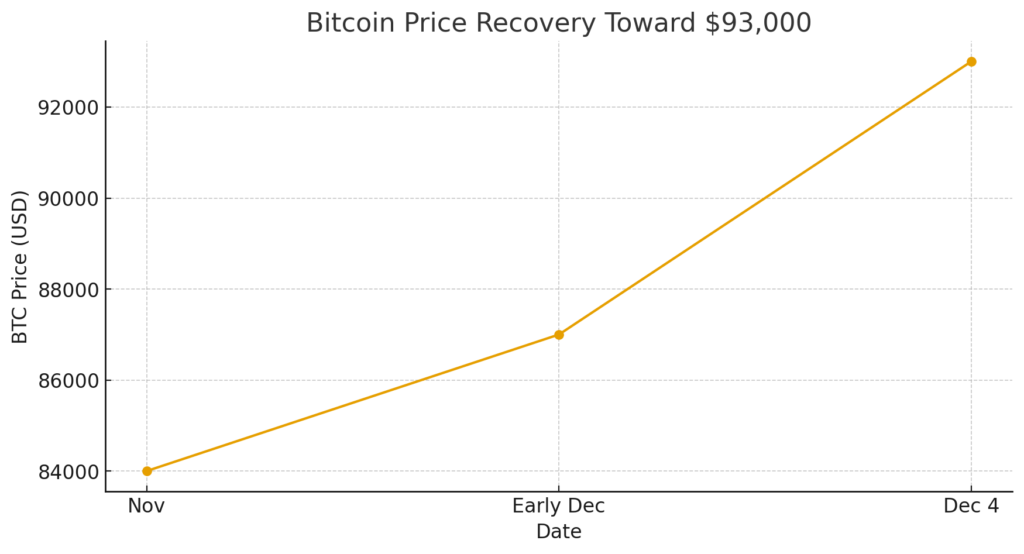
- Bitcoin rebounded to ~$93,000 amid growing expectations of a December interest-rate cut by the U.S. Federal Reserve and a weakening U.S. dollar.
- Speculation over the next Federal Reserve Chair, particularly the rise of Kevin Hassett as a dovish candidate, is influencing liquidity expectations.
- A hawkish alternative such as Kevin Warsh could pressure risk assets, highlighting policy-sensitivity in crypto markets.
- Renewed ETF inflows, easing financial conditions, and stable U.S. 10-year yields (~4.1%) are supporting the current uptrend.
- Crypto investors seeking new assets and revenue opportunities should monitor macro liquidity cycles, monetary policy transitions, and institutional flows as structural drivers.
I. Introduction — A Macro-Driven Bitcoin Rebound
Bitcoin (BTC) has regained strong momentum, rebounding to approximately $93,000 as markets increasingly price in a Federal Reserve rate cut in December. The weakening U.S. dollar has added fuel to the move, creating an environment where digital assets—especially Bitcoin—benefit from renewed liquidity expectations.
However, beyond the near-term macro backdrop, a new narrative has emerged: the influence of the “shadow Fed chair.” With the current Fed Chair Jerome Powell’s term ending in 2026, markets are already speculating on who will lead the next monetary cycle. The possibility of a more dovish successor—someone willing to cut rates sooner and deeper—has become a surprisingly powerful catalyst for the crypto market.
II. Why Bitcoin Climbed Back Toward $93,000
1. Surge in Rate-Cut Expectations
In the U.S. futures market, the probability of a December rate cut has jumped into the upper-80% range, signaling that traders expect imminent monetary easing. This development has loosened financial conditions and pushed Bitcoin out of the correction range between $84,000 and $87,000.
2. Dollar Weakness and Yield Stabilization
The U.S. dollar has softened as expectations for future policy easing grow. Meanwhile, the 10-year Treasury yield has stabilized around 4.1%, reducing upward pressure on global risk-off sentiment.
For crypto markets, which are highly sensitive to macro liquidity cycles, this alignment of falling yields and a softer dollar creates an ideal setup for upward price action.
3. Renewed ETF Inflows
Market analysts are watching whether U.S. Bitcoin ETFs can attract another wave of inflows. ETF demand was a central driver of Bitcoin’s earlier 2025 rally, and a resurgence of institutional buying could extend the current uptrend.
III. The “Shadow Fed Chair” Narrative: Who Might Lead the Next Monetary Cycle?
1. Kevin Hassett — A Dovish Candidate Favored by Markets
Former Chairman of the White House Council of Economic Advisers, Kevin Hassett, is emerging as a leading candidate for the next Fed Chair.
Crucially:
- Hassett has ties to Coinbase as a former advisor.
- He advocates early rate cuts and argues for a rapid normalization of inflation.
- Markets view him as dovish, implying weaker dollar conditions and greater liquidity.
A Hassett appointment could create long-term bullish pressure on Bitcoin, as markets tend to price in future policy cycles well before a new chair takes office.
2. Kevin Warsh — The Hawkish Alternative
Another potential candidate is former Fed Governor Kevin Warsh, known for his tightening bias.
If selected, markets may anticipate:
- Slower rate cuts
- Stronger dollar pressure
- Reduced liquidity flows into risk assets
This would likely dampen Bitcoin’s medium-term momentum.
3. Why Markets Care Now
Although Powell’s term does not end until May 2026, crypto markets have a strong tendency to front-run policy shifts. Traders are effectively positioning today based on who they believe will shape U.S. liquidity conditions two years from now.
IV. Recent Global Developments Affecting Bitcoin
To add broader context from other sources and market data:
1. Strong Institutional Accumulation
Institutions continue accumulating Bitcoin through ETFs and OTC desks. Recent reports show intensified demand from:
- U.S. asset managers
- Corporate treasuries exploring digital asset hedging
- Asian market participants shifting away from weakening regional fiat
2. Stablecoin Dominance and Network Liquidity
USDT and USDC market caps continue expanding, injecting on-chain liquidity and strengthening Bitcoin’s transactional velocity. The growth of dollar-backed stablecoins effectively amplifies crypto liquidity cycles.
3. Miners Preparing for 2026–2027 Expansion
Mining companies are increasing future capacity investment, anticipating a broader bull cycle fueled by declining interest rates and the next institutional wave. This strengthens the long-term bullish structure of the Bitcoin ecosystem.
4. Broader Market Correlations
Bitcoin continues to outperform:
- Gold
- Nasdaq technology stocks
- Broad commodity indices
This reinforces its role as a liquidity-sensitive macro asset, not merely a speculative instrument.
V. Looking Forward — What Will Determine Whether Bitcoin Breaks All-Time Highs?
1. ETF Flow Momentum
Bitcoin’s ability to sustain an upward trend will depend greatly on whether ETF inflows regain strength. Even moderate positive inflows can create outsized impacts, given ETF providers’ need to maintain on-chain reserves.
2. The Dollar Cycle
If the dollar continues weakening due to dovish Fed expectations, Bitcoin may test higher price ranges, potentially surpassing $95,000–$100,000 in early 2026.
3. The Actual Fed Decision in December
Should the Federal Reserve confirm a rate cut, liquidity conditions will ease further. The market response will likely be immediate and significant.
4. Appointment Signals for the Next Fed Chair
Even unofficial remarks or political hints regarding the next Fed Chair candidate may create short-term volatility in crypto markets.
VI. Conclusion — Why This Moment Matters for Crypto Investors
Bitcoin’s return to $93,000 is not just a rebound—it represents the intersection of:
- Monetary policy transition
- Dollar weakness
- Higher institutional participation
- Early speculation about future Fed leadership
For readers seeking new crypto assets, next-generation revenue opportunities, or practical blockchain applications, this moment highlights the importance of macro literacy.
Crypto markets are no longer isolated; they are deeply connected to the global financial system, affected by liquidity expectations and political transitions.
Understanding these structural forces will be essential for navigating the next major expansion phase of digital assets.
