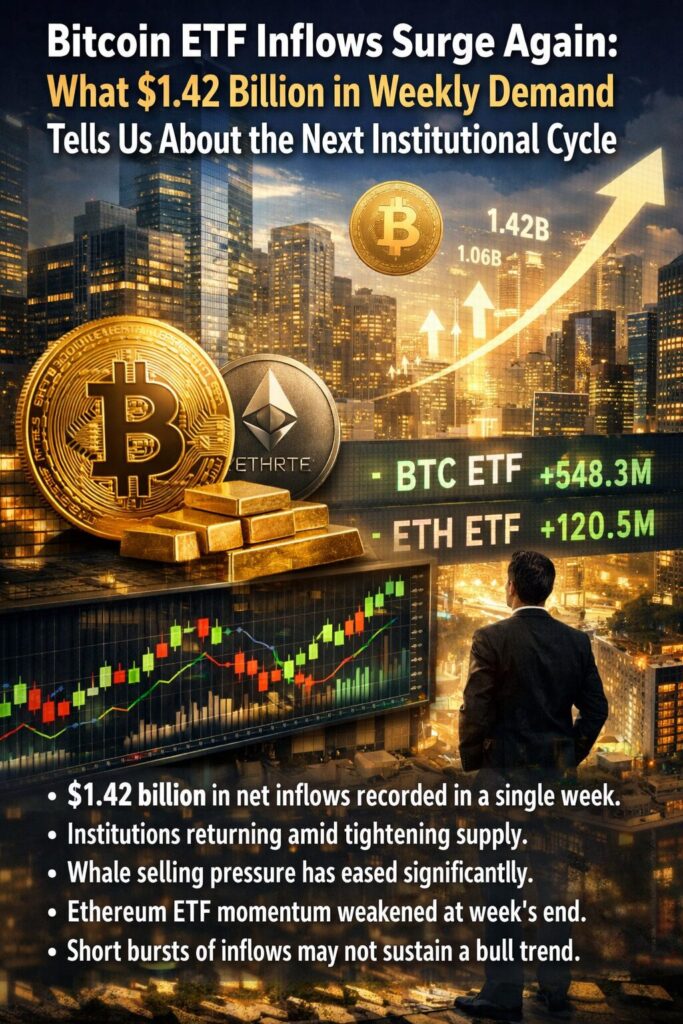
Bitcoin spot ETFs recorded $1.42 billion in net inflows in a single week, the strongest performance since early October.
Institutional investors appear to be returning via regulated, long-only ETF channels, amid tightening effective supply.
Whale selling pressure has eased compared with late December, reinforcing a short-term supply squeeze.
Ethereum ETFs also saw inflows, but momentum weakened sharply toward the end of the week.
Analysts warn that short bursts of ETF inflows alone are not enough to sustain a long-term bull trend without continued accumulation.
1. Bitcoin ETFs Reignite Institutional Interest
Bitcoin spot exchange-traded funds (ETFs) have staged a notable comeback. Over the most recent week, net inflows reached approximately $1.42 billion, marking the strongest weekly performance since early October, when inflows exceeded $2.7 billion.
This resurgence is significant not merely for its size, but for its composition and timing. According to market data provider SoSoValue, the majority of inflows were concentrated mid-week. Wednesday alone recorded roughly $844 million, the largest single-day net inflow in this period, followed closely by Tuesday’s $754 million.
While Friday saw a reversal with $395 million in net outflows, the earlier surge more than compensated, lifting the weekly total to levels that clearly signal renewed institutional participation.
This pattern suggests that large allocators—such as asset managers, pension-linked strategies, and family offices—are selectively re-engaging with Bitcoin exposure after a cautious end to the previous year.
2. Why Mid-Week Flows Matter More Than Headlines
Mid-week concentration is not incidental. Historically, institutional ETF flows tend to cluster around portfolio rebalancing windows, macro data releases, and risk-committee decisions.
In practical terms, this implies:
These flows are deliberate allocations, not retail speculation.
ETF inflows are being used as primary Bitcoin exposure, rather than derivatives or offshore vehicles.
The capital is entering through fully regulated channels, reinforcing Bitcoin’s position within traditional portfolio construction.
This is particularly relevant for compliance-driven institutions that cannot access offshore exchanges or unregulated custody solutions.
3. Supply Tightening: ETFs vs. Whale Behavior
Vincent Liu, Chief Investment Officer at Kronos Research, frames the current environment as an early-stage structural shift rather than a confirmed trend.
According to Liu, long-only investors who had remained on the sidelines are now re-entering the market through ETFs. At the same time, on-chain indicators suggest that large Bitcoin holders—commonly referred to as “whales”—have reduced net selling pressure compared with late December.
Where This Becomes Critical
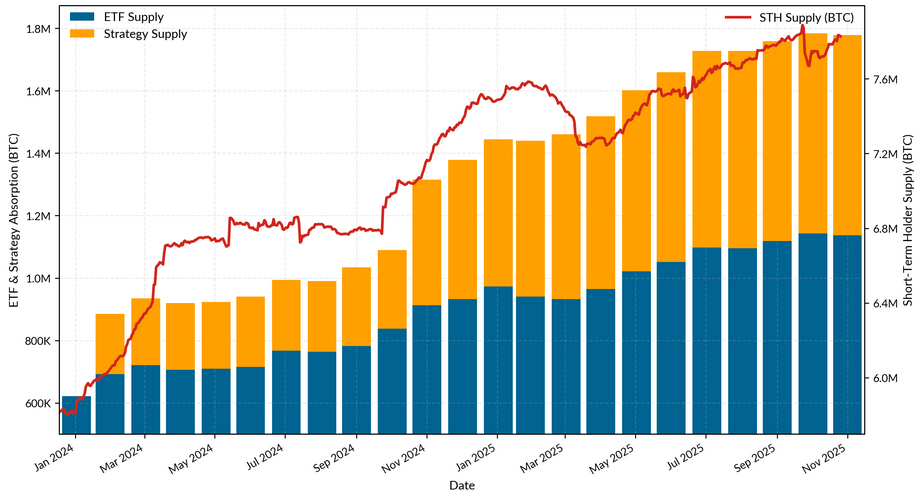
ETFs remove Bitcoin from liquid circulation, effectively locking supply.
Together, these forces tighten effective supply, even if total circulating supply remains unchanged.
In such an environment, price dips are more likely to be absorbed, increasing the probability of higher lows over time.
[“ETF Absorption vs. Whale Selling Pressure” — visualizing declining net whale sales alongside rising ETF holdings.]
4. Ethereum ETFs: Strong Start, Weak Finish
Ethereum spot ETFs also experienced inflows during the early part of the week:
Tuesday: approximately $290 million
Wednesday: approximately $215 million
However, unlike Bitcoin, Ethereum ETF demand weakened sharply toward the end of the week. Friday alone saw $180 million in net outflows, leaving the weekly total at around $479 million.
This divergence highlights a key market distinction:
Bitcoin is currently viewed as macro-aligned digital collateral.
Ethereum remains positioned as infrastructure and growth-linked, making it more sensitive to short-term risk sentiment.
Institutional investors appear to be prioritizing Bitcoin exposure first, while treating Ethereum allocations more tactically.
5. Are ETF Inflows Enough to Sustain a Rally?
Despite the optimistic signals, not all analysts are convinced that recent inflows guarantee a durable uptrend.
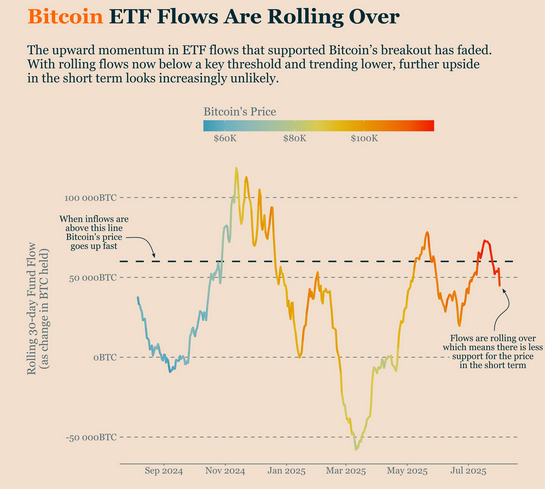
The macro-focused Bitcoin newsletter Econometrics cautions that sharp but brief ETF inflow spikes often lead to temporary price rebounds rather than sustained rallies. When inflows slow, price gains are frequently retraced.
Their analysis emphasizes three key points:
Cumulative ETF flows remain deeply negative on a longer-term basis.
A true trend reversal requires multiple consecutive weeks of strong inflows, not isolated spikes.
Short-term inflows may stabilize prices, but do not establish long-term momentum on their own.
[“Cumulative Bitcoin ETF Flows vs. Price” — showing that sustained price trends align with multi-week inflow persistence.]
6. Strategic Implications for Investors and Builders
For readers seeking new crypto assets, yield opportunities, or practical blockchain applications, this environment offers several insights:
For Investors
Bitcoin ETFs are becoming structural demand engines, not just speculative vehicles.
Monitoring flow persistence, rather than daily headlines, is critical.
Supply dynamics matter as much as macro narratives.
For Builders and Operators
Institutional adoption increasingly flows through regulated, transparent instruments.
Products that integrate ETFs, custody, compliance, and reporting are better positioned for institutional partnerships.
Bitcoin’s role as digital balance-sheet collateral is strengthening relative to purely transactional use cases.
7. Conclusion: Early Signals, Not Final Confirmation
The return of $1.42 billion in weekly Bitcoin ETF inflows marks a meaningful shift in market tone. Combined with easing whale selling pressure, it suggests that effective supply is tightening at a time when institutional appetite is cautiously returning.
However, this is best understood as an early-stage signal, not definitive confirmation of a new bull cycle. Sustainable upside will depend on whether ETF inflows remain strong over several weeks and whether broader market structure continues to improve.
For now, the message is clear: Bitcoin is once again being accumulated through institutional-grade channels, and the market is quietly adjusting to that reality.
About Us and Media
Blockchain and cryptocurrency media covering and exposing the practical application development on the blockchain industry and undiscovered coins.
Click edit button to change this text. Lorem ipsum dolor sit amet, consectetur adipiscing elit
Manage Consent
To provide the best experiences, we use technologies like cookies to store and/or access device information. Consenting to these technologies will allow us to process data such as browsing behavior or unique IDs on this site. Not consenting or withdrawing consent, may adversely affect certain features and functions.
Functional Always active
The technical storage or access is strictly necessary for the legitimate purpose of enabling the use of a specific service explicitly requested by the subscriber or user, or for the sole purpose of carrying out the transmission of a communication over an electronic communications network.
Preferences
The technical storage or access is necessary for the legitimate purpose of storing preferences that are not requested by the subscriber or user.
Statistics
The technical storage or access that is used exclusively for statistical purposes.The technical storage or access that is used exclusively for anonymous statistical purposes. Without a subpoena, voluntary compliance on the part of your Internet Service Provider, or additional records from a third party, information stored or retrieved for this purpose alone cannot usually be used to identify you.
Marketing
The technical storage or access is required to create user profiles to send advertising, or to track the user on a website or across several websites for similar marketing purposes.