
Main Points :
- Bitcoin’s failure near $93,000 has once again shifted market attention to the critical $90,000 support zone.
- While higher-timeframe (HTF) structure remains fragile, lower-timeframe (LTF) signals suggest that bulls still have a window to regain control if $90,000 holds.
- Order-book data and rising open interest indicate aggressive positioning, increasing the probability of a volatility expansion.
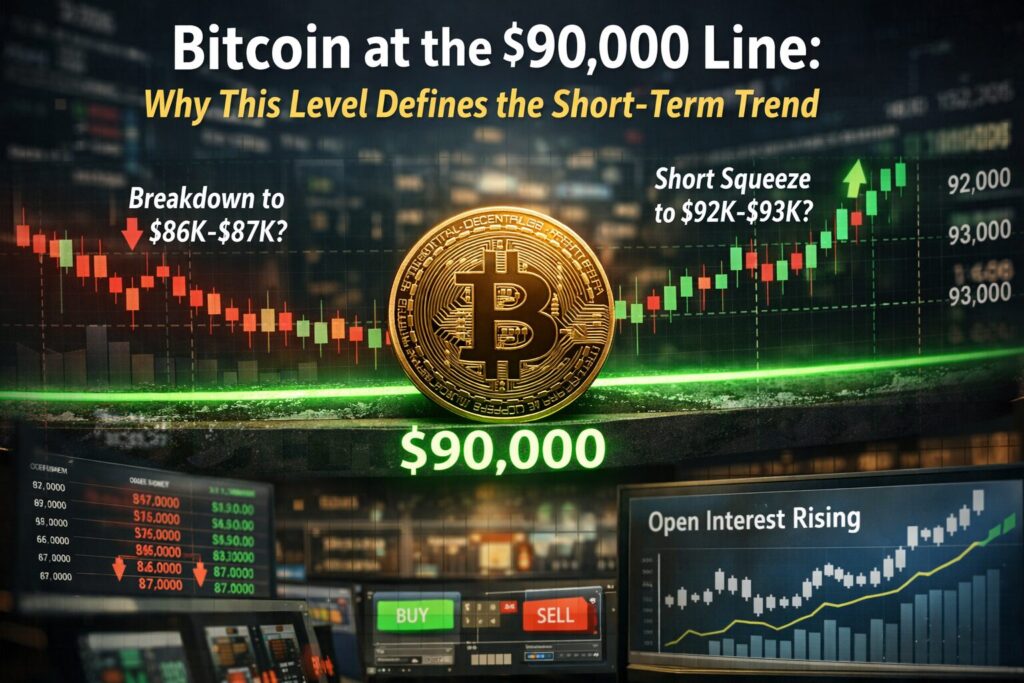
- A successful defense of $90,000 could trigger a short squeeze toward $92,000–$93,000, while a breakdown may open the path to $86,000–$87,000.
- For investors and builders seeking new crypto opportunities, this phase highlights how liquidity, derivatives, and market structure interact in real-world trading environments.
1. Market Context: A Rally Meets Its Ceiling
Bitcoin’s advance since the beginning of the year has been impressive, culminating in an 8% rally that briefly pushed prices toward the $93,000 region. However, this level once again acted as a formidable ceiling. The market recorded its third swing failure pattern (SFP) at roughly the same resistance, signaling that sellers remain active and well-positioned in that zone.
Following the rejection, Bitcoin retraced to around $89,250, marking the weekly low and reviving concerns about consolidation or even a deeper corrective phase. From a structural perspective, this price action reflects a market that is still undecided: long-term participants remain optimistic, but short-term traders are increasingly sensitive to key liquidity levels.
For experienced crypto participants, this environment is familiar. Strong rallies often stall at psychologically significant round numbers, and $90,000 has now become such a battlefield. Whether this level holds or fails will likely determine the short-term narrative, influencing everything from spot demand to derivatives positioning and funding rates.
2. Higher-Timeframe vs. Lower-Timeframe Signals
From a higher-timeframe (HTF) perspective, Bitcoin’s structure appears unstable. The repeated failures near $93,000 suggest that the market has not yet accumulated sufficient momentum to break decisively higher. Long-term moving averages are still supportive, but momentum indicators on weekly charts have flattened, reflecting hesitation rather than conviction.
In contrast, the lower-timeframe (LTF) picture offers more nuance. Bitcoin is currently trading within a critical order-block zone between approximately $89,200 and $90,500. This region has historically attracted demand, and its defense could allow bulls to reassert control in the short term.
Importantly, Bitcoin continues to trade above its monthly rolling Volume-Weighted Average Price (VWAP). This indicator flipped back to a bullish orientation at the start of 2026, reinforcing the idea that the broader market structure remains constructive despite near-term volatility. For traders and investors alike, this divergence between HTF caution and LTF opportunity underscores why timing and context matter in crypto markets.
3. Key Price Levels That Matter Now
In the coming sessions, several levels deserve close attention:
- $90,000: The primary psychological and technical support. Holding above this level keeps bullish scenarios alive.
- $91,666–$91,700: A decisive daily close above this area would signal renewed bullish strength and invalidate some recent bearish setups.
- $92,000–$93,000: The upper resistance zone where previous SFPs occurred. A move into this region could trigger short liquidations.
- $86,000–$87,000: The next major downside target if $90,000 fails, representing a liquidity pocket from prior consolidation.
Short-term price action is likely to remain range-bound into the weekend unless a strong catalyst emerges. However, crypto markets are known for abrupt shifts, especially when leverage and liquidity are concentrated around obvious levels.
4. Open Interest and the Risk of a Short Squeeze
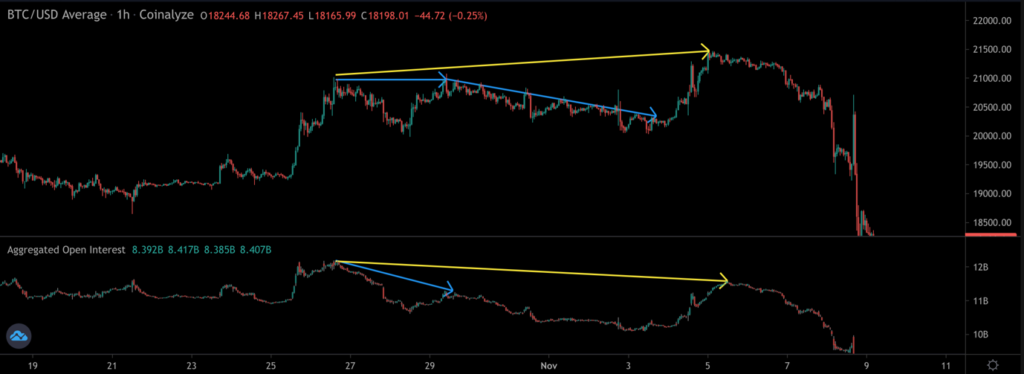
One of the most telling developments during the recent pullback from $92,000 to $90,000 has been the sharp increase in open interest. Rather than declining alongside price, open interest surged, suggesting that traders were aggressively adding positions—particularly shorts—into the dip.
This dynamic creates a two-sided risk. On one hand, it reflects growing bearish conviction among short-term traders. On the other, it sets the stage for a potential short squeeze if price stabilizes and moves higher. Should Bitcoin reclaim $91,700 on a daily closing basis, it would likely force late shorts to cover, accelerating price toward $92,000–$93,000.
For sophisticated market participants, this is a textbook example of how derivatives positioning can amplify spot moves. It also highlights why understanding open interest, funding rates, and liquidation levels is essential for anyone seeking consistent returns in crypto markets.
BTC Price vs. Open Interest (illustrating rising open interest during the pullback).
5. Order-Book Liquidity: Passive Buyers Step In
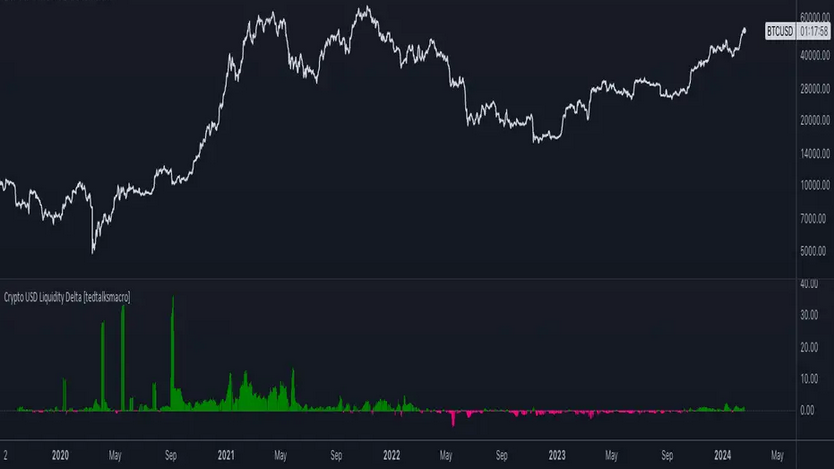
Order-book data adds another layer to the analysis. According to liquidity delta metrics, there has been a notable influx of passive buy orders around the $90,000 level. Over the past two weeks, similar absorption patterns preceded short-term rebounds, suggesting that larger players may be defending this zone.
Passive buying does not guarantee an immediate rally, but it often acts as a stabilizing force. If these bids continue to absorb sell pressure, downside momentum may weaken, increasing the likelihood of a bounce. Conversely, if these orders are pulled or overwhelmed, the resulting vacuum could lead to a swift drop toward lower support levels.
This behavior is particularly relevant for institutional traders and crypto businesses managing liquidity. It demonstrates how visible order-book dynamics can influence execution strategies, risk management, and even treasury decisions.
BTC Order-Book Liquidity Delta around $90,000.
6. Conflicting Views: Bullish Defense vs. Deeper Correction
Despite supportive liquidity signals, not all analysts are convinced that $90,000 will hold. Some futures traders warn that the increase in open interest also includes a significant number of fragile long positions. From this perspective, any short-term bounce could merely be a pause before a deeper move lower.
If Bitcoin were to lose $89,000 convincingly, the path toward $86,000–$87,000 would open, offering sellers a clear downside target. Such a move would likely flush out overleveraged positions on both sides, resetting the market for a more sustainable trend.
This divergence of views is healthy. Markets thrive on disagreement, and it is precisely this tension that creates opportunity. For investors searching for new crypto assets or yield opportunities, understanding these opposing narratives can help in structuring balanced strategies rather than chasing directional bets.
7. Broader Implications for Crypto Investors and Builders
Beyond short-term price action, the current Bitcoin setup offers valuable lessons for the broader crypto ecosystem:
- Market Structure Matters: Support and resistance are not abstract concepts; they reflect real liquidity, real capital, and real behavior.
- Derivatives Drive Volatility: Futures and options markets increasingly dictate short-term moves, even for spot-focused investors.
- Liquidity Is a Strategic Asset: For exchanges, wallets, and payment platforms, understanding liquidity flows is critical for user experience and risk control.
- Opportunities Extend Beyond Price: Periods of consolidation often coincide with innovation in infrastructure, from improved custody solutions to more efficient on-chain settlement mechanisms.
For readers interested in practical blockchain applications, this environment underscores why robust risk management and market awareness are just as important as technological innovation.
8. Conclusion: A Defining Moment at $90,000
Bitcoin’s struggle around $90,000 is more than a simple technical story. It encapsulates the current state of the crypto market: optimism tempered by caution, innovation coexisting with leverage-driven volatility, and opportunity emerging from uncertainty.
If bulls successfully defend $90,000 and reclaim higher levels, the narrative will quickly shift back to continuation toward new highs. If not, a deeper correction could provide a healthier foundation for the next leg of the cycle. Either way, this juncture offers valuable insights for traders, investors, and builders alike.
For those seeking the next source of returns or the next practical use case in blockchain, moments like these are not just to be watched—they are to be studied, understood, and strategically navigated.
