Analysts at Benchmark and TD Cowen have pushed back against speculation that a chain reaction of forced Bitcoin liquidations could destabilize the market. Both firms continue to maintain a “buy” rating, arguing that the risks are overstated and that Strategy, the largest corporate holder of Bitcoin, remains positioned to manage its obligations without resorting to large‑scale sales.
Benchmark’s Mark Palmer explained that fears of a forced liquidity chain are based on assumptions that Strategy would sell Bitcoin during periods of negative news. He noted that even if the company were to liquidate holdings, it would first draw down its roughly $1 billion cash reserve earmarked for dividend payments. This reserve, he argued, provides a buffer that reduces the likelihood of immediate Bitcoin disposals.
Concerns have been amplified by Strategy’s expanding preferred stock structure. Fortune reported that the company has significantly increased its issuance of preferred shares, with outstanding value now around $15.5 billion. Annual dividend obligations tied to this issuance have risen to approximately $1.5 billion, while the firm’s cash balance remains close to $1 billion. Critics argue that further issuance to fund dividends could increase leverage and pressure liquidity.
The debate intensified after Strategy sold 32 Bitcoin at the end of May, a move interpreted as a departure from Chairman Michael Saylor’s long‑standing “never sell” philosophy. Skeptics warned that if the company were to shift toward larger disposals, it could trigger selling pressure across the broader market.
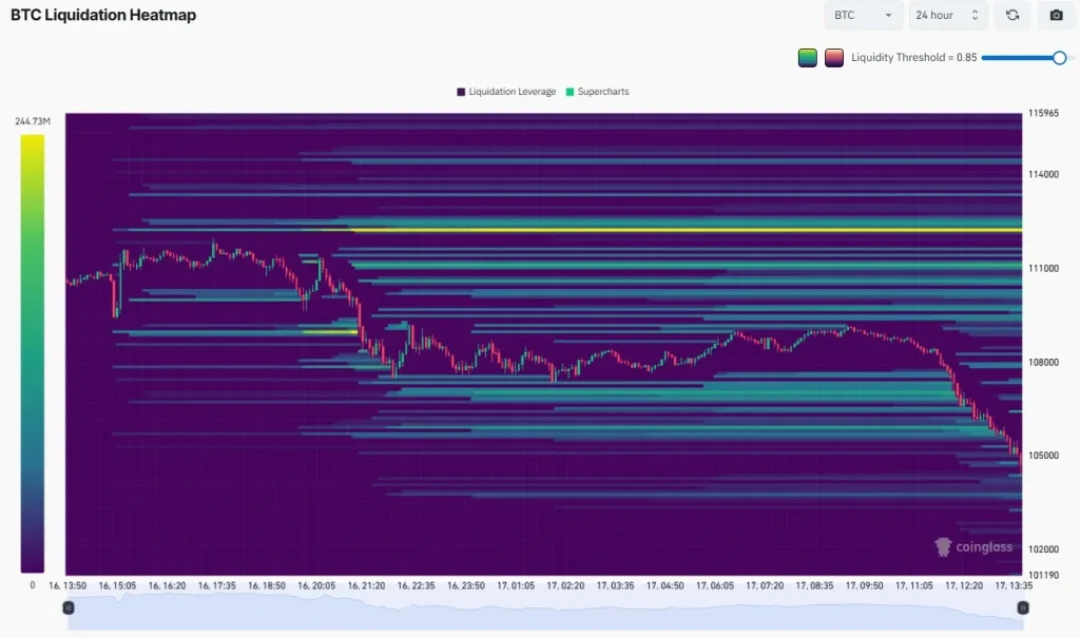
Bitcoin itself has been volatile. On June 6, prices fell sharply to around $59,000 before recovering to nearly $67,000 by June 16. A report from MEXC noted that Bitcoin gained about 1.5 percent on June 15 during the Wall Street session, supported by easing geopolitical tensions. News of progress toward a ceasefire framework between the United States and Iran boosted risk appetite, lifting equities alongside crypto. The S&P 500 and Nasdaq Composite each advanced by more than 2 percent, reflecting improved investor sentiment.
Palmer emphasized that Strategy’s perpetual preferred STRC has no maturity date, which reduces the likelihood of immediate forced liquidation. He added that before Bitcoin reserves valued at roughly $55 billion could even be considered for liquidation, the market would need to experience significant deterioration.
TD Cowen analysts Lance Bitanza and Jonathan Navarrete echoed this view. They argued that STRC’s dividend obligations remain manageable given Strategy’s cash reserves. At the same time, they acknowledged that the long‑term viability of the company’s Bitcoin treasury strategy depends on continued upward momentum in Bitcoin prices. They also highlighted that STRC helps dampen volatility during downturns, offering stable returns even when Bitcoin experiences sharp declines. In their assessment, STRC functions as a tool for capital preservation and income generation, contrasting with Bitcoin’s more volatile profile.
Strategy confirmed that it sold 32 Bitcoin between May 26 and May 31, raising about $2.5 million at an average price of $77,135 per coin. The proceeds were directed toward dividend payments. In a CNBC interview on June 11, CEO Vong Le explained that the transaction demonstrated Bitcoin could be liquidated when necessary, without undermining the company’s broader strategy.
More broadly, Strategy disclosed that it sold another 1,587 Bitcoin earlier in the week for approximately $100 million, while simultaneously increasing its total holdings to 846,842 Bitcoin between June 1 and June 7. On the same day, Vong Le remarked, “In total, I net bought about 1,500 Bitcoin this June,” underscoring the company’s continued commitment to accumulation despite tactical sales.
The contrasting views highlight the tension between market fears of forced liquidation and analysts’ confidence in Strategy’s ability to manage obligations. While critics warn of potential selling pressure, Benchmark and TD Cowen maintain that the company’s reserves, preferred stock structure, and ongoing accumulation strategy reduce the likelihood of destabilizing disposals.