
Market Overview
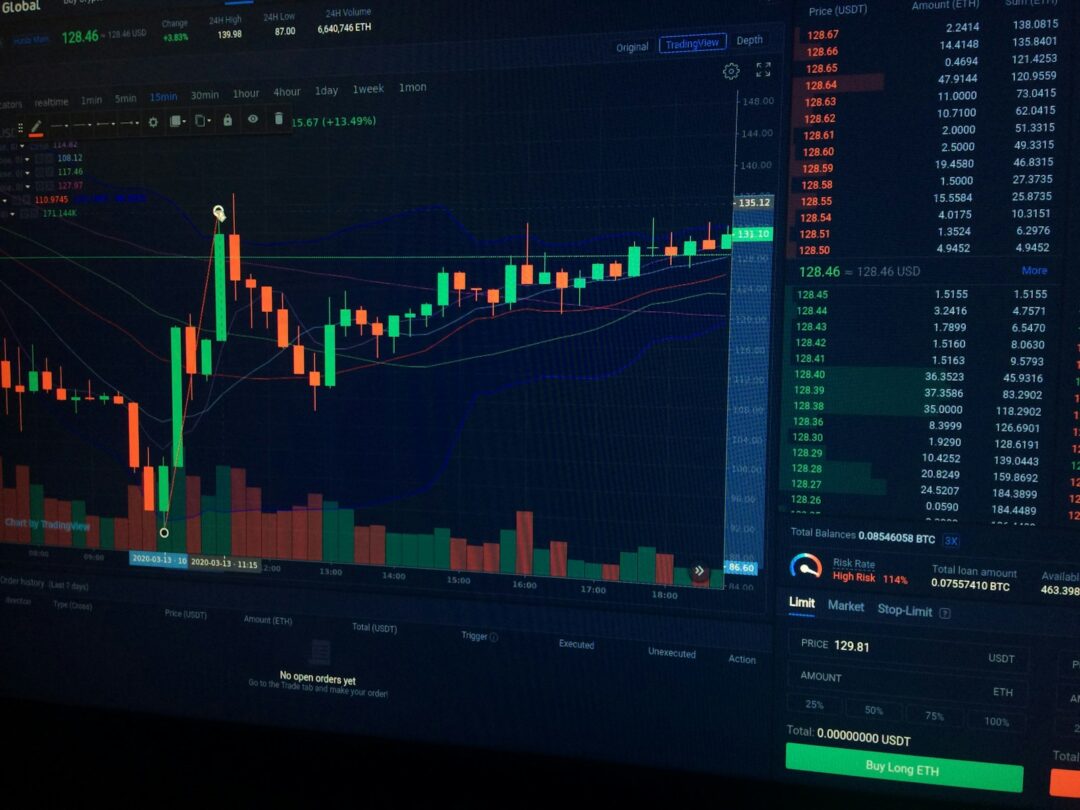
Digital asset markets entered September 4 in Asia with their strongest single-session recovery since the late-August correction. Bitcoin traded near $81,200, Ethereum around $2,500, and XRP near $1.45 after Federal Reserve Governor Christopher Waller signaled that he could support holding interest rates unchanged if upcoming inflation data confirm continued disinflation. The shift reversed much of the macro pressure that had driven Bitcoin below $77,000 only one day earlier.
CoinGlass placed Bitcoin at approximately $81,183, up 5.3% over 24 hours, with an intraday move that reached above $81,700 on some market feeds. Ethereum traded near $2,500, up approximately 4.8%, while XRP advanced almost 8% to approximately $1.45. The synchronized move indicates that the recovery broadened beyond Bitcoin into the higher-beta portion of the digital-asset market.
The immediate catalyst came from monetary-policy expectations. Reuters reported on September 3 that Waller was inclined to support keeping rates unchanged if incoming data confirm that inflation pressure is cooling. Markets reduced the implied probability of a September Federal Reserve increase to approximately 48% from 59% before his remarks.
U.S. Treasury yields responded rapidly. The benchmark 10-year yield fell toward 4.74% after reaching approximately 4.818% on September 2, its highest level since November 2023. The dollar index declined roughly 0.7%. Falling yields and a weaker dollar restored demand for liquidity-sensitive assets and triggered a rapid repricing across cryptocurrency markets and crypto-linked equities.
The rally was amplified by derivatives positioning. Market liquidation trackers showed more than $400 million of cryptocurrency positions liquidated during the rebound, with short positions accounting for the majority of forced closures. Bitcoin’s move through $80,000 produced a concentrated short squeeze, while Ethereum and XRP experienced simultaneous liquidation-driven accelerations.
CoinGlass currently shows approximately $275.7 million of Bitcoin futures liquidations over 24 hours, $108.3 million for Ethereum, and $12.1 million for XRP. The three assets alone therefore generated almost $400 million of futures liquidations. The scale explains the speed of the rebound but also means that part of the latest advance reflects forced buying rather than new discretionary capital.
Regulated fund flows provide a more mixed institutional signal. The latest fully reported U.S. session on September 2 showed Bitcoin ETFs returning to approximately $101.1 million of net inflows after losing $236.5 million on September 1. Ether ETFs recorded approximately $48.1 million of redemptions, ending a 12-session inflow streak that had attracted roughly $1.62 billion. XRP ETFs lost approximately $7.2 million, ending an 11-session sequence that had accumulated around $170 million.
The distinction between market price and ETF timing is important. Thursday’s sharp rally occurred after the latest completed fund-flow reporting window, meaning the September 3 move cannot yet be classified as an ETF-led breakout. The initial evidence points more strongly toward falling yields, a weaker dollar, and short covering as the immediate drivers, with September 3 ETF data still requiring final confirmation.
Market sentiment strengthened but remains below late-August extremes. Alternative.me placed its Crypto Fear & Greed Index at 65, classified as Greed, compared with 63 one day earlier, 71 one week earlier, and 25 one month earlier. The market has therefore recovered from the September selloff without returning to the more crowded sentiment conditions that accompanied Bitcoin’s initial move through $80,000.
Institutional infrastructure continues to expand independently of short-term price action. On September 3, Standard Chartered launched institutional spot cryptocurrency trading in the United Arab Emirates, offering Bitcoin and Ether execution to professional clients. The development makes the globally systemically important bank one of the most significant traditional institutions to provide direct spot crypto trading in the Gulf region.
A countervailing liquidity risk is developing in Japan. The yen strengthened more than 2% on September 3 as markets increased expectations for another Bank of Japan rate increase. Reuters reported that markets were pricing approximately a 75% probability of a 25-basis-point increase at the BOJ’s September meeting. Faster Japanese tightening could pressure global carry trades and partially offset easier U.S. financial conditions.
The next decisive catalyst is only hours away. The U.S. Employment Situation report for August is scheduled for September 4 at 8:30 a.m. Eastern Time, or 21:30 in Tokyo. A Reuters poll expects approximately 56,000 new payrolls following July’s 23,000 decline. The release will determine whether Waller’s preference for patience gains broader support inside the Federal Reserve or whether Chair Kevin Warsh’s more restrictive Jackson Hole message remains dominant.
Bitcoin Market Analysis
BTC Narrative
Bitcoin is trading near $81,200 after rising more than 5% over 24 hours and briefly reaching the $81,700 region. The move represents an almost complete reversal of the decline that carried BTC toward $76,000-$77,000 earlier this week and restores price to the upper boundary of the late-August consolidation.
The macro impulse was unusually direct. Waller’s comments reduced the implied probability of a September Federal Reserve increase to roughly 48% from 59%, while the 10-year Treasury yield declined from approximately 4.818% toward 4.74%. Bitcoin moved from below $77,000 to above $81,000 as those rates expectations changed.
The move has also changed the derivatives structure. CoinGlass places Bitcoin futures open interest near $57.65 billion, up materially from approximately $53 billion during the earlier deleveraging phase. Twenty-four-hour futures turnover reached roughly $93.1 billion compared with approximately $6.58 billion of spot activity.
Futures turnover is therefore approximately fourteen times larger than reported cash-market volume. Around $275.7 million of Bitcoin futures positions were liquidated over 24 hours. The increase in open interest after a large short squeeze indicates that new positions are already replacing the bearish leverage that was removed during Thursday’s rally.
The cash-market institutional picture remains constructive over a broader horizon. Farside Investors recorded approximately $101.1 million of net Bitcoin ETF inflows on September 2, led by roughly $115.4 million into BlackRock’s IBIT. Bitwise, Morgan Stanley, and Grayscale’s lower-fee Bitcoin product also attracted capital, partially offset by approximately $56.2 million of redemptions from GBTC.
The September 2 result followed a $236.5 million Bitcoin ETF outflow on September 1. The two-day sequence illustrates the current institutional regime: investors remain willing to add exposure around the upper-$70,000 region, but flows are no longer uniformly positive as they were during the strongest part of August’s institutional accumulation cycle.
Thursday’s rally occurred after the September 2 ETF reporting window, so the current move should not yet be attributed to renewed regulated-fund demand. The stronger evidence is a macro-driven short squeeze supported by an existing institutional ownership base. Confirmation would require Bitcoin ETF subscriptions to remain positive after the move through $80,000.
Traditional financial adoption is nevertheless continuing. Standard Chartered’s September 3 launch of institutional Bitcoin and Ether spot trading in the UAE broadens direct bank-mediated access to the asset class. Developments of this type improve market depth over a longer horizon because institutions can transact through regulated banking relationships rather than relying exclusively on crypto-native exchanges.
The principal near-term risk is that Bitcoin has returned rapidly to the same supply area that rejected the market in late August. Short covering can carry price through obvious resistance, but sustainable acceptance above $81,000-$82,000 requires discretionary buyers to replace forced buyers after the squeeze ends.
Friday’s employment report provides the immediate test. Payroll growth materially below the expected 56,000 would reinforce the case for unchanged Federal Reserve rates and could push Treasury yields lower. A stronger employment figure or faster wage growth would increase the risk that markets restore expectations for another rate increase, making the latest Bitcoin breakout vulnerable to reversal.
BTC Technical & Liquidity Structure
Immediate support has shifted sharply higher to $80,000-$80,500. Bitcoin’s ability to maintain the psychological $80,000 threshold after the short-liquidation impulse fades will provide the first indication of whether the latest move represents a genuine range breakout.
The stronger short-term support lies between $78,500 and $79,000. This corridor represents the upper portion of the previous consolidation range and should attract both tactical buyers and derivatives hedging if Bitcoin experiences a post-squeeze retracement.
Below $78,500, the next significant support remains between $76,500 and $77,500. Bitcoin repeatedly attracted demand in this area before Thursday’s rally. A sustained daily close below $76,500 would indicate that the move above $80,000 was dominated by temporary short covering rather than durable cash-market demand.
Immediate resistance is concentrated between $81,500 and $82,200. Bitcoin has already traded into the lower portion of this region. A clean daily close above $82,200 would represent the strongest technical confirmation since the August breakout.
Above $82,200, the next liquidity region lies between $83,500 and $85,000. A sustained move through $85,000 would place Bitcoin inside a thinner historical-volume area and could accelerate price discovery toward $88,000-$90,000.
The derivatives structure requires close monitoring. Open interest has rebuilt toward $57.7 billion while futures volume exceeds spot turnover by more than fourteen times. The healthiest continuation would involve Bitcoin consolidating above $80,000 while open interest stabilizes and ETF subscriptions strengthen. Rising leverage without corresponding spot demand would increase the probability of another rejection.
BTC Forecast
The base case is consolidation between $79,000 and $82,500 ahead of the U.S. employment report, with a moderately constructive bias while Bitcoin remains above $80,000. A daily close above $82,200 would increase the probability of a move toward $83,500-$85,000, while a sufficiently weak payroll report could reopen $88,000-$90,000. A sustained close below $78,500 would weaken momentum and expose $76,500-$77,500. A return below $75,000 would materially challenge the current recovery.
Ethereum Market Analysis
ETH Narrative
Ethereum is trading near $2,500 after gaining approximately 4.8% over 24 hours. The asset has reclaimed the psychological $2,500 threshold after briefly trading below $2,400 earlier this week, but it remains inside the broader consolidation structure that developed after August’s institutional breakout.
The derivatives market played a major role in the recovery. CoinGlass places Ethereum futures open interest near $33.36 billion, with approximately $57.56 billion of 24-hour futures turnover compared with roughly $3.21 billion of spot activity.
Futures turnover remains almost eighteen times larger than reported cash-market volume. Approximately $108.3 million of Ethereum futures positions were liquidated during the latest 24-hour period. The combination confirms that Thursday’s recovery involved substantial derivatives repositioning rather than purely spot-led accumulation.
The institutional fund picture weakened immediately before the rally. U.S. spot Ether ETFs recorded approximately $48.1 million of net redemptions on September 2, ending a 12-session inflow streak that had attracted approximately $1.62 billion.
BlackRock’s ETHA lost approximately $53.4 million on September 2, Fidelity’s FETH lost $26.2 million, and Grayscale’s ETHE recorded approximately $23.5 million of redemptions. BlackRock’s second Ethereum product partially offset those withdrawals with approximately $52.9 million of inflows.
The size of the preceding accumulation remains important. A $48 million outflow is small relative to approximately $1.62 billion of subscriptions accumulated during the previous 12 sessions. The September 2 reversal therefore represents a loss of momentum rather than evidence that institutional investors have abandoned Ethereum.
The broader institutional infrastructure continues expanding. Standard Chartered’s September 3 launch of direct institutional Ether spot trading in the UAE provides another regulated banking channel for professional investors. That development complements U.S. ETF demand, corporate treasury accumulation, and Ethereum staking as institutional ownership channels.
Ethereum’s supply structure remains supportive. Regulated ETF custody, corporate treasury holdings, and staking remove substantial ETH from immediately tradable circulation. The scarcity effect becomes more relevant if cash-market demand strengthens while derivatives leverage normalizes.
The principal risk remains macro beta. Ethereum historically responds more aggressively than Bitcoin to changes in real yields and global liquidity. Waller’s comments therefore produced a larger percentage rebound, but the same characteristic means that a stronger-than-expected employment report could trigger a larger downside reaction.
The preferred institutional signal would be Ethereum holding above $2,450-$2,500 after the short squeeze while ETF flows return to positive territory. A rally financed primarily through another increase in open interest above the current $33 billion level would be more vulnerable to a leverage-driven reversal.
ETH Technical & Liquidity Structure
Immediate support is concentrated between $2,470 and $2,500. Ethereum is trading directly around this corridor after Thursday’s recovery. Continued acceptance would indicate that buyers are willing to maintain exposure after the derivatives-driven breakout.
The stronger support region lies between $2,400 and $2,425. This area contained repeated demand during the earlier correction and remains the principal boundary between consolidation and another test of the lower August range.
Below $2,400, structural support is concentrated between $2,300 and $2,350. A sustained daily close below $2,300 would materially weaken the institutional recovery and expose the $2,200-$2,250 region.
Immediate resistance lies between $2,525 and $2,550. Ethereum repeatedly encountered supply in this corridor during late August. A confirmed daily close above $2,550 would indicate that the post-Jackson Hole correction has been fully absorbed.
Above $2,550, the next targets are $2,600-$2,650, followed by the broader institutional supply zone between $2,700 and $2,750.
The liquidity structure is moderately constructive but remains derivatives-heavy. Open interest above $33 billion and futures turnover approximately eighteen times spot volume create meaningful long-liquidation risk if ETH loses $2,450. The preferred continuation would combine ETF inflows, stable open interest, and increasing cash-market volume.
ETH Forecast
The base case is consolidation between $2,400 and $2,550 with a neutral-to-moderately constructive bias while Ethereum holds above $2,470. A confirmed close above $2,550 would expose $2,600-$2,650, while a weak U.S. payroll report and renewed ETF demand could extend the move toward $2,700. A sustained loss of $2,400 would return attention to $2,300-$2,350, while a break below $2,300 would materially weaken the August institutional structure.
XRP Market Analysis
XRP Narrative
XRP is trading near $1.45 after advancing approximately 7.8% over 24 hours, the strongest daily move among the three major assets. The token rebounded from approximately $1.32-$1.34 during the previous session and has returned to the upper portion of its early-September range.
The move followed the same macro trigger as Bitcoin and Ethereum but produced a substantially larger percentage response because XRP remains a higher-beta asset with thinner cash-market depth. The token broke through a short-term declining trend line and reclaimed the $1.40 region after repeatedly failing to hold that level earlier this week.
Derivatives activity expanded sharply. CoinGlass placed XRP futures open interest near $3.35 billion, with approximately $6.08 billion of 24-hour futures turnover compared with approximately $1.44 billion of spot volume.
Futures activity was therefore approximately 4.2 times larger than reported spot turnover, a materially lower ratio than Bitcoin or Ethereum. Around $12.1 million of XRP futures positions were liquidated over 24 hours. The comparatively stronger spot component improves the quality of the rally, although derivatives remain an important amplifier.
The latest completed ETF session was less constructive. U.S. spot XRP ETFs recorded approximately $7.2 million of net outflows on September 2, ending an 11-session inflow streak that had attracted around $170 million.
The preceding streak lifted cumulative U.S. XRP ETF inflows to approximately $1.68 billion. A single $7.2 million redemption is therefore small relative to the installed institutional ownership base, but it removes the assumption that regulated products will provide uninterrupted daily demand during corrections.
The current rally has not yet been confirmed by September 3 ETF data. Price appreciation is therefore more directly attributable to lower U.S. rate expectations, broad crypto risk-on positioning, and short covering. A return to positive XRP ETF flows would materially improve the institutional quality of the rebound.
The price-flow divergence remains important. XRP fell from approximately $1.70 toward the low-$1.30 region even while institutional funds accumulated for 11 consecutive sessions. This demonstrated that regulated demand remained smaller than profit-taking and derivatives deleveraging. Thursday’s recovery begins to close that divergence but does not yet eliminate it.
Institutional ownership nevertheless creates a stronger supply backdrop than existed earlier in the year. U.S. XRP funds have accumulated substantial token inventories, while the XRP Ledger continues to be used for payments, tokenization, and stablecoin infrastructure. Those structural developments reduce the amount of marginal spot demand required to move price when exchange liquidity tightens.
The principal short-term risk is renewed leverage above $1.45-$1.50. XRP open interest has already risen from approximately $3 billion during the recent deleveraging phase to about $3.35 billion. A continued rally accompanied by rapidly expanding open interest could recreate the long-side crowding that contributed to the late-August correction.
XRP Technical & Liquidity Structure
Immediate support has shifted to $1.43-$1.45. XRP is currently trading directly inside this corridor following its sharp recovery. Holding the area would indicate that buyers are accepting the move above the former $1.40 resistance level.
The stronger tactical support lies between $1.36 and $1.39. This region contained repeated price activity during the early-September correction and should provide the first meaningful demand zone if the latest short squeeze retraces.
Below $1.36, structural support is concentrated between $1.31 and $1.33. A sustained daily close below $1.31 would materially weaken the current recovery and expose the deeper $1.25-$1.27 liquidity region.
Immediate resistance lies between $1.48 and $1.50. XRP is approaching this area after its approximately 8% daily advance. A confirmed daily close above $1.50 would materially improve the short-term technical structure.
Above $1.50, the next resistance corridor lies between $1.54 and $1.60. A sustained move through $1.60 would reopen the late-August supply zone around $1.68-$1.70.
The liquidity setup has improved because spot volume is relatively stronger than in Bitcoin or Ethereum. Futures turnover is only about four times reported spot volume, compared with fourteen times for Bitcoin and eighteen times for Ethereum. The principal warning signal would be another rapid expansion in open interest while price stalls below $1.50-$1.54.
XRP Forecast
The base case is consolidation between $1.38 and $1.54 with a neutral-to-constructive bias while XRP remains above $1.43. A daily close above $1.50 would improve the probability of a move toward $1.54-$1.60. Sustained acceptance above $1.60 could reopen $1.68-$1.70. A loss of $1.38 would expose $1.31-$1.33, while a sustained break below $1.31 would increase downside risk toward $1.25-$1.27.
Key Levels and Forecast Table
| Asset | Institutional Theme | Key Support | Key Resistance | ETF/Fund Flow Trend | Near-Term Forecast |
|---|---|---|---|---|---|
| Bitcoin (BTC) | Waller-Driven Rate Repricing Triggers Short Squeeze as Institutional Fund Demand Stabilizes | $80,000-$80,500; $78,500-$79,000 | $81,500-$82,200; $83,500-$85,000 | Latest completed session: approximately $101.1 million inflow on September 2 after $236.5 million outflow on September 1 | Moderately constructive above $80,000; stronger confirmation above $82,200; payroll-sensitive below $79,000 |
| Ethereum (ETH) | Strong Prior Institutional Accumulation Meets First ETF Outflow After 12 Positive Sessions | $2,470-$2,500; $2,400-$2,425 | $2,525-$2,550; $2,600-$2,650 | Approximately $48.1 million outflow on September 2 ended a 12-session streak that accumulated roughly $1.62 billion | Neutral to moderately constructive above $2,470; recovery confirmation above $2,550 |
| XRP | Macro-Driven High-Beta Rebound Follows First ETF Outflow After an 11-Session Accumulation Streak | $1.43-$1.45; $1.36-$1.39 | $1.48-$1.50; $1.54-$1.60 | Approximately $7.2 million outflow on September 2 ended an 11-session streak that attracted roughly $170 million; cumulative inflows remain around $1.68 billion | Neutral to constructive above $1.43; stronger confirmation above $1.50-$1.54 |
Final Assessment
The digital-asset market enters September 4 with a materially stronger short-term price structure than it carried only 24 hours earlier. Bitcoin has rebounded from below $77,000 to above $81,000 after Federal Reserve Governor Christopher Waller reduced expectations for a September rate increase, pushing the 10-year Treasury yield lower and weakening the dollar. Ethereum has returned to $2,500 and XRP has advanced toward $1.45, while almost $400 million of futures liquidations across the three assets demonstrates that forced short covering materially amplified the move. The rally therefore represents a meaningful repair of market structure, but not yet a fully confirmed institutional breakout.
The next confirmation must come from cash markets and macro data. Bitcoin’s latest completed ETF session returned to approximately $101 million of inflows, but Ethereum and XRP both ended long institutional inflow streaks on September 2, and September 3 fund-flow data remain incomplete. Meanwhile, Bitcoin open interest has rebuilt toward $58 billion, Ethereum toward $33 billion, and XRP toward $3.35 billion as speculative exposure returns. The August U.S. employment report due at 21:30 Tokyo time on September 4 is therefore the immediate catalyst: payroll growth materially below the roughly 56,000 consensus would reinforce Waller’s case for patience and could support Bitcoin above $82,000, Ethereum above $2,550, and XRP above $1.50. Stronger labor data would restore rate-hike risk and test whether Bitcoin can defend $79,000-$80,000, Ethereum $2,400-$2,470, and XRP $1.36-$1.43 once the current short-squeeze impulse has fully normalized.




