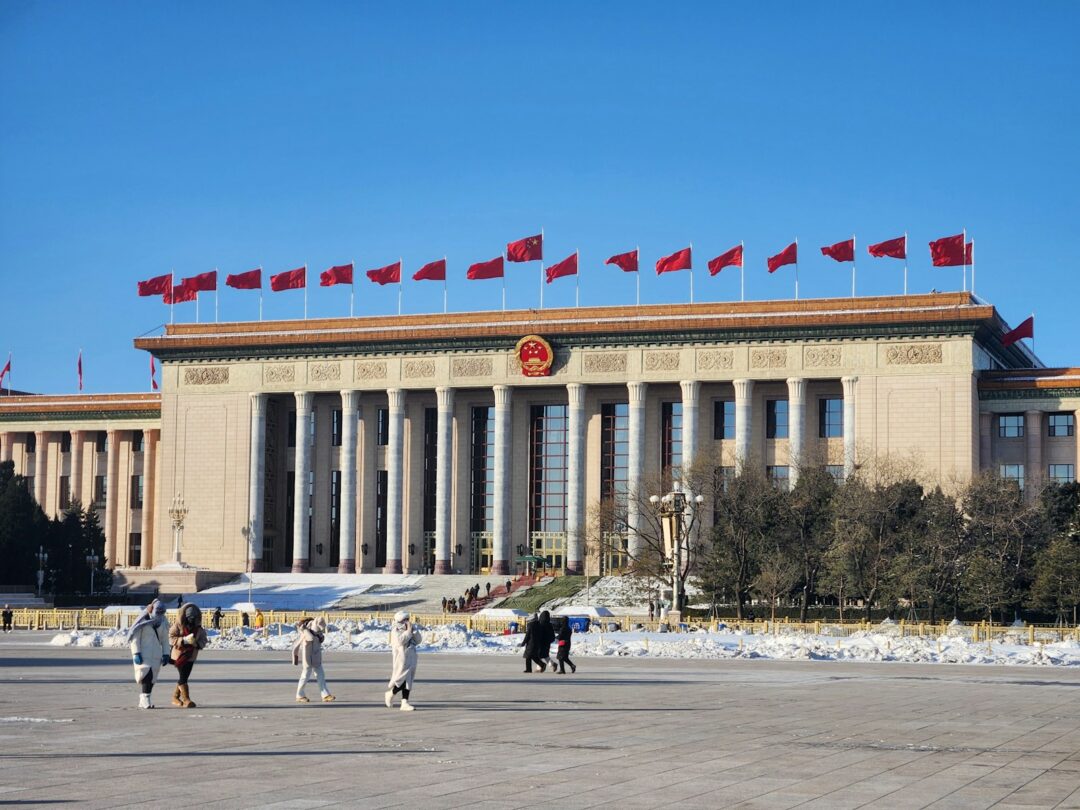
In January 2026, China Securities Regulatory Commission planned to impose order for excessive stocks to mitigate market misconduct and to sustain market stability. The China Supreme Court has reported to impose further orders on compensation for insider trading and market misconduct to enhance legal systems to support investors to file for compensation with lower costs, such as Representative Action in February 2026.
Currently, based on a report released during the press conference held by the State Council Information Office in Beijing on May 27, the China’s Supreme People’s Court will proceed with comprehensive review of trial rules covering new cases linked to cryptocurrencies and cross-border finance.
During the press conference, with the theme “Comprehensive Promotion of Law-Based State Governance,” Liu Guixiang, vice-ministerial-level full-time member and second-level justice of the Supreme People’s Court Adjudication Committee, highlighted that the legal interpretation regarding civil compensation in connection to insider trading and market misconduct shall be immediately address to support the stable function of the capital market and secure the judicial rights and interest of investors.
According to a Coinpost report, the event was launched during the period of the “15th Five-Year Plan” and attended by officials from the Central Political and Legal Affairs Commission, the Standing Committee of the National People’s Congress, the Supreme People’s Procuratorate, the Ministry of Public Security, and the Ministry of Justice.
The People’s Bank of China also reported that reinforcing surveillance of cryptocurrency activities remains as the main task for 2026, following the country’s limitations on cryptocurrency trading and mining enacted in September 2021. On February 6, the regulator issued a regulatory reinforcement notice, along with eight (8) institutions covering the National Development and Reform Commission, specifically the restrictions for tokenization of real-world assets (RWAs) and the unauthorized issuance and circulation of RMB-pegged stablecoins.
Liu also emphasized that the plans cover the development of normative documents on judicial protection for artificial intelligence, data property rights, and improvements to court rules for data ownership, data transactions, and AI-generated works. He added that the plan will reinforce legal collaboration with financial regulatory authorities, improvements in lending models, and mitigate financial illegal activities.
Thus, the Supreme People’s Court aims to develop the formulation of legal interpretation concerning civil compensation in connection to insider trading and market misconduct.