Key Points :
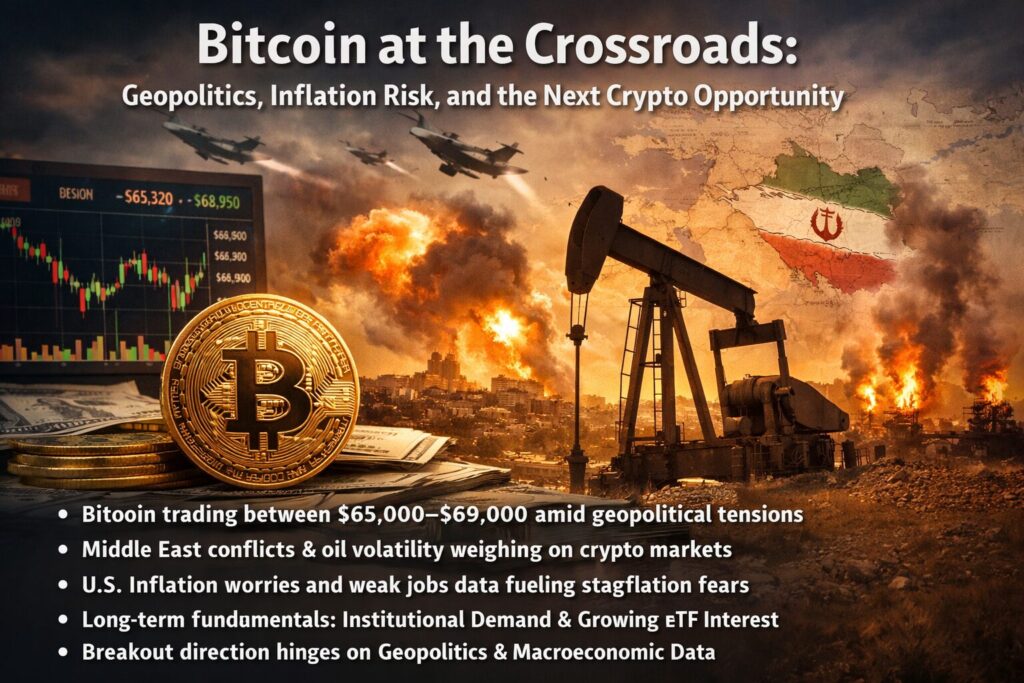
- Bitcoin is currently trading in a range-bound market (~$65,000–$69,000) amid geopolitical uncertainty
- Rising tensions in the Middle East, especially involving U.S.–Iran dynamics, are suppressing upside momentum
- Oil price volatility is emerging as a key indirect driver of crypto markets
- Weak U.S. employment data and inflation risks raise concerns about stagflation, a bearish signal for risk assets
- Despite short-term downside risks, structural drivers (institutional demand, ETFs, on-chain activity) remain intact
- A breakout direction will likely be determined by geopolitical outcomes + macroeconomic data
1. Current Bitcoin Market Structure: A Tense Equilibrium
BTC Price Range Chart ($60K–$70K consolidation)
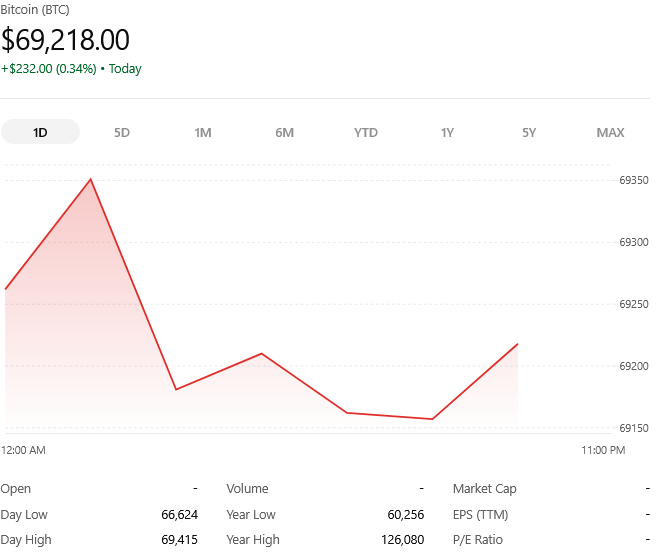
Bitcoin has entered a phase of consolidation, trading between approximately $65,000 and $69,000 over the past week. This sideways movement reflects a broader hesitation in the market, where neither bulls nor bears have taken decisive control.
At the start of the week, optimism surrounding potential diplomatic progress between the United States and Iran briefly supported risk sentiment. Bitcoin responded with resilience, maintaining its footing despite intermittent negative news—such as renewed concerns around quantum computing threats to cryptographic systems.
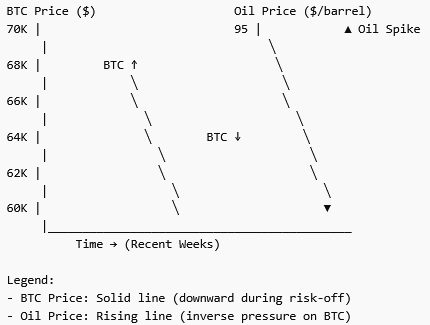
However, the upward momentum proved fragile. As oil prices surged following geopolitical incidents—most notably a tanker strike near Qatar—Bitcoin’s rally stalled. The market quickly shifted toward a risk-off posture, highlighting Bitcoin’s increasing sensitivity to global macro events.
This dynamic underscores an important shift: Bitcoin is no longer trading in isolation. It is now deeply integrated into the broader financial ecosystem, reacting to the same macroeconomic and geopolitical signals as equities and commodities.
2. Geopolitical Risk: The Middle East as a Market Catalyst
Oil Price vs BTC Correlation (recent trend)
The most significant driver of Bitcoin’s short-term outlook is the escalating tension in the Middle East. The approaching U.S. deadline for potential military action against Iran (April 6) represents a critical inflection point.
If negotiations fail and military conflict intensifies—particularly involving attacks on energy infrastructure or control over key assets such as Kharg Island—the consequences could be profound:
- Oil prices may spike sharply
- Inflationary pressures could accelerate globally
- Investors may rotate out of risk assets, including crypto
Historically, Bitcoin has been viewed as “digital gold,” a hedge against uncertainty. However, recent behavior suggests that in acute geopolitical crises, Bitcoin behaves more like a risk asset than a safe haven.
That said, there is a counter-scenario. If diplomatic efforts succeed—such as coordinated maritime monitoring in the Strait of Hormuz—oil price stability could return. In this case, Bitcoin could regain upward momentum and attempt a breakout above $70,000+ levels.
3. Macro Pressure: Employment Data and Stagflation Risks
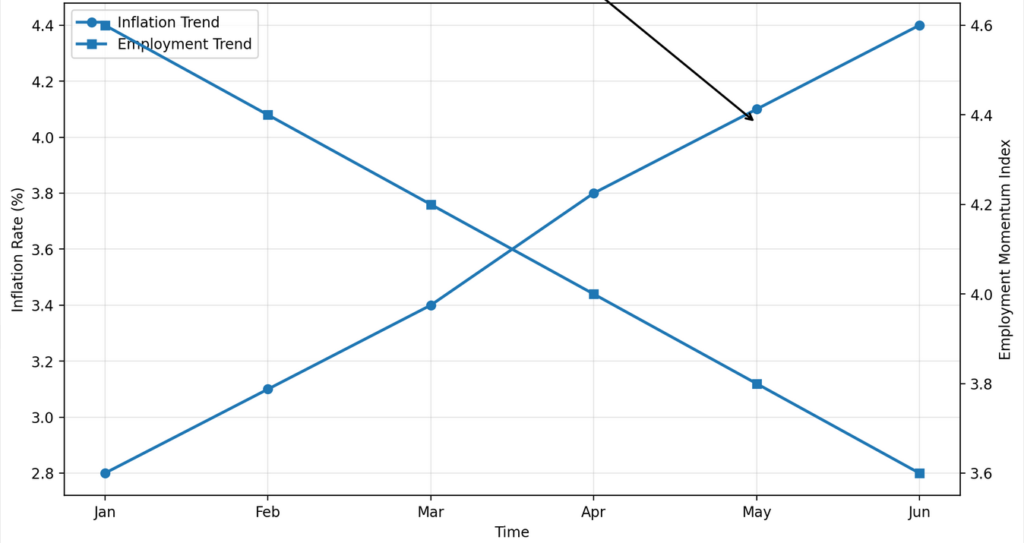
Inflation vs Employment Trend (Stagflation Scenario)
Beyond geopolitics, macroeconomic data from the United States is becoming increasingly influential.
The latest focus is on:
- Nonfarm Payrolls (NFP)
- Consumer Price Index (CPI) (April 10 release)
If employment growth continues to weaken while inflation remains elevated—especially due to rising energy costs—the market may face a stagflation scenario.
This is particularly dangerous for crypto markets because:
- Slowing growth reduces liquidity and risk appetite
- Persistent inflation limits central banks’ ability to ease monetary policy
- Interest rates may remain elevated longer than expected
In such an environment, Bitcoin could face downward pressure toward:
- $65,000 breakdown → $60,000 support level
This aligns with the analyst’s base-case scenario of continued softness.
4. On-Chain and Structural Trends: The Hidden Bull Case
While short-term risks dominate headlines, underlying blockchain data tells a more nuanced story.
Key observations:
- Active addresses remain stable, suggesting consistent user engagement
- Transaction volumes show resilience, indicating ongoing network utility
- Institutional inflows—particularly via Bitcoin ETFs—continue to provide structural support
Additionally, large holders (“whales”) have not shown significant distribution behavior, implying that long-term conviction remains intact.
This divergence between price stagnation and on-chain strength often precedes major moves. Historically, such conditions have led to volatility expansions, where Bitcoin breaks out sharply once uncertainty resolves.
5. Strategic Implications for Crypto Investors
For readers seeking new crypto assets and revenue opportunities, the current environment presents both risk and asymmetry.
Short-Term Strategy (Defensive)
- Monitor geopolitical headlines closely
- Watch oil price movements as a proxy for risk sentiment
- Prepare for downside scenarios toward $60,000
Medium-Term Strategy (Opportunistic)
- Accumulate during periods of macro-driven weakness
- Focus on ecosystems with real utility (payments, settlement, tokenization)
- Track narratives tied to AI, real-world assets (RWA), and cross-border finance
Long-Term Thesis (Structural Bull Case)
Bitcoin’s integration into global finance—through ETFs, institutional custody, and payment rails—continues to strengthen its role as a macro asset class.
Even in a stagflationary environment, Bitcoin may eventually benefit as:
- A hedge against currency debasement
- A neutral, borderless financial infrastructure layer
- A settlement asset in emerging digital economies
6. Conclusion: A Market Defined by External Forces
Bitcoin stands at a critical juncture where its direction is no longer determined solely by internal crypto dynamics.
Instead, three external forces dominate:
- Geopolitical escalation (Middle East tensions)
- Energy markets (oil price volatility)
- Macroeconomic data (inflation + employment)
In the near term, the balance of risks suggests continued volatility with a downside bias. However, this should not obscure the broader transformation underway: Bitcoin is evolving into a globally recognized financial instrument.
For investors, the key is not simply predicting price movements, but understanding the interconnected system in which Bitcoin now operates.
Those who can navigate this complexity—balancing macro awareness with blockchain fundamentals—will be best positioned to capture the next wave of opportunity.