

Key Takeaways :
- Australia has passed a comprehensive digital asset framework requiring licensing for exchanges and custodians
- The law aligns Australia with global regulatory leaders like the EU (MiCA), Singapore, and Hong Kong
- Small platforms are exempt, enabling innovation while enforcing oversight on major players
- The framework is expected to boost institutional participation and market credibility
- Compliance, custody transparency, and auditability will become competitive advantages
- The shift signals a broader global transition from “regulatory uncertainty” to “regulated scalability”
1. Introduction: From Regulatory Ambiguity to Structured Growth
On April 1, 2026, Australia passed a landmark digital asset bill—formally titled the Corporations Amendment (Digital Asset Framework) Bill 2025. This legislation marks a decisive shift in how one of the world’s advanced financial economies approaches cryptocurrency, tokenized assets, and blockchain-based platforms.
For years, Australia—like many jurisdictions—operated in a gray zone. Digital asset businesses functioned under fragmented interpretations of existing financial laws, often leading to inconsistent compliance expectations. This new framework changes that entirely.
Instead of forcing crypto into legacy definitions, Australia has now built a dedicated regulatory layer that explicitly recognizes digital asset platforms as a distinct financial category. The implications are not just local—they are global.
2. What the Law Actually Does
At its core, the new legislation amends both the Corporations Act and ASIC Act to bring digital asset platforms under the Australian Financial Services License (AFSL) regime.
This means:
- Crypto exchanges
- Custodians (including tokenized custody platforms)
- Brokerage and intermediary services
…must now obtain and maintain an AFSL license issued by the Australian Securities and Investments Commission.
Key Requirements
- Licensing under AFSL
- Operational transparency and reporting obligations
- Consumer protection mechanisms
- Risk management and custody controls
This effectively places crypto platforms on similar regulatory footing as traditional financial institutions.
3. Threshold-Based Exemptions: Smart Regulation, Not Overreach
One of the most strategically important aspects of the law is its exemption structure.
Platforms are excluded if:
- Annual transaction volume is below approximately $6.6 million USD
- Customer holdings per user remain below $3,300 USD
This creates a dual-layer ecosystem:
| Segment | Regulatory Treatment |
|---|---|
| Startups / small platforms | Light-touch / exempt |
| Large platforms | Full compliance required |
This design avoids a common regulatory mistake: suffocating innovation while trying to protect consumers.
Instead, Australia is clearly targeting systemic risk—focusing enforcement where it matters most.
4. Global Context: Australia Joins the Regulatory Leaders
Australia’s move is not happening in isolation. It is part of a broader global convergence toward formal crypto regulation.
Comparable Frameworks
- Markets in Crypto-Assets Regulation (European Union)
- Singapore licensing regime
- Hong Kong VASP framework
These jurisdictions have already established structured licensing systems. By aligning with them, Australia ensures compatibility with global capital flows and institutional standards.
5. Why This Matters: Institutional Capital Is Waiting for Clarity
The most important impact of this law is not compliance—it is capital.
Institutional investors, including hedge funds, pension funds, and banks, have largely remained cautious about direct exposure to crypto markets due to regulatory uncertainty.
This framework changes that.
Before Regulation
- Legal ambiguity
- Custody risk concerns
- Counterparty risk
- Limited fiduciary approval
After Regulation
- Defined compliance requirements
- Licensed custodians
- Standardized risk frameworks
- Institutional-grade infrastructure
This transition is expected to unlock billions in potential inflows over the coming years.
6. Custody Becomes the Core Battlefield
One of the most underestimated aspects of this law is its focus on custody.
Historically, crypto failures—from exchange collapses to fraud—have often centered around custody mismanagement.
The new framework elevates custody into a regulated function, requiring:
- Segregation of client assets
- Transparent recordkeeping
- Auditability
- Operational safeguards
This aligns crypto with traditional financial custody standards.
For platforms, this creates a new competitive axis:
Trust is no longer a branding element—it is a regulated requirement.
7. Market Impact Projection
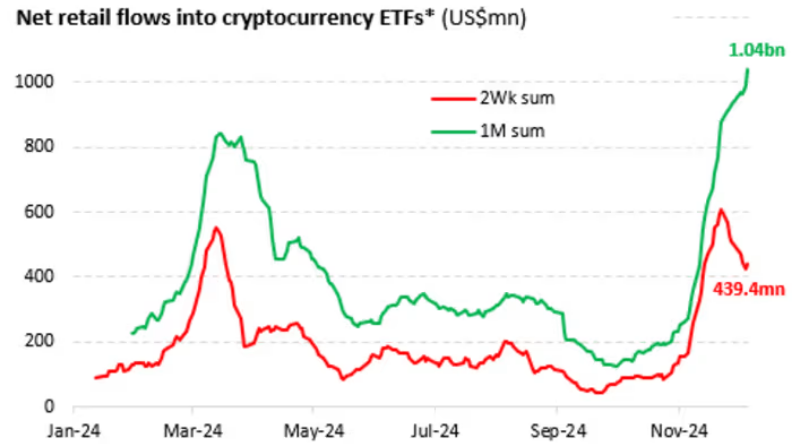
Expected Effects Over 3–5 Years
- Increase in institutional participation
- Consolidation of smaller exchanges
- Growth in compliant custody providers
- Emergence of regulated DeFi hybrids
8. Strategic Implications for Builders and Investors
For your audience—those seeking new assets and practical blockchain applications—this law signals several actionable shifts:
A. New Investment Opportunities
- Licensed exchanges and custodians
- Compliance infrastructure providers
- Tokenized asset platforms
B. Shift Toward “Regulated DeFi”
Fully decentralized systems will increasingly integrate compliance layers:
- On-chain KYC
- Travel Rule integration
- Hybrid custody models
C. Geographic Arbitrage Is Ending
Previously, projects could relocate to avoid regulation. That window is closing.
The future is:
Build compliant from day one—or risk exclusion from global markets.
9. The Bigger Picture: From Speculation to Infrastructure
This law represents a broader transition in the crypto industry:
| Phase | Description |
|---|---|
| 2017–2021 | Speculation-driven growth |
| 2022–2024 | Collapse-driven regulation |
| 2025–2030 | Infrastructure-driven expansion |
Australia’s framework belongs firmly in the third phase.
Crypto is no longer just an asset class—it is becoming financial infrastructure.
10. Conclusion: A Blueprint for the Next Wave of Crypto Growth
Australia’s digital asset law is more than regulation—it is a signal.
A signal that:
- Governments are no longer ignoring crypto
- Markets are maturing into institutional-grade ecosystems
- Compliance is becoming a growth driver, not a barrier
For builders, investors, and financial institutions, the message is clear:
The next wave of crypto growth will not come from avoiding regulation—but from mastering it.



