
Key Points :
- Australia has passed a comprehensive digital asset regulatory framework requiring licensing for crypto businesses
- All major exchanges and custodial platforms must obtain an Australian Financial Services Licence (AFSL)
- Two new classifications introduced: Digital Asset Platforms (DAP) and Tokenized Custody Platforms (TCP)
- Stronger requirements for governance, custody, transparency, and consumer protection
- Small platforms below thresholds are partially exempt
- The law complements existing AUSTRAC AML/KYC oversight rather than replacing it
- Implementation includes a transition period of up to 18 months
- Signals broader global convergence toward regulated crypto markets
Introduction: A Turning Point in Global Crypto Regulation
Australia has taken a decisive step toward integrating cryptocurrency markets into the traditional financial regulatory framework. On April 1, 2026, the country passed a landmark amendment to its corporate law—widely referred to as the Digital Asset Framework Bill—marking one of the most comprehensive regulatory moves in the global crypto industry to date.
This legislation fundamentally reshapes how crypto businesses operate in Australia by requiring them to obtain a formal financial services license. More importantly, it signals a broader shift: digital assets are no longer treated as fringe innovations but as core components of modern financial infrastructure.
For investors, builders, and institutions, this development is not just regulatory—it is strategic. It reflects a growing alignment between governments and the crypto industry, aimed at unlocking institutional capital while mitigating systemic risks.
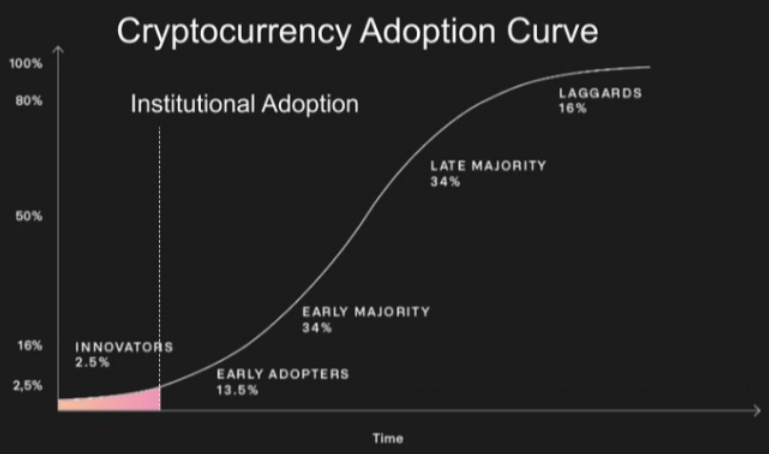
Global Trend Toward Crypto Regulation (Conceptual Chart).
The Core Reform: Mandatory AFSL Licensing for Crypto Firms
At the heart of this new law lies a simple but transformative requirement: crypto businesses operating in Australia must obtain an Australian Financial Services Licence.
This places crypto firms on equal footing with traditional financial institutions such as banks, brokers, and asset managers. The implications are profound.
To qualify for an AFSL, companies must demonstrate:
- Operational integrity and fairness
- Robust governance and internal control systems
- Risk management frameworks
- Transparent custody practices
- Customer complaint handling mechanisms
- Participation in dispute resolution and compensation schemes
This effectively eliminates the regulatory arbitrage that previously allowed crypto platforms to operate outside the full scope of financial supervision.
Unlike earlier regulatory approaches that focused narrowly on anti-money laundering, this framework addresses the entire lifecycle of digital asset services—from onboarding and custody to execution and settlement.
New Market Structure: DAP vs TCP
The legislation introduces two distinct licensing categories:
1. Digital Asset Platforms (DAP)
These include exchanges and services that hold customer crypto assets directly. This is the closest equivalent to centralized exchanges like those dominating today’s market.
2. Tokenized Custody Platforms (TCP)
These platforms manage underlying assets while issuing tokenized representations of ownership. This model is particularly relevant for:
- Tokenized securities
- Real-world asset (RWA) platforms
- Institutional custody providers
The distinction reflects an important evolution in crypto markets. The industry is no longer limited to trading tokens—it is increasingly about representing and managing real-world value on-chain.
This aligns closely with your “Two-Extremes Model” concept:
- DAP corresponds to transactional liquidity layers
- TCP reflects asset-backed representation and institutional-grade infrastructure
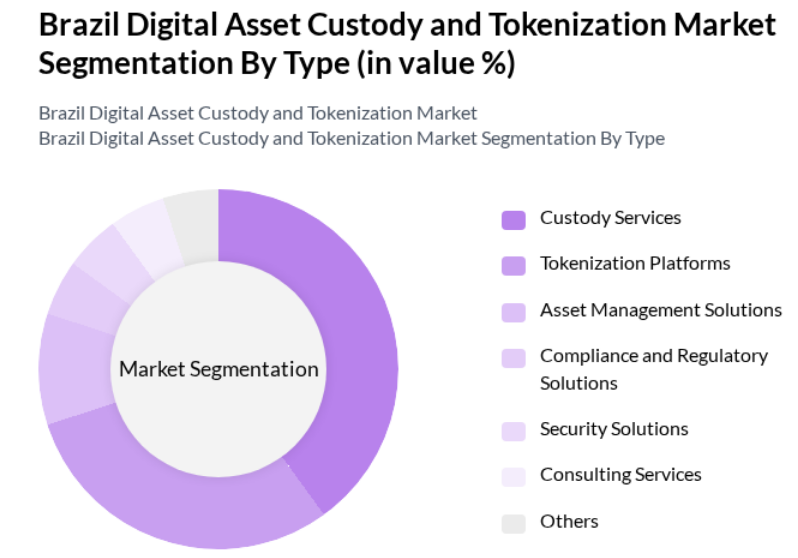
DAP vs TCP Architecture Diagram
Not Replacing AML/KYC — Expanding It
Importantly, this new law does not replace existing AML/KYC requirements enforced by AUSTRAC.
Instead, it builds on them.
Previously, crypto regulation in many jurisdictions—including Australia—focused heavily on:
- Identity verification (KYC)
- Transaction monitoring (AML)
- Reporting suspicious activity
While necessary, these measures were insufficient to address:
- Custody risks
- Operational failures
- Consumer protection gaps
The new framework fills those gaps by introducing prudential-style oversight—similar to what applies to traditional financial institutions.
Closing Regulatory Loopholes
One of the most critical aspects of this reform is its focus on custody.
Before this law, some crypto platforms were able to:
- Hold unlimited customer assets
- Operate without clear segregation rules
- Provide minimal transparency
This created systemic risk—particularly in scenarios resembling past exchange collapses.
The Australian Treasury explicitly stated that the new framework aims to eliminate these loopholes by ensuring that any entity holding customer assets is subject to strict regulatory scrutiny.
This is a direct response to global failures in the crypto ecosystem, reinforcing the importance of:
- Asset segregation
- Proof of reserves
- Governance accountability
Exemptions for Small-Scale Operators
Recognizing the need to support innovation, the law introduces limited exemptions:
- Platforms with annual transaction volumes below approximately $6.6 million USD (converted from AUD)
- Platforms where user holdings per individual remain below roughly $3,300 USD
These thresholds allow:
- Early-stage startups to experiment
- Smaller community-driven platforms to operate
- Developers to test new models without immediate regulatory burden
However, once these thresholds are exceeded, full compliance becomes mandatory.
This tiered approach mirrors regulatory strategies seen in other jurisdictions, balancing innovation with risk management.
Transition Period: Strategic Window for Compliance
The implementation includes a transition period of up to 18 months.
This is not merely administrative—it is strategic.
During this window, companies must:
- Redesign compliance architecture
- Implement custody controls
- Upgrade reporting systems
- Align governance structures
For serious players, this period represents an opportunity to:
- Establish institutional credibility
- Attract regulated capital
- Position themselves ahead of competitors
For weaker or undercapitalized platforms, it may signal exit or consolidation.
Global Context: A Coordinated Regulatory Wave
Australia’s move is part of a broader global trend.
Around the world, jurisdictions are converging toward similar frameworks:
- The EU’s MiCA
- Increasing enforcement actions in the United States
- Licensing regimes emerging across Asia and the Middle East
The direction is clear:
Crypto is transitioning from a speculative frontier to a regulated financial sector.
This transition is unlocking:
- Institutional participation
- Pension fund exposure
- Integration with traditional finance
At the same time, it is raising the bar for compliance and operational excellence.
Institutional Capital Flow into Crypto

Implications for Investors and Builders
For investors, this regulatory shift reduces one of the biggest risks in crypto: counterparty failure.
Licensed platforms must now:
- Safeguard customer assets
- Provide transparency
- Operate under enforceable standards
This makes crypto markets more investable for:
- Institutions
- Corporate treasuries
- High-net-worth individuals
For builders, the implications are more nuanced.
On one hand:
- Compliance costs increase
- Entry barriers rise
On the other:
- Trust improves
- Market size expands
- Institutional partnerships become viable
In other words, regulation compresses the long tail of weak players while amplifying strong, compliant ecosystems.
Strategic Insight: Regulation as an Opportunity, Not a Constraint
Many in the crypto industry historically viewed regulation as a threat.
However, this perspective is rapidly changing.
Regulation—when designed effectively—can:
- Standardize trust
- Reduce systemic risk
- Enable cross-border interoperability
Australia’s framework demonstrates a key insight:
The future of crypto is not “unregulated decentralization” versus “centralized control.”
It is a hybrid model where decentralized technologies operate within regulated frameworks.
This aligns directly with emerging trends such as:
- Tokenized real-world assets (RWAs)
- Regulated stablecoins
- Institutional DeFi
Conclusion: The Beginning of a Mature Crypto Economy
Australia’s new digital asset law is more than a regulatory update—it is a signal of maturation.
By requiring AFSL licensing, introducing structured platform classifications, and strengthening custody rules, the country is setting a precedent for how crypto markets can evolve into a stable, scalable financial system.
For global participants, the message is clear:
- Compliance is no longer optional
- Transparency is a competitive advantage
- Institutional alignment is the next growth driver
As more jurisdictions follow similar paths, the crypto industry is entering a new phase—one defined not by speculation, but by infrastructure, integration, and long-term value creation.