
Key Points :
- Whale holdings have declined by approximately 188,000 BTC over the past year
- Apparent demand shows a net contraction of ~63,000 BTC
- ETF and corporate accumulation (≈50,000 BTC + 44,000 BTC monthly) fails to absorb selling pressure
- U.S. demand remains weak, with persistent negative Coinbase Premium
- Potential rebound to $71,500–$81,200 if geopolitical tensions (U.S.–Iran) ease
- Retail accumulation is slowing significantly, reducing market support
1. Introduction: A Market Driven by Contradiction
The Bitcoin market in early 2026 presents a paradox that is increasingly difficult for investors to ignore. On the surface, institutional demand appears robust. Exchange-traded funds (ETFs) are accumulating Bitcoin at one of the fastest paces since late 2025, and corporate treasury strategies—led by firms such as Strategy—continue to absorb large volumes of BTC.
Yet beneath this apparent strength lies a structural weakness. On-chain data reveals a consistent contraction in overall demand, a phenomenon that has begun to outweigh even aggressive institutional accumulation. According to recent analysis from CryptoQuant, Bitcoin remains firmly in a bearish regime, driven not by a lack of capital inflows but by a deeper erosion of market participation across key investor segments.
This divergence—between visible institutional buying and invisible structural selling—defines the current phase of the Bitcoin cycle.
2. Institutional Demand vs. Market Reality
Institutional players have not retreated. In fact, they are accelerating.
During March 2026, Bitcoin ETFs collectively purchased approximately 50,000 BTC within 30 days, marking the highest level of accumulation since October 2025. At the same time, Strategy added another 44,000 BTC, reinforcing its position as the dominant corporate Bitcoin treasury holder.
From a traditional market perspective, such inflows should have driven prices upward. However, Bitcoin has instead struggled, trading below key resistance levels and failing to regain bullish momentum.
The reason lies in the concept of “apparent demand.” This metric compares newly mined Bitcoin and changes in long-term holder supply against net accumulation. As of late March, apparent demand registered a negative 63,000 BTC, indicating that selling pressure across the broader market is exceeding institutional absorption.
This imbalance suggests that institutional demand, while significant, is not yet sufficient to counteract the broader distribution cycle underway.
3. Whale Capitulation: A Structural Shift
One of the most striking developments is the behavior of large holders—commonly referred to as “whales.”
(Bitcoin Whale Holdings Change Over Time — Image showing shift from +200,000 BTC to -188,000 BTC)
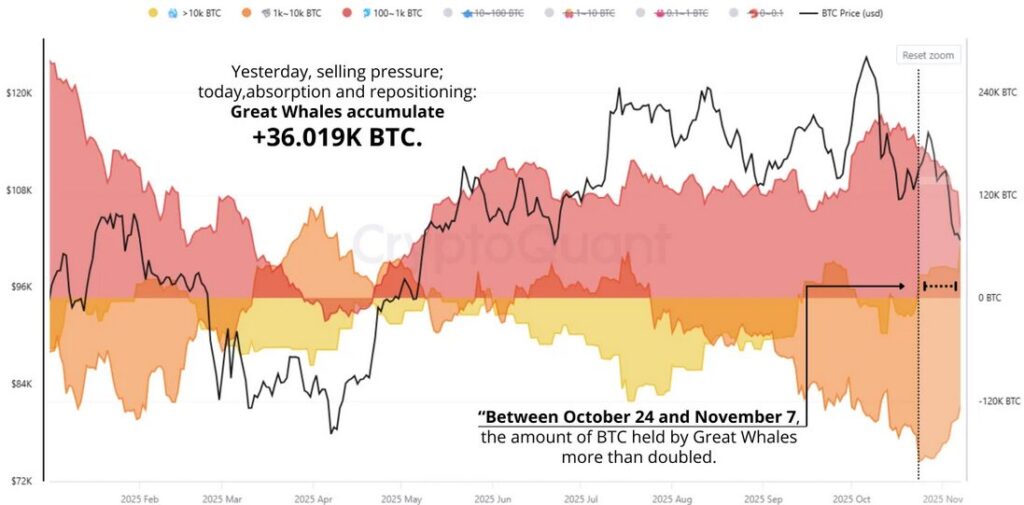
Over the past year, wallets holding between 1,000 and 10,000 BTC have shifted dramatically from accumulation to distribution. At the peak of the 2024 bull cycle, whales added roughly +200,000 BTC. Today, that figure has reversed to approximately -188,000 BTC.
This represents one of the largest distribution cycles in Bitcoin’s history.
Whale behavior is critical because these entities often act as liquidity providers and market stabilizers. When they shift into net selling mode, it typically signals either:
- Profit-taking at cycle highs, or
- A strategic reallocation away from Bitcoin exposure
In this case, the scale and persistence of selling suggest a broader structural repositioning rather than short-term profit-taking.
4. Mid-Tier and Retail Investors: Weakening Support
The weakening of the Bitcoin market is not limited to whales. Mid-sized holders (100–1,000 BTC) and retail investors are also showing signs of fatigue.
Mid-tier holders have significantly slowed their accumulation since November 2025. Meanwhile, smaller investors—traditionally the backbone of bull market momentum—are still net buyers but at a sharply reduced pace.
Retail holdings growth has fallen from approximately 1,000,000 BTC in October 2025 to just 429,000 BTC today, representing more than a 50% decline in growth rate.
(Distribution of BTC Holdings by Investor Size — showing declining growth in smaller holders)
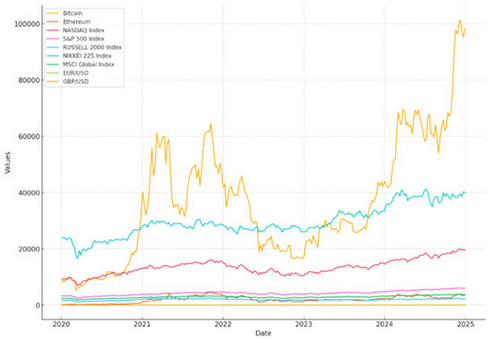
This trend is particularly concerning because retail investors historically provide the marginal demand necessary to sustain upward price movements. Without their participation, rallies tend to stall quickly.
5. The Collapse of U.S. Demand
Another critical factor is the weakening demand from U.S. investors, long considered the dominant force in global crypto markets.
The Coinbase Premium Index, which measures the price difference between Coinbase and offshore exchanges, has remained consistently negative. This indicates that U.S. investors are not aggressively buying Bitcoin—even as prices have fallen into the $65,000–$70,000 range.
Historically, such price levels would attract significant inflows from American institutions and retail traders alike. The absence of this behavior suggests a shift in sentiment, possibly driven by:
- Macro uncertainty (interest rates, liquidity tightening)
- Regulatory caution
- Portfolio rebalancing toward alternative assets
This aligns with broader on-chain data pointing to a systemic decline in demand rather than a temporary market pause.
6. Macro Forces: The Role of Geopolitics
Despite the bearish structure, there remains a potential catalyst for short-term recovery: geopolitics.
CryptoQuant highlights the possibility that easing tensions between the United States and Iran could trigger a relief rally in Bitcoin. Historically, Bitcoin has reacted positively to reductions in geopolitical risk, as investors rotate back into risk assets.
If such conditions materialize, Bitcoin could rebound into the $71,500–$81,200 range.
(Bitcoin Price Resistance Zones — highlighting $71,500–$81,200 range)
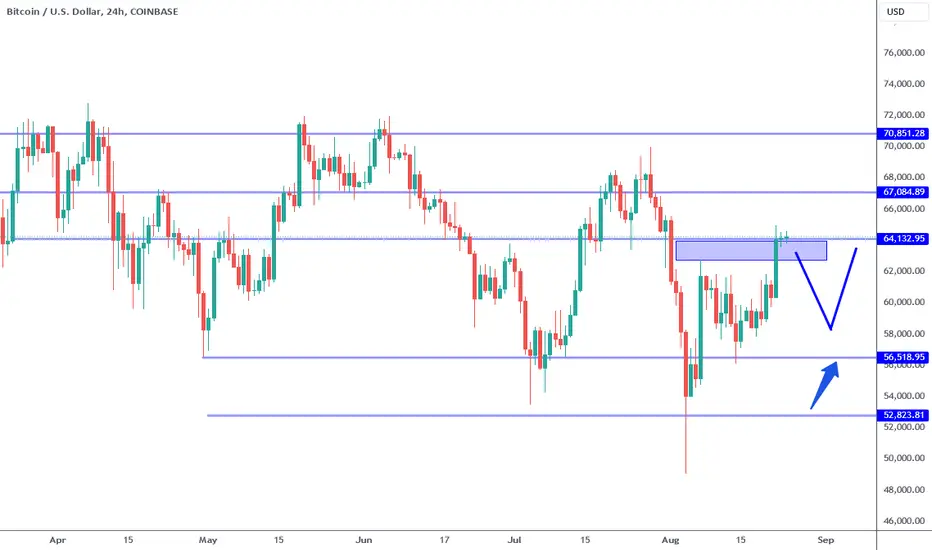
This range corresponds to:
- The lower boundary of major resistance levels
- The “realized price” of active traders (average acquisition cost)
In bearish markets, these zones often act as ceilings rather than breakout points.
7. Structural Bear Market: Understanding the Regime
Bitcoin is currently trading below both:
- Key resistance levels
- The average cost basis of active market participants
This combination is characteristic of a bear market structure, where:
- Rallies are short-lived
- Selling pressure dominates
- Market confidence erodes gradually
Unlike sharp crashes driven by panic, this type of bear market is more insidious. It unfolds slowly, driven by declining participation rather than sudden shocks.
8. Strategic Implications for Investors
For investors seeking new opportunities or revenue streams in crypto, the current environment demands a shift in strategy.
1. Focus on Structural Trends, Not Headlines
Institutional buying alone is no longer a reliable bullish signal. Investors must analyze broader demand metrics, including on-chain data and participation rates.
2. Monitor Whale Behavior Closely
Whales are leading indicators of market direction. Continued distribution suggests caution, while stabilization may signal a bottoming process.
3. Watch Macro Catalysts
Geopolitical developments and liquidity conditions can trigger short-term rallies—even within a broader bearish trend.
4. Diversify into Emerging Narratives
With Bitcoin demand weakening, capital may rotate into:
- Layer-2 ecosystems
- AI-integrated blockchain projects
- Real-world asset (RWA) tokenization
These sectors may offer higher growth potential during Bitcoin consolidation phases.
9. Conclusion: A Market at a Crossroads
Bitcoin’s current state is defined by contradiction. Institutional accumulation remains strong, yet the broader market is weakening. Whales are selling, retail momentum is fading, and U.S. demand has diminished.
At the same time, macro conditions offer a potential lifeline. A shift in geopolitical dynamics could spark a temporary rebound, pushing prices toward the $71,500–$81,200 range.
However, until structural demand recovers, such rallies are likely to remain corrective rather than transformative.
For investors, the message is clear:
This is no longer a market driven purely by inflows—it is a market defined by participation.
Understanding that distinction may be the key to navigating the next phase of the crypto cycle.