Key Points :
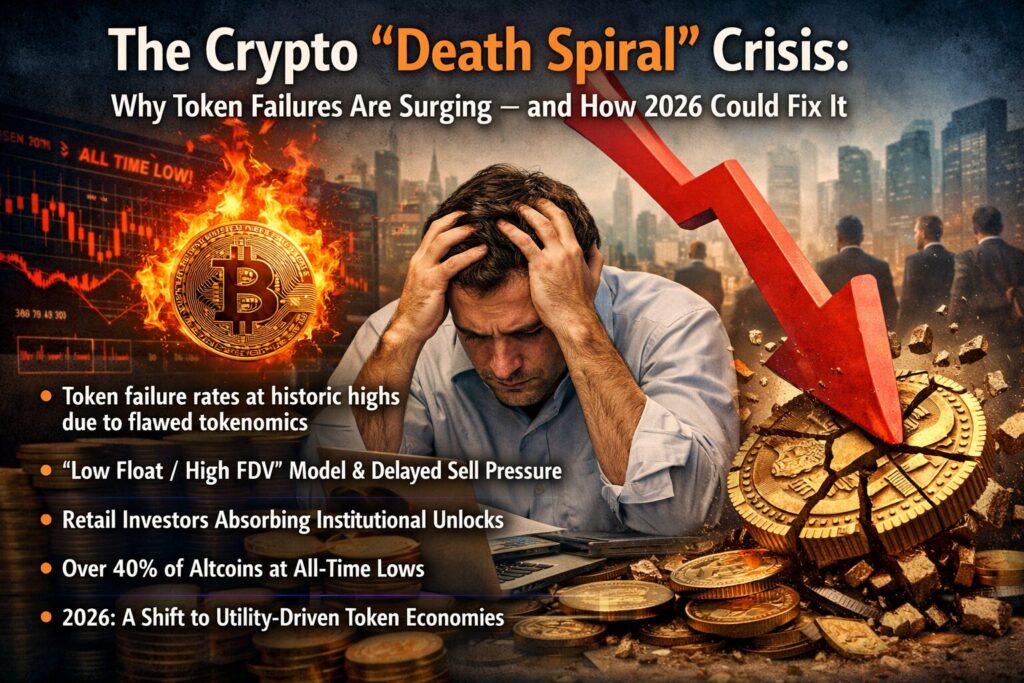
- Token failure rates have reached historic highs due to flawed tokenomics
- The “Low Float / High FDV” model creates artificial valuations and delayed sell pressure
- Retail investors are absorbing institutional unlocks — leading to collapse cycles
- Over 40% of altcoins are near all-time lows, signaling structural liquidity issues
- Sustainable token models require higher initial circulation (20%+) and real product-market fit
- 2026 may mark a shift toward utility-driven token economies rather than speculative launches
1. The Rising Failure Rate of Crypto Tokens
The cryptocurrency industry, once celebrated for rapid innovation and exponential growth, is now facing a sobering reality: an unprecedented number of token failures. According to insights presented at the European blockchain conference EthCC, researchers highlighted that the majority of newly launched tokens between 2024 and 2025 have failed to sustain long-term value.
At the center of this analysis is Darius Moukhtarzade, a researcher at 21Shares, who argued that the issue is not merely market volatility—but structural flaws in token design.
Historically, crypto cycles have always involved boom-and-bust dynamics. However, what makes the current cycle particularly concerning is the scale and speed at which tokens are collapsing. Unlike previous cycles where failures were often tied to technological immaturity or regulatory uncertainty, today’s failures are increasingly tied to deliberate economic design choices.
This suggests a deeper systemic issue—one embedded in how tokens are issued, priced, and distributed.
2. Understanding the “Low Float, High FDV” Trap
The primary culprit identified by Moukhtarzade is the now-dominant “Low Float / High Fully Diluted Valuation (FDV)” model.
To understand why this model is problematic, we need to break down its mechanics:
- Low Float: Only a small percentage of tokens are available for trading at launch
- High FDV: The theoretical valuation assumes all tokens are already in circulation
This combination creates an illusion of strong market demand. With limited supply, early trading activity pushes prices upward, often attracting retail investors who interpret rising prices as genuine momentum.
However, this perception is misleading.
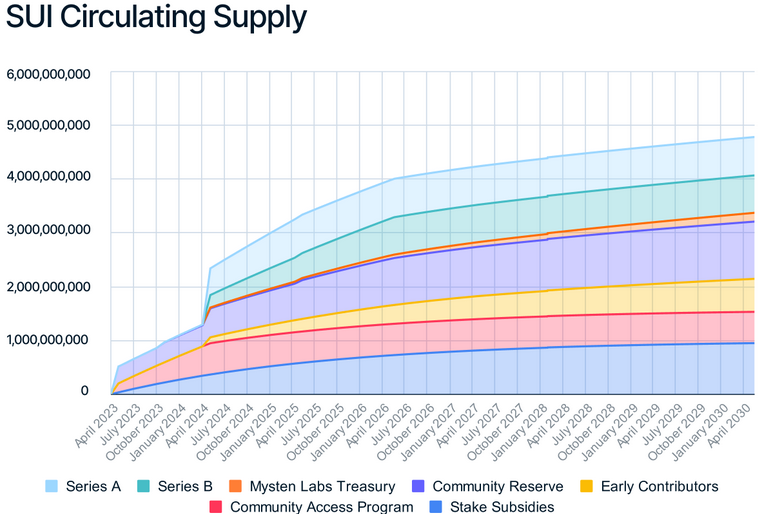
Behind the scenes, a large portion of tokens is locked—typically allocated to early investors, team members, or foundations. These tokens are scheduled for release (unlock) over time.
When these unlock events occur, the market suddenly faces a surge in supply. If demand does not increase proportionally, prices inevitably fall.
This model effectively delays the real price discovery process, creating a fragile market structure that is highly susceptible to collapse.
3. The “Death Spiral” Mechanism Explained
The consequence of this flawed model is what experts describe as a “death spiral.”
The sequence typically unfolds as follows:
- Artificial Price Inflation: Limited supply drives prices up post-launch
- Investor Entry: Retail investors enter, expecting continued growth
- Token Unlock Events: Large volumes of previously locked tokens enter circulation
- Sell Pressure Surge: Early investors begin taking profits
- Liquidity Breakdown: Market depth is insufficient to absorb selling
- Price Collapse: Rapid decline triggers panic selling
- Loss of Confidence: Users abandon the project
This cycle is self-reinforcing. As prices fall, liquidity dries up further, accelerating the decline.
The most concerning aspect is that retail investors often bear the brunt of these collapses, effectively subsidizing early investors’ exits.
This dynamic raises serious questions about fairness and sustainability in current token markets.
4. Liquidity Fragmentation and Market Saturation
Another critical factor contributing to high failure rates is liquidity fragmentation.
With thousands of tokens competing for attention and capital, liquidity is spread thin across the market. This leads to several structural problems:
- Reduced Trading Depth: Even moderate sell orders can significantly impact price
- Volatility Amplification: Thin liquidity increases price swings
- Capital Inefficiency: Funds are distributed across too many projects
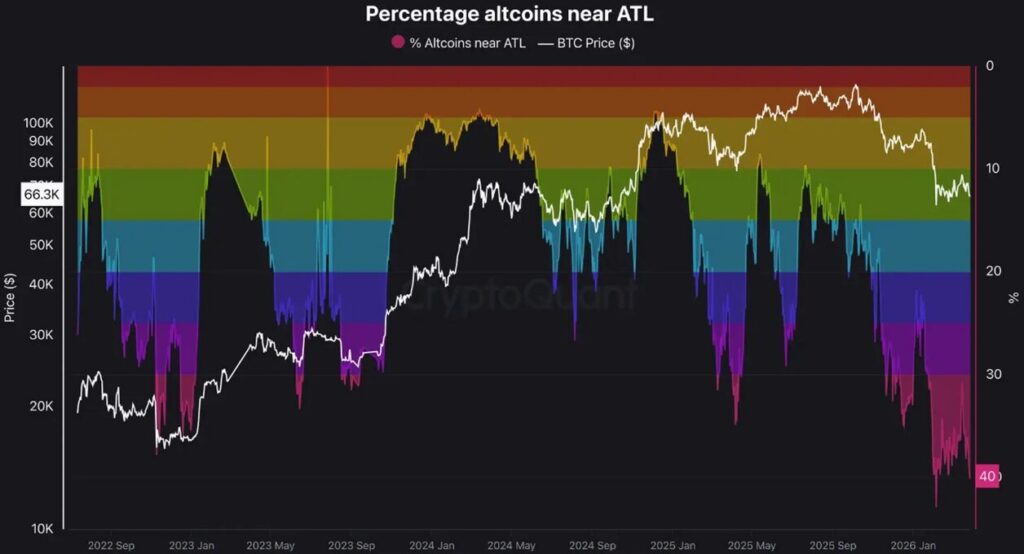
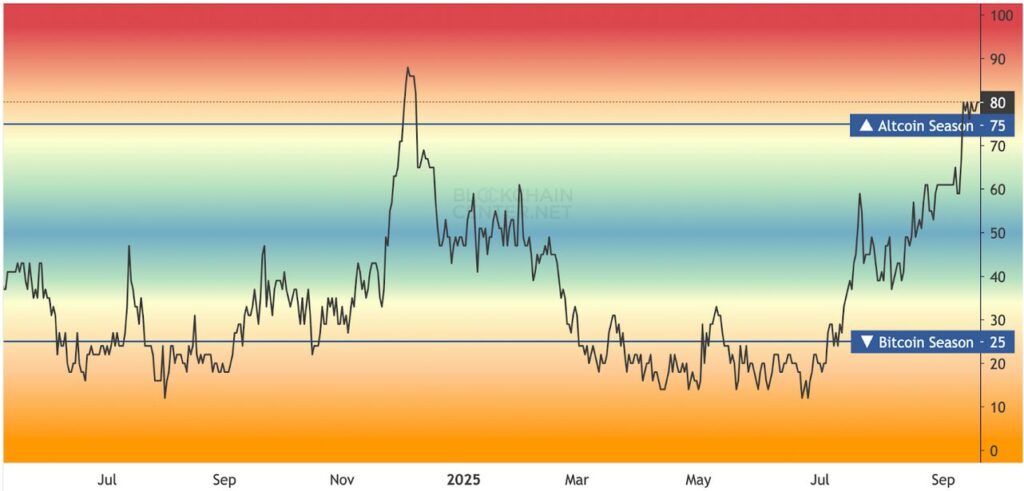
Reports suggest that more than 40% of altcoins are currently trading near their all-time lows. This indicates that the issue is not isolated to individual projects but is systemic across the market.
In such an environment, even fundamentally strong projects struggle to maintain price stability.
5. The Missing Foundation: Product-Market Fit (PMF)
A recurring theme in Moukhtarzade’s analysis is the absence of Product-Market Fit (PMF) in many token launches.
In traditional startups, PMF is a prerequisite for scaling. Companies must demonstrate that their product solves a real problem and has measurable user demand before pursuing aggressive growth.
In crypto, however, this sequence is often reversed.
Projects frequently launch tokens before:
- Establishing a viable product
- Achieving meaningful user adoption
- Generating sustainable revenue
This creates a disconnect between token valuation and actual utility.
Without real demand, tokens rely heavily on speculative interest. When that interest fades—as it inevitably does—prices collapse.
6. Toward a Sustainable Token Model in 2026
Looking ahead to 2026, experts are advocating for a fundamental shift in how tokens are designed and launched.
1. Increase Initial Circulation (20%+)
By increasing the proportion of tokens available at launch, markets can achieve more accurate price discovery. This reduces the shock of future unlock events and creates a more stable supply-demand balance.
2. Align Incentives with Long-Term Value
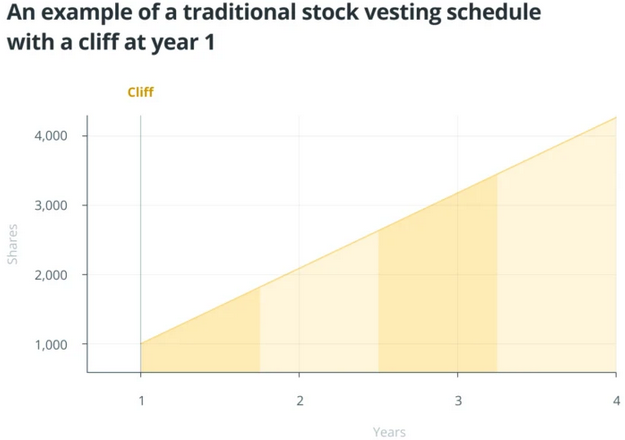
Token allocations should prioritize long-term contributors rather than short-term speculators. Vesting schedules must be transparent and aligned with project milestones.
3. Establish PMF Before Token Launch
Projects should delay token issuance until they have:
- A working product
- Active users
- Revenue streams
This ensures that token value is anchored in real utility.
4. Strengthen Value Capture Mechanisms
Tokens must have clear economic roles within their ecosystems, such as:
- Fee payments
- Governance rights
- Revenue sharing
Without these mechanisms, tokens risk becoming purely speculative instruments.
7. Broader Market Implications: A Maturing Industry
The current wave of failures, while painful, may ultimately serve a constructive purpose.
Markets often evolve through periods of excess and correction. The dot-com bubble of the early 2000s, for example, led to the emergence of fundamentally stronger companies.
Similarly, the crypto industry may be undergoing a necessary phase of consolidation.
Weak projects will likely disappear, while those with real utility and sustainable economics will survive and thrive.
Institutional investors are also becoming more selective, focusing on projects with clear fundamentals rather than hype-driven narratives.
8. Opportunities for Investors and Builders
For investors, the current environment presents both risks and opportunities.
For Investors:
- Focus on token distribution metrics, not just price
- Evaluate unlock schedules carefully
- Prioritize projects with real usage and revenue
For Builders:
- Design tokenomics with long-term sustainability in mind
- Avoid over-reliance on speculative demand
- Build products that solve real-world problems
Those who adapt to these new realities will be better positioned to succeed in the next phase of the crypto market.
Conclusion: From Speculation to Substance
The surge in token failures is not merely a market anomaly—it is a reflection of deeper structural issues within the crypto ecosystem.
The “death spiral” phenomenon underscores the dangers of misaligned incentives, artificial valuations, and premature token launches.
However, it also points toward a path forward.
By embracing more transparent, utility-driven, and user-focused models, the industry can move beyond speculative cycles and toward sustainable growth.
As 2026 approaches, the question is not whether crypto will survive—but what form it will take.
The answer may define the next decade of digital finance.