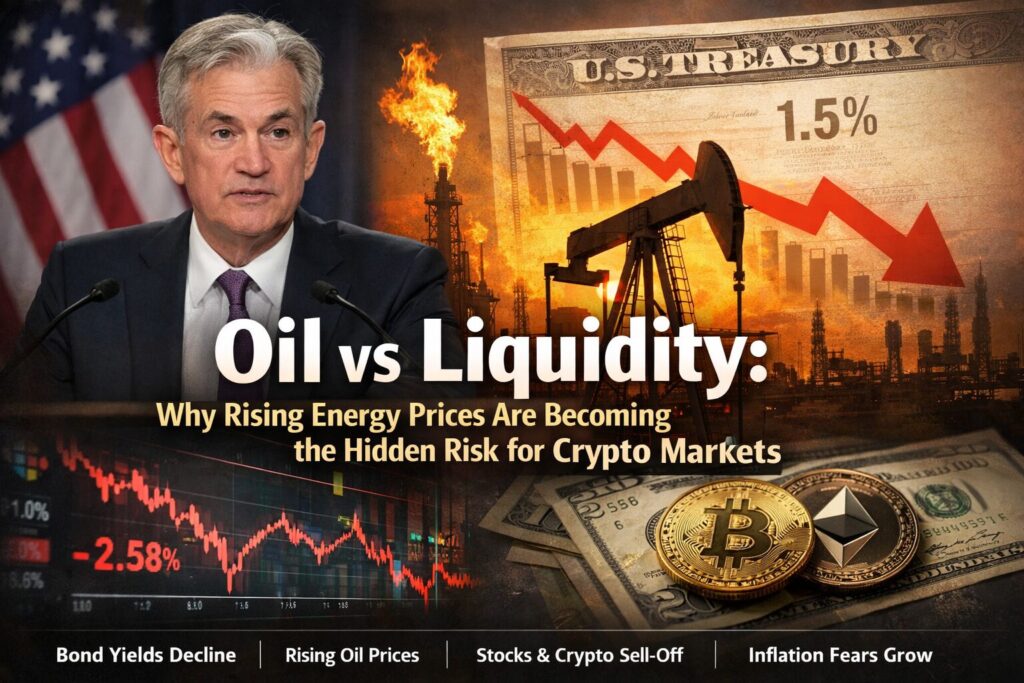
Key Takeaways :
- Comments from Jerome Powell helped calm bond markets by reducing immediate rate hike fears
- U.S. Treasury yields declined, signaling easing monetary pressure
- However, rising oil prices are reintroducing inflation risks
- Crypto and equities lost early gains due to macro uncertainty
- Energy-driven inflation may become the next major headwind for digital assets
1. Macro Calm, Market Confusion: Powell’s Balancing Act
At the center of the latest market movements is the Federal Reserve’s ongoing effort to balance inflation control with economic stability. In recent remarks, Jerome Powell signaled that the Federal Reserve is not rushing into additional rate hikes despite geopolitical tensions, particularly those linked to energy markets.
His comments were interpreted as dovish—at least relative to market expectations. Investors had feared that escalating tensions involving Iran and potential energy supply disruptions could trigger a fresh wave of inflation, forcing the Fed into aggressive tightening. Instead, Powell emphasized patience, suggesting that the central bank would monitor developments before taking action.
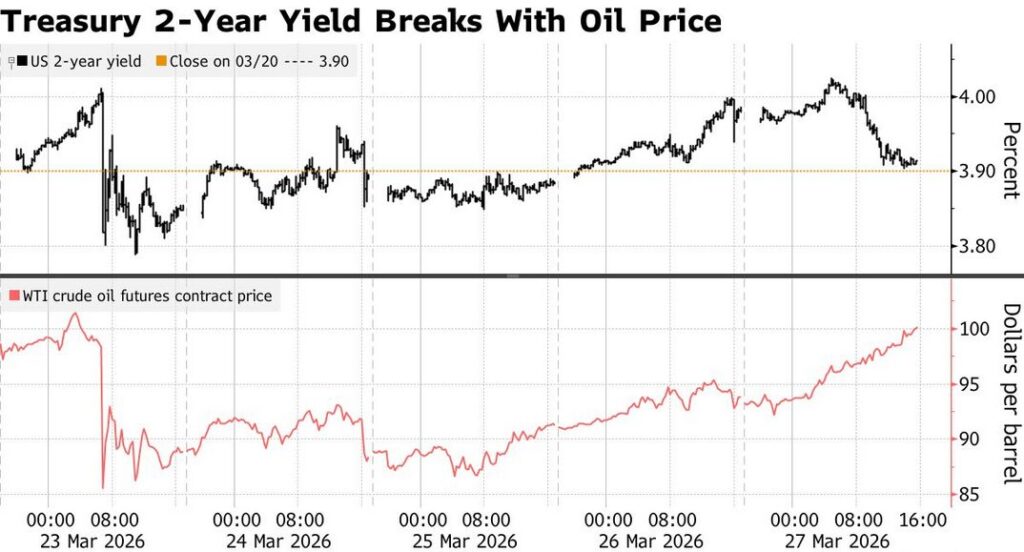
This shift in tone had an immediate effect: bond yields declined. Lower yields typically signal reduced expectations for future interest rate hikes and often provide support for risk assets such as stocks and cryptocurrencies.
However, this initial optimism proved short-lived.
2. Insert Figure 1 Here – Bond Yields vs Oil Price Trend (2025–2026)
3. The Real Pressure Point: Oil Prices Keep Rising
While monetary policy concerns eased, another force began to dominate market sentiment: rising oil prices.
Crude oil has been on a steady upward trajectory, driven by geopolitical uncertainty, constrained supply, and resilient global demand. This creates a fundamental tension in financial markets:
- Lower interest rates → supportive for risk assets
- Higher oil prices → inflationary → negative for risk assets
This divergence is critical.
Energy prices feed directly into inflation metrics. As oil rises, transportation costs increase, production costs climb, and consumer prices follow. Even if central banks pause rate hikes, persistent inflation pressures can force them back into tightening later.
For crypto markets, this is particularly problematic. Unlike equities, which may benefit from sector rotation (e.g., energy stocks rising), cryptocurrencies lack direct inflation-linked revenue streams.
4. Why Crypto Reacted Negatively Despite Lower Yields
At first glance, falling bond yields should have been bullish for crypto. Historically, assets like Bitcoin and Ethereum tend to perform well in lower-rate environments due to increased liquidity.
Yet, both markets gave up early gains.
This reaction highlights a deeper shift in how crypto is being priced:
4.1 Crypto Is Now a Macro Asset
Crypto is no longer trading purely on internal narratives (like halving cycles or DeFi innovation). Instead, it is increasingly behaving like a macro-sensitive risk asset.
4.2 Inflation > Interest Rates (Short-Term)
Even if rate hikes pause, rising inflation expectations can offset the benefit. Markets are forward-looking—if oil-driven inflation persists, future tightening becomes inevitable.
4.3 Liquidity Expectations Are Fragile
Crypto thrives on liquidity expansion. Any signal that liquidity may remain constrained—or worsen—creates immediate downside pressure.
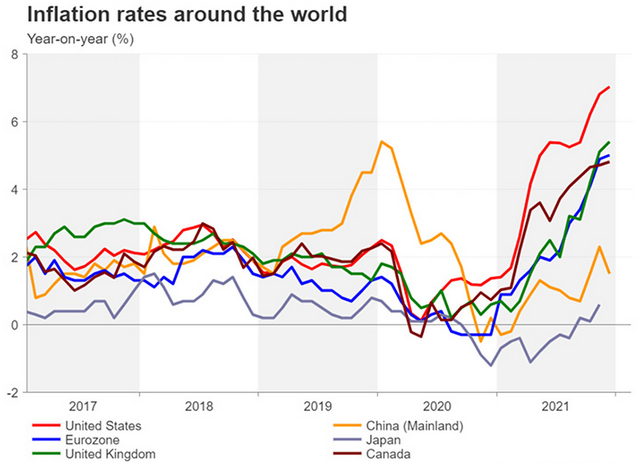
5. Insert Figure 2 Here – Bitcoin Price vs Oil Correlation (2025–2026)
6. Energy Shock Risk: A Structural Threat to Crypto Cycles
The mention of Iran is not incidental. Energy markets are highly sensitive to geopolitical disruptions, and any escalation could amplify volatility.
Historically, energy shocks have had cascading effects:
- Increased inflation
- Central bank tightening
- Reduced consumer spending
- Risk-off sentiment
For crypto, this chain reaction can delay or suppress bull cycles.
Key Insight
Unlike previous cycles (e.g., 2017, 2021), the current crypto market is deeply intertwined with global macro conditions. This makes it more resilient in some ways—but also more vulnerable to external shocks.
7. Institutional Perspective: A Shift in Capital Allocation
Institutional investors are playing a growing role in crypto markets. Their behavior differs significantly from retail participants:
- They allocate based on macro frameworks
- They hedge against inflation using diversified assets
- They reduce exposure when volatility rises
If oil-driven inflation persists, institutions may:
- Increase allocations to commodities
- Reduce exposure to high-beta assets like crypto
- Rotate into cash or short-term bonds
This dynamic can suppress crypto rallies even in the absence of direct negative news.
8. Strategic Implications for Crypto Investors
For readers seeking new crypto assets and revenue opportunities, the current environment requires a more nuanced approach.
8.1 Watch Energy Markets Closely
Oil is becoming a leading indicator. A sustained rise could signal continued pressure on crypto.
8.2 Focus on Utility-Based Projects
Projects with real-world applications—payments, infrastructure, or tokenized assets—may outperform purely speculative tokens.
8.3 Stablecoin and Yield Strategies
In uncertain macro conditions, stablecoin yields and on-chain income strategies may offer more consistent returns.
8.4 Timing Matters More Than Narrative
Even strong narratives (AI + crypto, RWA tokenization, etc.) can be overridden by macro forces in the short term.
9. Broader Trend: The Financialization of Crypto
This episode reinforces a broader trend: the financialization of crypto.
Crypto is no longer isolated. It is now part of a global system influenced by:
- Central bank policy
- Commodity markets
- Geopolitics
- Institutional capital flows
This integration brings legitimacy—but also complexity.
10. Conclusion: The New Battleground Is Not Rates—It’s Energy
The market reaction to Powell’s comments reveals a critical shift.
Interest rates are no longer the sole driver of crypto performance. Instead, energy prices—and their impact on inflation—are emerging as a dominant force.
Even as the Federal Reserve pauses, rising oil prices may:
- Reignite inflation concerns
- Delay liquidity expansion
- Suppress risk asset performance
For crypto investors, this means one thing:
Understanding macro is no longer optional—it is essential.
The next major crypto bull run may not be determined by halving cycles or technological breakthroughs alone, but by how effectively the market navigates the complex interplay between liquidity and energy.