
Key Takeaways :
- The Foreign, Commonwealth & Development Office (FCDO) sanctioned a Chinese-language crypto marketplace tied to human trafficking.
- The platform Xinbi processed an estimated $20 billion in illicit transactions between 2021–2025.
- The marketplace enabled money laundering, stolen data trading, scam operations, and communications infrastructure.
- Sanctions targeted not only individuals but also financial infrastructure behind organized fraud networks.
- This marks a shift toward system-level enforcement in crypto crime, not just individual arrests.
- Global cooperation is intensifying ahead of upcoming international anti-illicit finance summits.
1. Introduction: A Turning Point in Crypto Crime Enforcement
The recent sanctions imposed by the Foreign, Commonwealth & Development Office represent a major escalation in the global fight against cryptocurrency-enabled crime. Unlike earlier enforcement efforts that focused primarily on individual actors, this initiative targets the underlying infrastructure that enables large-scale illicit activity.
At the center of the case is Xinbi, a Chinese-language crypto marketplace that has reportedly processed over $20 billion in transactions. According to blockchain intelligence firm Chainalysis, Xinbi functioned as a hub for a wide range of criminal services, including money laundering, fraud enablement tools, and trafficking-related operations.
This move signals a structural shift: governments are no longer simply chasing criminals—they are dismantling the ecosystems that sustain them.
2. The Xinbi Marketplace: A Criminal Infrastructure Layer
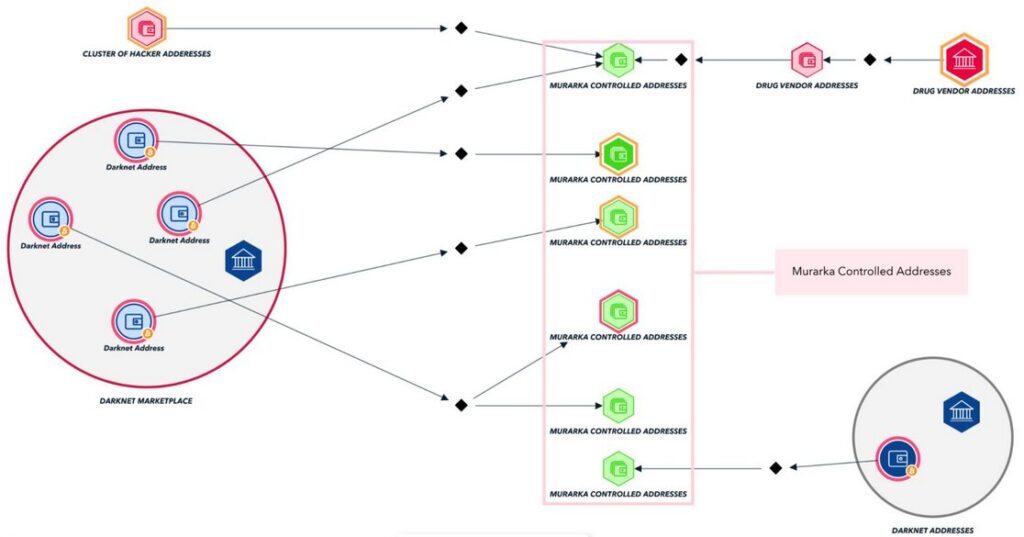
Xinbi operated primarily via Telegram, positioning itself as a peer-to-peer marketplace with escrow functionality. This design mimicked legitimate e-commerce platforms, but instead of consumer goods, it facilitated the trade of illicit services and tools.
What Was Being Sold
- Stolen personal identity data (KYC leaks, passports, IDs)
- Money laundering services (crypto mixers, OTC brokers)
- Scam software (phishing kits, romance scam scripts)
- Satellite communication devices used to contact victims
This ecosystem allowed fraud operations—especially those tied to Southeast Asian scam compounds—to scale rapidly while maintaining operational anonymity.
Infrastructure Role
Xinbi was not just a marketplace—it was infrastructure:
- Enabled financial settlement via crypto
- Provided escrow protection for criminal transactions
- Supported communication logistics through hardware distribution
- Integrated with broader networks like Haowang Guarantee
Together, these components formed a resilient, modular ecosystem that significantly reduced operational risk for criminal organizations.
3. The Southeast Asia Scam Industry: Industrialized Fraud

The sanctions also targeted physical infrastructure, particularly a facility known as #8 Park in Cambodia, operated by Legend Innovation Co..
Authorities estimate that this site housed up to 20,000 trafficked individuals, forced to participate in large-scale online scams.
How the System Works
- Victims are trafficked and coerced into scam operations.
- They use scripts and tools purchased from marketplaces like Xinbi.
- Payments are processed via cryptocurrency.
- Funds are laundered through OTC brokers and mixers.
- Profits are reinvested into infrastructure and expansion.
This is not random fraud—it is industrialized cybercrime, combining:
- Human trafficking
- Financial engineering
- Digital infrastructure
4. Financial Impact and Asset Freezing
The UK sanctions resulted in the freezing of over $1.3 billion in assets globally.
Seized or Frozen Assets Include:
- London real estate (commercial and luxury residential)
- Office buildings worth over $130 million
- Private helicopters and high-value assets
- Financial accounts linked to the network
Notably, individuals such as Eang Soklim were designated for their role in enabling these operations.
Authorities also identified links to the Prince Group, which had previously faced sanctions from both the UK and US.
5. Strategic Shift: Targeting Infrastructure, Not Just Actors
This enforcement action reflects a critical evolution in regulatory thinking.
Old Model:
- Arrest individuals
- Shut down isolated scam operations
New Model:
- Target marketplaces and infrastructure
- Freeze financial flows
- Disrupt entire ecosystems
By focusing on platforms like Xinbi, authorities aim to increase friction across the entire criminal supply chain.
This mirrors broader trends in crypto regulation, where:
- Exchanges face stricter KYC/AML requirements
- Blockchain analytics firms gain influence
- Governments collaborate across jurisdictions
6. Implications for the Crypto Industry
6.1 Compliance Will Deepen
Crypto businesses—especially exchanges, wallets, and OTC desks—will face increasing pressure to:
- Implement transaction monitoring
- Integrate blockchain analytics tools
- Enforce Travel Rule compliance
For regulated entities like EMI/VASP operators, this aligns directly with global frameworks such as FATF recommendations.
6.2 Rise of Intelligence-Driven Enforcement
Firms like Chainalysis are becoming central players, providing actionable intelligence that bridges blockchain transparency and law enforcement.
6.3 Risk for Grey-Zone Platforms
Platforms operating in regulatory grey areas—especially Telegram-based or decentralized OTC markets—will face heightened scrutiny.
7. Market and Investment Perspective
For investors and builders, this development carries both risks and opportunities.
Risks
- Increased compliance costs
- Crackdowns on certain DeFi or P2P models
- Greater regulatory uncertainty in emerging markets
Opportunities
- Growth of compliant infrastructure providers
- Demand for on-chain analytics and AML tools
- Expansion of regulated stablecoin ecosystems
- Institutional adoption driven by improved trust
8. Conclusion: Toward a More Transparent but Controlled Crypto Future
The UK’s sanctions against Xinbi and associated networks mark a pivotal moment in the evolution of cryptocurrency regulation.
This is no longer about isolated bad actors—it is about dismantling entire digital economies of crime.
For the crypto industry, the message is clear:
- Transparency is no longer optional
- Compliance is becoming infrastructure
- Trust will define long-term winners
As governments coordinate globally, the balance between decentralization and regulation will shape the next phase of blockchain adoption.
For those seeking new opportunities, the frontier is shifting—from speculative assets to real-world, compliant, and scalable blockchain applications.