
Key Points :
- Strategy halted Bitcoin purchases and stock sales for the first time since December 2025
- Chairman Michael Saylor has not disclosed the exact reason behind the pause
- The company still holds 762,099 BTC (~$51B), maintaining its position as the largest public corporate holder
- Mining firms like MARA Holdings are selling BTC to manage debt, while Canaan continues accumulation
- Broader trend: capital reallocation toward AI/HPC infrastructure while maintaining indirect exposure to crypto
1. A Strategic Pause That Signals More Than It Appears
In a development that has captured the attention of institutional investors and crypto market participants alike, Strategy—the publicly listed company known for its aggressive Bitcoin accumulation strategy—has paused both Bitcoin purchases and equity issuance. This marks the first such interruption in its acquisition pattern since December 2025, signaling a potential shift in how corporate capital engages with digital assets.
According to a recent filing with the U.S. Securities and Exchange Commission (SEC), Strategy did not acquire any Bitcoin between March 23 and March 29. At the same time, the company refrained from issuing additional shares under its at-the-market (ATM) equity program, which has historically been its primary funding mechanism for Bitcoin purchases.
Despite this pause, Strategy’s position remains formidable. The firm holds approximately 762,099 BTC, valued at over $51 billion at current market prices (approximately $67,000 per BTC). This scale of ownership continues to position Strategy as the single largest corporate holder of Bitcoin globally.
However, the significance of this pause lies not in the absence of buying—but in what it may indicate about changing market dynamics.
2. Market Conditions and Capital Efficiency Pressures
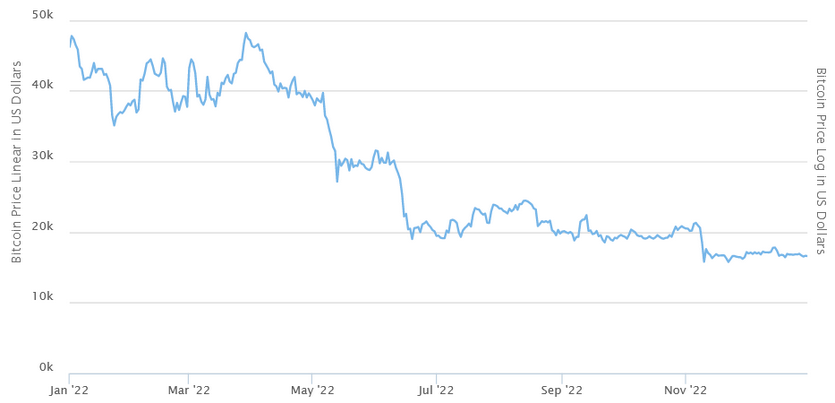
The backdrop to Strategy’s decision is a shifting macro and crypto-specific environment. Over the past 12 months, Bitcoin has experienced a decline of more than 18%, reflecting broader risk-off sentiment across global markets. At the same time, Strategy’s own stock (MSTR) has dropped over 60% in the past six months, reducing the effectiveness of equity-based fundraising.
This introduces a critical constraint: when equity valuation declines, issuing new shares becomes increasingly dilutive and less attractive. For a company like Strategy, whose Bitcoin acquisition model relies heavily on leveraging its stock as a financing tool, this creates a structural bottleneck.
In this context, the decision to pause purchases may not be a retreat from Bitcoin conviction, but rather a recalibration of capital efficiency. Continuing to buy Bitcoin under unfavorable financing conditions could weaken shareholder value, even if the long-term thesis remains intact.
This highlights a broader reality: institutional Bitcoin strategies are not purely ideological—they are deeply tied to capital market conditions.
3. Diverging Corporate Strategies: Sell, Hold, or Accumulate
While Strategy has chosen to pause, other major players in the crypto ecosystem are taking different approaches, reflecting a fragmentation of institutional strategies.
MARA Holdings: Liquidity Over Accumulation
MARA Holdings, one of the largest Bitcoin mining firms, recently sold 15,133 BTC for approximately $1.1 billion. The proceeds were used to reduce convertible debt, signaling a shift toward balance sheet optimization rather than aggressive accumulation.
This move underscores a key trend: mining companies are increasingly prioritizing financial stability over speculative upside. As mining difficulty rises and margins compress, holding large Bitcoin reserves becomes riskier, particularly when debt obligations are involved.
Canaan: Continued Expansion and Accumulation
In contrast, Canaan continues to expand its mining operations and increase its holdings of both Bitcoin and Ethereum. As of March 10, the company reported holding 1,793 BTC and 3,952 ETH, alongside ongoing expansion in Texas.
Canaan’s strategy suggests a longer-term commitment to crypto infrastructure, betting that current market conditions represent a temporary downturn rather than a structural decline.
4. The AI/HPC Shift: A New Capital Magnet
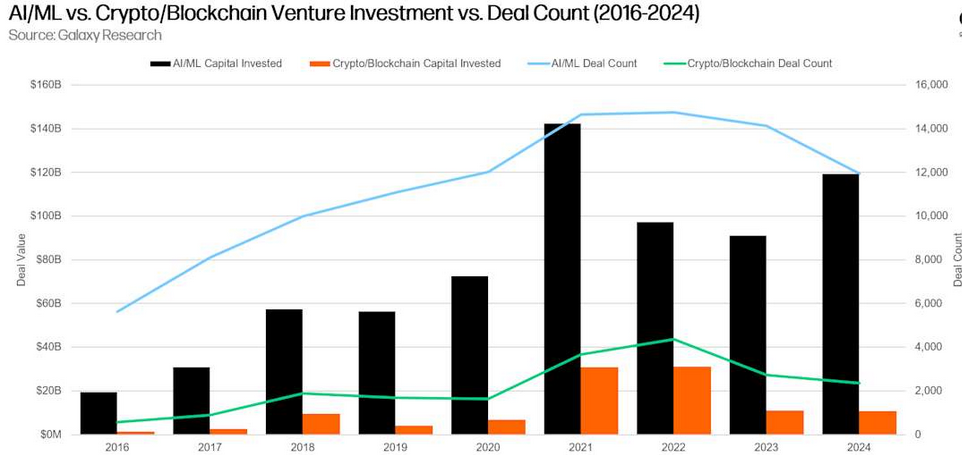
One of the most important underlying trends shaping these decisions is the rapid rise of artificial intelligence (AI) and high-performance computing (HPC) as alternative capital allocation targets.
Mining companies, in particular, are uniquely positioned to pivot toward AI workloads due to their existing infrastructure—data centers, power contracts, and cooling systems. As AI demand surges, these assets can often generate more stable and predictable returns compared to Bitcoin mining.
This has led to a growing reallocation of capital:
- GPU resources are being redirected from mining to AI training
- Data centers are being repurposed for cloud computing services
- Energy contracts are being renegotiated for diversified workloads
However, this does not represent a complete exit from crypto. Instead, it reflects a hybrid strategy where companies maintain exposure to Bitcoin while diversifying revenue streams.
5. Institutional Behavior: From Aggressive Accumulation to Tactical Positioning
The current landscape suggests that institutional involvement in Bitcoin is entering a new phase. The early era of aggressive accumulation—characterized by companies like Strategy issuing large amounts of equity to buy BTC—is giving way to a more nuanced approach.
This new phase is defined by:
- Capital discipline: Companies are more selective about when and how they acquire Bitcoin
- Balance sheet management: Debt reduction and liquidity preservation are becoming priorities
- Diversification: Exposure to AI, HPC, and other high-growth sectors is increasing
- Market timing awareness: Purchases are more sensitive to macroeconomic conditions
Importantly, this does not imply a loss of confidence in Bitcoin. Rather, it reflects a maturation of institutional strategies as the asset class becomes more integrated into traditional finance.
6. Implications for Investors and Builders
For readers seeking new crypto assets, revenue opportunities, and practical blockchain applications, these developments offer several key insights:
1. Bitcoin Remains a Core Asset—but Not the Only One
Even as companies pause accumulation, none are exiting Bitcoin entirely. It continues to serve as a foundational asset within diversified portfolios.
2. Infrastructure Is the Real Battleground
The shift toward AI and HPC highlights the importance of infrastructure. Projects that intersect with computing power, data centers, and energy optimization may offer new opportunities.
3. Liquidity and Financing Models Matter
The Strategy case demonstrates that access to capital markets can significantly influence crypto strategies. Understanding how companies fund their operations is critical for evaluating their long-term viability.
4. Hybrid Models Will Dominate
The future is likely to belong to companies that can bridge crypto and traditional industries—whether through payments, remittances, or enterprise blockchain solutions.
7. Conclusion: A Pause, Not a Retreat
Strategy’s decision to pause Bitcoin purchases should not be interpreted as a bearish signal in isolation. Instead, it represents a moment of strategic recalibration within a rapidly evolving market.
As institutional players navigate declining equity valuations, rising mining costs, and the explosive growth of AI, their approaches to Bitcoin are becoming more sophisticated. The era of simple accumulation is giving way to a more complex landscape where capital efficiency, diversification, and technological convergence play central roles.
For investors and builders alike, the message is clear: the crypto industry is not shrinking—it is evolving. And those who understand these shifts will be best positioned to capture the next wave of opportunity.