
Main Points :
- Bipartisan compromise emerging for the CLARITY Act, a major U.S. crypto market structure bill.
- Proposed rule may limit yield on stablecoins, addressing concerns from the banking sector.
- Law would clarify jurisdiction between the SEC and CFTC, one of the largest regulatory uncertainties in crypto.
- Institutional investors may enter the market more aggressively once regulatory clarity improves.
- Stablecoin design and DeFi yield models could significantly change under new regulations.
Introduction: The Regulatory Turning Point for Crypto Markets
The cryptocurrency industry has entered a decisive phase in its relationship with global regulators, and nowhere is this more evident than in the United States. For years, one of the largest barriers to institutional adoption of digital assets has been the lack of a clear legal framework defining what constitutes a security, a commodity, or an entirely new category of digital asset. This uncertainty has created friction between regulators such as the U.S. Securities and Exchange Commission (SEC) and the Commodity Futures Trading Commission (CFTC), while also discouraging banks, asset managers, and payment companies from fully committing capital to the crypto ecosystem.
Against this backdrop, a new development has emerged in Washington. A bipartisan compromise surrounding the proposed CLARITY Act, a major crypto market structure bill, may finally provide a pathway toward regulatory certainty. However, the compromise also introduces a controversial element: limits on yield-bearing stablecoins.
The outcome of this legislation could reshape not only the regulatory landscape but also the design of stablecoins, decentralized finance (DeFi) protocols, and institutional crypto investment strategies. For investors seeking the next generation of digital assets or revenue opportunities in blockchain applications, understanding the implications of this bill is essential.
The CLARITY Act: A Framework for Crypto Market Structure
At the core of the debate lies the CLARITY Act, a legislative proposal aimed at defining the regulatory boundaries for digital assets in the United States. One of the biggest challenges facing the crypto industry has been determining which regulator has authority over different types of digital assets.
Under the current regulatory environment:
- The SEC often treats many tokens as securities.
- The CFTC claims oversight over digital commodities such as Bitcoin.
This regulatory overlap has resulted in enforcement actions, legal disputes, and uncertainty for companies building blockchain-based services.
The CLARITY Act seeks to resolve this issue by establishing a structured framework for digital asset classification. Under the proposed model:
- Digital assets that behave like securities during fundraising phases may fall under SEC oversight.
- Decentralized networks whose tokens function more like commodities could fall under CFTC jurisdiction.
If implemented, this framework would provide companies with a clearer compliance pathway, enabling them to develop blockchain products without constantly fearing retroactive enforcement.
For crypto entrepreneurs and investors, this clarity could be transformative. Markets historically thrive when regulatory rules become predictable. The emergence of regulated derivatives markets, spot ETFs, and compliant custodial services could follow soon after.
The Stablecoin Debate: Why Banks Are Concerned
One of the most contentious aspects of the compromise revolves around stablecoins, digital assets designed to maintain a stable value relative to fiat currencies such as the U.S. dollar.
Stablecoins have become a fundamental infrastructure layer in the crypto economy. They serve as:
- Trading pairs on crypto exchanges
- Liquidity tools in DeFi lending protocols
- Cross-border settlement instruments
- Digital cash equivalents for blockchain transactions
However, the rapid growth of stablecoins has raised concerns among traditional financial institutions. Banks fear that if stablecoins begin offering high yields, they could attract deposits away from the traditional banking system.
Deposits represent one of the most important funding sources for banks. If consumers shift large amounts of money into stablecoins that offer yield, it could theoretically weaken the banking system’s deposit base.
To address this concern, lawmakers involved in the CLARITY Act compromise are reportedly exploring limits on passive yield for stablecoin holders. Instead of earning rewards simply for holding stablecoins, incentives may be tied to transaction activity or other usage-based metrics.
This compromise aims to balance two competing priorities:
- Protecting the stability of the banking system
- Allowing innovation in blockchain-based financial infrastructure
As one U.S. senator involved in the negotiations reportedly stated, the goal is to reach a compromise “that leaves everyone slightly dissatisfied.”
(“Stablecoin Market Growth vs Traditional Bank Deposits”)

Rapid growth of stablecoins compared with slower growth in traditional bank deposits.
Stablecoins as the Backbone of the Crypto Economy
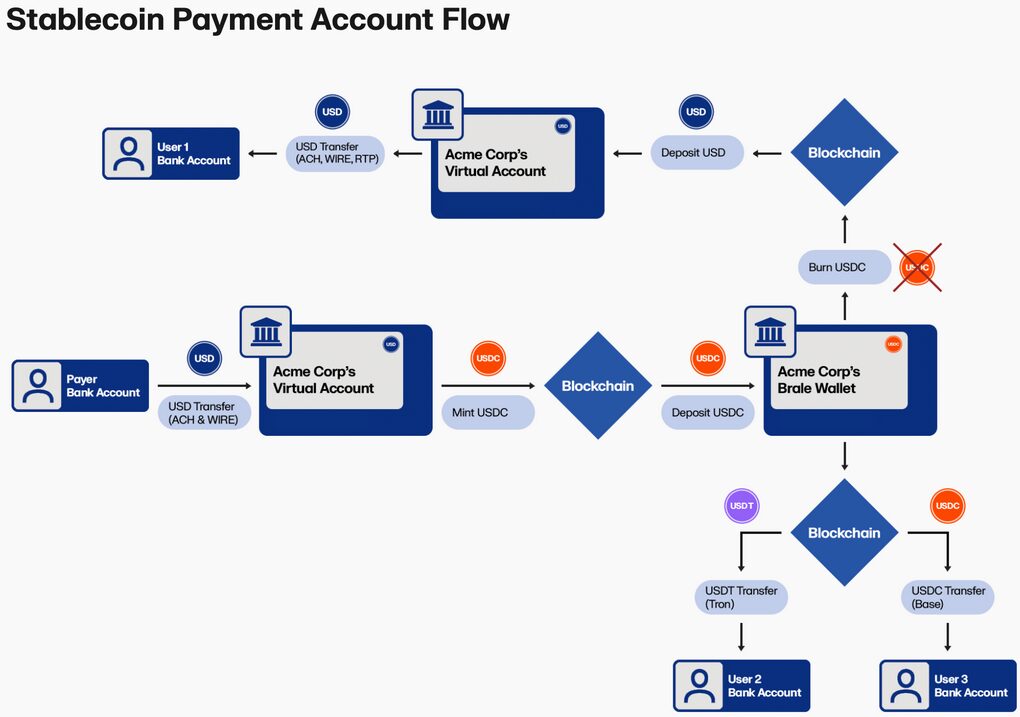
The importance of stablecoins cannot be overstated. Over the past several years, stablecoins such as USDT, USDC, and newer algorithmic or collateralized models have become the primary settlement layer for digital asset trading.
In many ways, stablecoins serve as the “digital dollar infrastructure” for the blockchain economy. Rather than using bank transfers, traders and institutions can move billions of dollars across global markets in minutes.
Recent estimates suggest that the total stablecoin market capitalization exceeds $150 billion, with daily transaction volumes often surpassing traditional payment networks in certain segments of the digital asset ecosystem.
Stablecoins are also increasingly used outside the crypto trading environment. Examples include:
- Remittances between emerging markets
- E-commerce payments in regions with unstable currencies
- Treasury management tools for crypto-native businesses
- Settlement layers for decentralized exchanges
If regulatory clarity emerges in the United States, the stablecoin sector could experience another wave of growth, potentially integrating more closely with traditional financial systems.
(“Stablecoin Ecosystem Use Cases”)
Key use cases of stablecoins across the crypto financial ecosystem.
Institutional Capital Waiting for Regulatory Clarity
One of the most significant implications of the CLARITY Act compromise is its potential effect on institutional investment.
Large financial institutions—including banks, hedge funds, and asset managers—have been cautiously exploring crypto markets for years. However, regulatory ambiguity has slowed the pace of adoption.
Many institutions require clear answers to fundamental questions before allocating capital:
- Are tokens securities or commodities?
- Which regulator oversees trading venues?
- How should custodians hold digital assets?
- What compliance frameworks apply to stablecoins?
Without clear answers, compliance departments often block large-scale crypto exposure.
If the CLARITY Act succeeds in clarifying these issues, it could unlock significant capital inflows. Institutional investors control trillions of dollars in assets, and even a small allocation to digital assets could dramatically reshape market dynamics.
Some analysts believe that regulatory clarity could trigger a new wave of crypto financial products, including:
- Tokenized securities
- On-chain treasury instruments
- Blockchain-based settlement networks
- Regulated crypto derivatives markets
These developments could expand the crypto economy far beyond its current trading-focused structure.
Implications for DeFi and Yield Strategies
The potential restriction on stablecoin yield also raises important questions for decentralized finance (DeFi) platforms.
Many DeFi protocols rely heavily on stablecoins for lending, liquidity provision, and yield farming. If U.S. regulations limit yield mechanisms tied directly to stablecoin holdings, DeFi developers may need to redesign their economic models.
Possible adaptations include:
- Yield generated through transaction fees rather than passive holding
- Tokenized treasury assets backing stablecoins
- Hybrid models integrating regulated financial institutions
- Cross-border DeFi systems operating outside U.S. jurisdiction
Innovation in blockchain technology often accelerates when regulatory frameworks create new constraints. As a result, the CLARITY Act could indirectly shape the next generation of DeFi architecture.
The Global Regulatory Competition
While the United States debates the CLARITY Act, other jurisdictions have already moved ahead with digital asset regulations.
For example:
- The European Union implemented MiCA, a comprehensive crypto regulatory framework.
- Hong Kong and Singapore have introduced licensing regimes for digital asset exchanges.
- Several countries are experimenting with central bank digital currencies (CBDCs).
If the U.S. successfully establishes a balanced crypto regulatory framework, it could regain leadership in blockchain innovation. Conversely, excessive restrictions could push crypto development to other regions.
This global competition for blockchain innovation makes the outcome of the CLARITY Act particularly significant.
Conclusion: A Defining Moment for Crypto Regulation
The emerging compromise surrounding the CLARITY Act represents one of the most consequential moments in the history of cryptocurrency regulation.
By clarifying the regulatory roles of the SEC and CFTC, the bill could remove one of the largest barriers preventing institutional adoption of digital assets. At the same time, proposed limits on stablecoin yield highlight the ongoing tension between financial innovation and the protection of traditional banking systems.
For investors, entrepreneurs, and developers in the blockchain ecosystem, the implications extend far beyond U.S. policy debates. Regulatory clarity could unlock massive institutional capital, accelerate the integration of blockchain into mainstream finance, and reshape the design of stablecoins and DeFi platforms.
Whether the final legislation satisfies all stakeholders remains uncertain. However, one reality is becoming increasingly clear: the next phase of the cryptocurrency industry will likely be defined not only by technological innovation but also by the regulatory frameworks that govern it.
As governments and financial institutions continue to negotiate the boundaries of the digital asset economy, the CLARITY Act may ultimately serve as a blueprint for how the world balances financial stability with the transformative potential of blockchain technology.