Main Points :
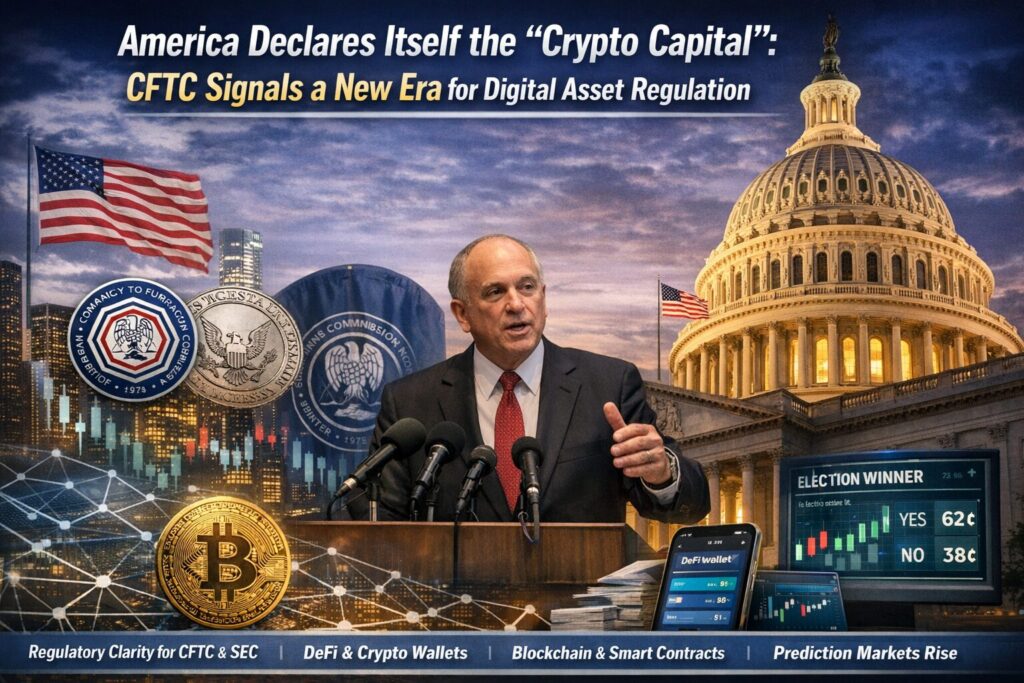
- The Chairman of the U.S. Commodity Futures Trading Commission (CFTC) stated that the United States should be considered the global capital of cryptocurrency innovation.
- A new regulatory approach is being prepared to clarify jurisdiction between the CFTC and the U.S. Securities and Exchange Commission (SEC).
- The CFTC plans to provide guidance for decentralized finance (DeFi) and non-custodial crypto software such as wallets.
- Blockchain and smart contracts are increasingly transforming commodity trading, clearing, settlement, and collateral management.
- The growing popularity of prediction markets and decentralized information systems could reshape how society determines truth and economic expectations.
The United States Positions Itself as the Global Center of Crypto Innovation
In early March 2026, during a conference in Florida, the Chairman of the U.S. Commodity Futures Trading Commission (CFTC) declared that the United States should be viewed as the “crypto capital of the world.” The remarks represent a significant signal that U.S. regulators increasingly view digital assets not merely as speculative instruments but as a foundational technology shaping the next generation of financial markets.
The speech was delivered as part of a broader discussion about what the chairman described as “a new era of American market leadership.” According to the prepared remarks published by the CFTC, the United States has a unique opportunity to lead the development of the global digital asset ecosystem.
This leadership, the chairman argued, stems from the country’s history of building innovative financial markets and adapting regulatory frameworks to emerging technologies. Just as the U.S. once became the center of global capital markets, it now seeks to establish itself as the primary hub for blockchain innovation, decentralized finance, and digital commodity trading.
This statement reflects a growing recognition among policymakers that the crypto economy is transitioning from experimentation into mainstream financial infrastructure.
Blockchain and Smart Contracts Are Reshaping Commodity Markets
One of the central themes of the chairman’s speech was the growing influence of blockchain technology and smart contracts on traditional commodity markets.
Smart contracts—self-executing programs that automatically enforce agreements when predefined conditions are met—are enabling new ways to manage trading, clearing, and settlement processes. The Ethereum blockchain, for example, has become one of the most widely used platforms for deploying smart contract applications.
In traditional financial markets, commodity transactions often involve multiple intermediaries such as brokers, clearing houses, and custodians. Each layer introduces delays, operational costs, and potential points of failure. Blockchain systems, however, allow many of these processes to be automated and verified through decentralized networks.
The chairman emphasized that blockchain technology can significantly improve several key areas of financial market infrastructure:
- Trade execution
- Clearing and settlement
- Collateral management
- Risk monitoring
For example, a commodity derivatives contract could theoretically settle instantly on-chain rather than taking days through conventional systems. Collateral requirements could be monitored automatically through smart contracts, reducing counterparty risk.
Such developments could dramatically reshape global commodity markets—an area traditionally overseen by the CFTC.
The Rise of Digital Markets and the Next Wave of Financial Innovation
Another key point emphasized in the speech was the idea that financial markets are undergoing rapid digitalization.
The chairman argued that the United States has historically reinvented itself through waves of technological innovation. From industrialization to the internet era, each transformation reshaped the global economy.
According to the speech, the rise of cryptocurrencies and blockchain technology represents another transformative wave comparable to the early days of the internet.
Cryptocurrencies, once dismissed as niche or speculative assets, are increasingly becoming part of mainstream financial systems. Major institutions—including asset managers, banks, and payment companies—have begun integrating blockchain-based infrastructure into their operations.
Recent trends illustrate this shift clearly:
- The continued expansion of Bitcoin ETFs in the United States
- Growing institutional interest in tokenized real-world assets (RWA)
- Increasing use of stablecoins for cross-border payments
- Rapid growth of Layer-2 blockchain scaling solutions
Together, these developments suggest that blockchain technology is evolving beyond digital currencies and into a core infrastructure layer for global finance.
Ending the Turf War Between the SEC and CFTC
For years, one of the biggest obstacles facing crypto companies operating in the United States has been regulatory uncertainty. In particular, there has been ongoing tension between the SEC and the CFTC regarding which agency should oversee different types of digital assets.
The SEC has traditionally argued that many cryptocurrencies qualify as securities, placing them under securities law. The CFTC, on the other hand, has treated certain cryptocurrencies—such as Bitcoin—as commodities.
This lack of clarity has created confusion for developers, exchanges, and investors.
During the speech, the CFTC chairman suggested that the agency intends to strengthen cooperation with the SEC to resolve these jurisdictional conflicts.
The goal is to create clear classifications for digital assets, ensuring that market participants understand which regulatory framework applies to their activities.
Such clarity could have significant implications for the industry. Clear regulatory rules would likely encourage more companies to establish operations in the United States rather than moving overseas to more crypto-friendly jurisdictions.
Regulatory Guidance for DeFi and Non-Custodial Wallets
Perhaps the most closely watched aspect of the speech was the chairman’s announcement that the CFTC is preparing regulatory guidance related to decentralized finance (DeFi).
DeFi refers to financial applications built on blockchain networks that operate without traditional intermediaries such as banks or brokers. These platforms allow users to lend, borrow, trade, and earn yields through automated smart contracts.
The chairman revealed that he has instructed CFTC staff to develop guidance regarding registration requirements for non-custodial software systems, including:
- Crypto wallets
- DeFi protocols
- decentralized trading systems
This issue has been controversial within the crypto community. Developers argue that non-custodial software should not be regulated in the same way as financial institutions because the software does not hold user funds.
Providing regulatory clarity for these tools could be crucial for the future of decentralized finance in the United States.
If implemented carefully, such guidance could create a framework that protects consumers without stifling innovation.
Prediction Markets and the Search for Decentralized Truth
Another intriguing part of the speech focused on the rise of prediction markets.
Prediction markets allow participants to bet on the likelihood of future events, such as elections, economic indicators, or geopolitical developments. These markets aggregate the collective expectations of participants and often produce remarkably accurate forecasts.
The chairman noted that an increasing number of people now trust social media, podcasts, and prediction markets more than traditional news media or expert commentary.
While this trend raises concerns about misinformation, it also highlights the potential value of decentralized information systems.
When combined with blockchain technology, prediction markets could create new mechanisms for distributed trust.
The chairman suggested that decentralized prediction markets may help society verify truth and detect misinformation by aggregating large numbers of independent perspectives.
In addition, blockchain-based prediction markets could provide safeguards against phenomena such as:
- Misinformation campaigns
- Manipulated narratives
- Financial “debanking” of controversial viewpoints
In essence, decentralized systems may offer new ways to establish credibility and transparency in the digital age.
Global Competition for Crypto Leadership
The United States is not the only country seeking leadership in the crypto sector. Over the past few years, several jurisdictions have introduced regulatory frameworks designed to attract blockchain innovation.
For example:
The European Union implemented the MiCA (Markets in Crypto-Assets) regulation, creating one of the world’s most comprehensive digital asset regulatory frameworks.
Singapore has developed a licensing system that allows crypto companies to operate under strict but clear regulatory oversight.
Hong Kong has recently re-opened its crypto trading market to retail investors as part of a strategy to become a regional digital asset hub.
These developments have created a global race among financial centers to become the dominant hub for digital finance.
The CFTC chairman’s statement that the United States should serve as the “crypto capital” suggests that American regulators are increasingly aware of this competition.
Opportunities for Investors and Builders
For investors, developers, and entrepreneurs, the regulatory direction of the United States could have major implications for the next phase of the crypto industry.
Clearer rules could unlock several major opportunities:
1. Institutional Capital Expansion
Large financial institutions often avoid uncertain regulatory environments. Greater clarity could encourage pension funds, banks, and asset managers to increase their exposure to digital assets.
2. Growth of Tokenized Assets
Tokenization of real-world assets—such as commodities, bonds, and real estate—could become a major growth sector.
3. DeFi Integration With Traditional Finance
If regulatory frameworks emerge for DeFi platforms, we may see hybrid models combining decentralized protocols with regulated financial institutions.
4. Expansion of Crypto Infrastructure
Wallet providers, blockchain developers, and analytics platforms could benefit from regulatory frameworks that recognize non-custodial software.
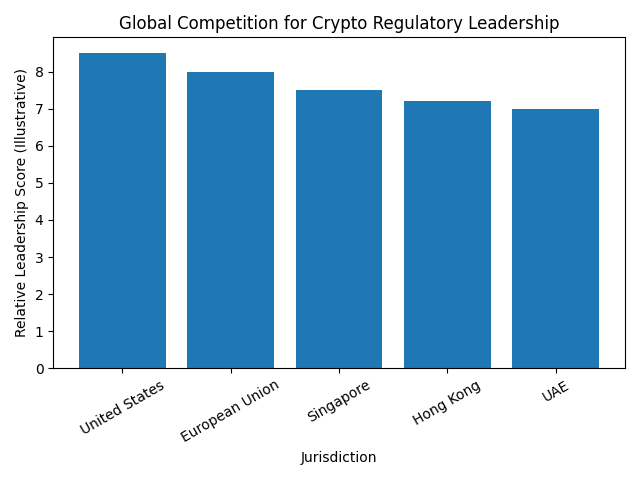
Insert Graph – Global Crypto Regulatory Competition
Suggested graph content:
Title: Global Competition for Crypto Regulatory Leadership
Countries included:
- United States
- European Union
- Singapore
- Hong Kong
- United Arab Emirates
Metrics:
- Regulatory clarity
- Institutional adoption
- Innovation ecosystem
- Capital inflow
This visual can help readers understand the geopolitical competition shaping the future of digital assets.
Insert Diagram – Blockchain Commodity Settlement
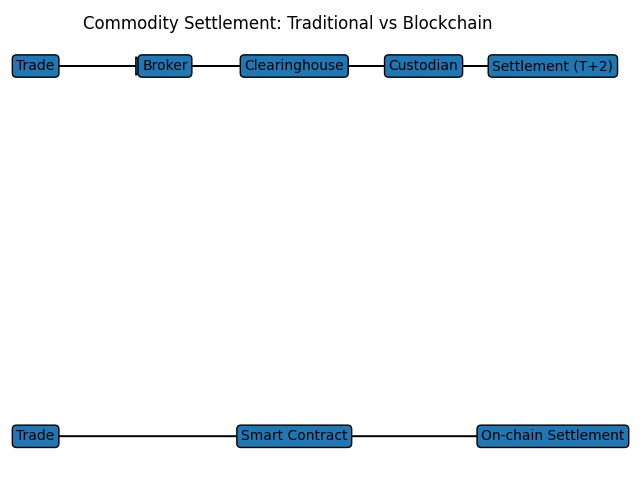
Diagram description:
Traditional system vs Blockchain system
Traditional:
Trade → Broker → Clearinghouse → Custodian → Settlement (T+2)
Blockchain:
Trade → Smart Contract → On-chain settlement (near-instant)
Conclusion: The Beginning of a New Regulatory Phase for Crypto
The declaration that the United States aims to become the global capital of cryptocurrency reflects a broader shift in regulatory thinking.
Rather than treating digital assets solely as a regulatory risk, policymakers increasingly recognize them as a strategic technology capable of reshaping global finance.
Several key developments will determine whether this vision becomes reality:
- Cooperation between the CFTC and SEC
- Clear rules for DeFi and non-custodial software
- Regulatory frameworks that support innovation while protecting investors
If these elements come together successfully, the United States could indeed become the center of the next generation of financial infrastructure.
For investors and builders searching for the next wave of opportunities, the message is clear:
The regulatory environment surrounding crypto is entering a new phase—and those who understand the intersection of technology, policy, and finance may find themselves at the forefront of the next global financial revolution.